

CarbonBridge 2026 Forecast: Emerging Revenues, Clearing Product Sales

CarbonBridge just sent us one of those startup updates that reads like a weather report from the edge of the future: revenue clouds finally forming, product sunshine breaking through, and a fundraising storm system still parked directly overhead.
A year ago, CarbonBridge was largely in “build the weird machine and prove it works” mode. Now it is inching into the far more dangerous phase: “sell the weird machine to someone with procurement policies.”
Step one on the revenue story was 2025, which was real revenue, but the kind of real revenue that comes with a footnote and a headache. CarbonBridge billed ARPA-E under a reimbursement contract. Meaning: they spend money first, then get paid back later, which is a fun arrangement if you enjoy the sensation of your cash flow trying to escape your body. That ARPA-E billing covered about half of their constrained expenses, with the rest coming from fundraising and prize money. It is the classic early-stage blend: some science, some grit, and a little bit of “please let the bank account hold.”
Then 2026 shows up and, in a small but meaningful plot twist, product sales begin.
Their first customer is Lawrence Berkeley National Laboratory in Emeryville, with sponsorship by BEAM Circular. That is a big signal, not because it makes them a giant company overnight (they are explicitly saving exact numbers for shareholder meetings), but because it proves something crucial: the thing they built is not just impressive in a slide deck. Someone serious is paying to use it to solve a real problem.
The product itself is basically CarbonBridge’s R&D reactor system graduating into a real, sellable tool for the R&D community. It is optimized for rapid A/B testing because CarbonBridge is selling what it uses in the tradition of the original HP. That is always the best kind of confidence: not “trust us,” but “we are trapped in this with you.”
The bet is that this core innovation, a bioreactor designed to deliver gases to microbes efficiently without beating them up with pressure and bubbles, unlocks a pipeline of new molecules over the next two to three years. Translation: the company is laying track now so customers can later run full-speed trains on it, making things like methane-to-methanol conversions and biosurfactants with economics that can actually stand in the same room as fossil-derived molecules without immediately getting laughed out.
They are also being annoyingly disciplined about quality before scaling, because every founder eventually learns the hard truth: shipping something “kind of fine” to early customers is not a growth strategy, it’s a reputation demolition derby.
Meanwhile, Phase 2 looms: the pilot location. They are narrowing it down and working through economics and logistics, with the subtle but unmistakable subtext that access to funds is the key that unlocks the next door.
Which brings us to fundraising: negotiations continue, stakeholders are apparently acting in good faith, and the deal is being shepherded toward the finish line while concerns pop up like whack-a-moles. Normal startup stuff, if your definition of “normal” includes living inside a spreadsheet-powered suspense thriller.
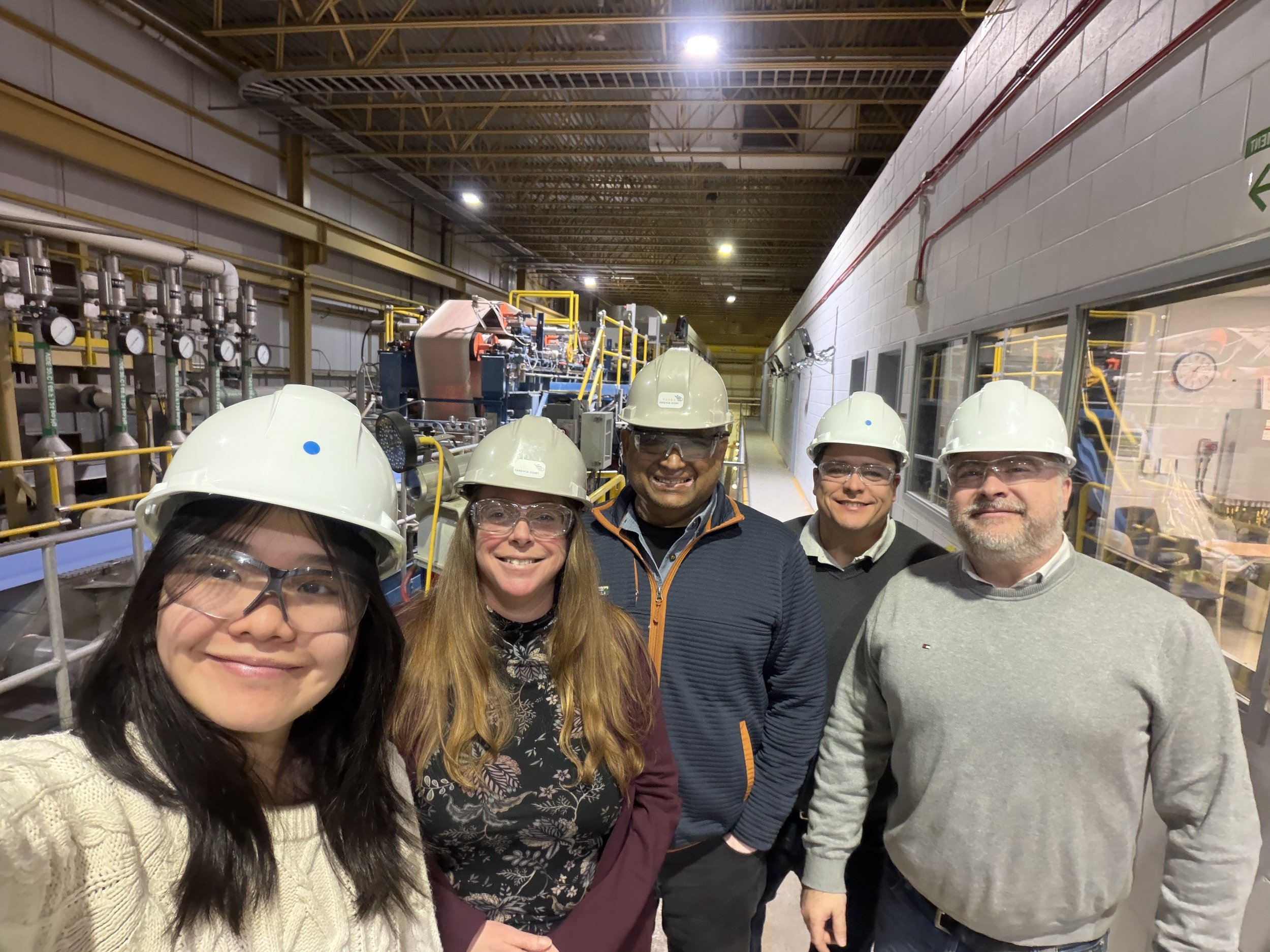
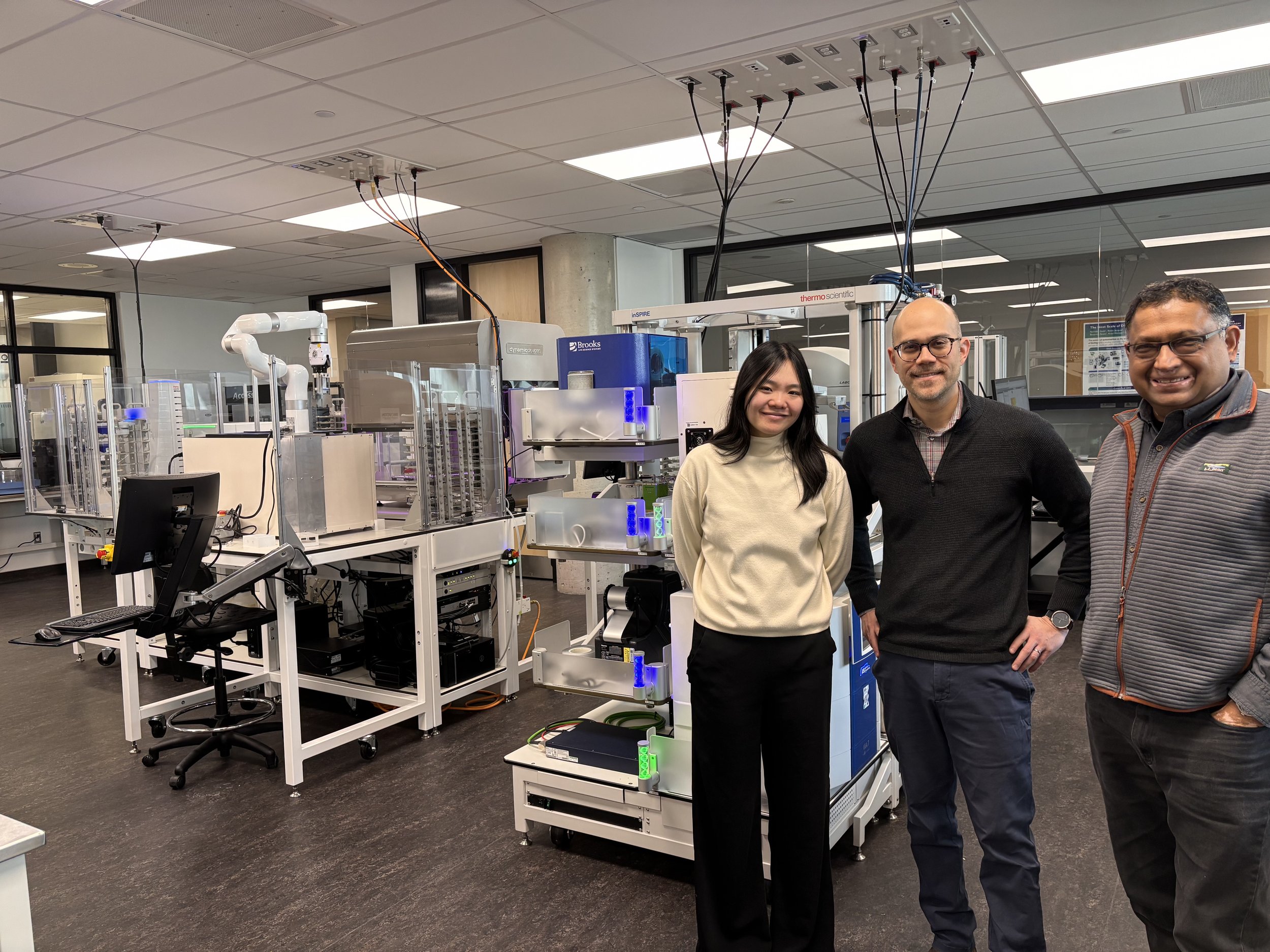
On the “humans are still doing things in physical reality” front, Sophia and the team spent mid-February in Quebec during what sounds like an experimental attempt to discover new temperature numbers below “cold.” They visited potential partners across Becancour, Trois Rivieres, and Shawinigan, plus meetings in Montreal including a look inside Dr. Nicholas Gold’s synbio lab at Concordia. There were photos. There was snow. There was a shovel in the car, which is Quebec’s version of an insurance policy.
Staffing is queued up pending funding close, with interns potentially supported via LifeSci NY. AI is also being pushed deeper into their workflow, with the practical goal of cutting software subscriptions,running leaner and minimizing data exposure. Not “AI because buzzword,” but “AI because fewer tools means fewer ways to accidentally pay $89/month forever to expose critical data.”
So the update, in one sentence: CarbonBridge is transitioning from “promising science project” to “company with customers,” while it wrestles the two boss fights every startup must beat to level up: scaling responsibly and closing the financing to do it.
CarbonBridge was a graduate of Santa Cruz Works’ Santa Cruz Accelerates 5th Cohort
Related Articles
Gas to Gold: CarbonBridge's Bioreactors Set New Industry Benchmark
DOE Awards $41 Million for Renewable Energy Projects, Including CarbonBridge
CarbonBridge Selected for TechCrunch's Prestigious 2025 Startup Battlefield 200
How a Chance Encounter Became a Game-Changing Research Partnership
CarbonBridge Wins Prestigious 2024 Wallenius Wilhelmsen Orcelle® Award