First UCSC Student-built Satellite Just Deployed from the ISS
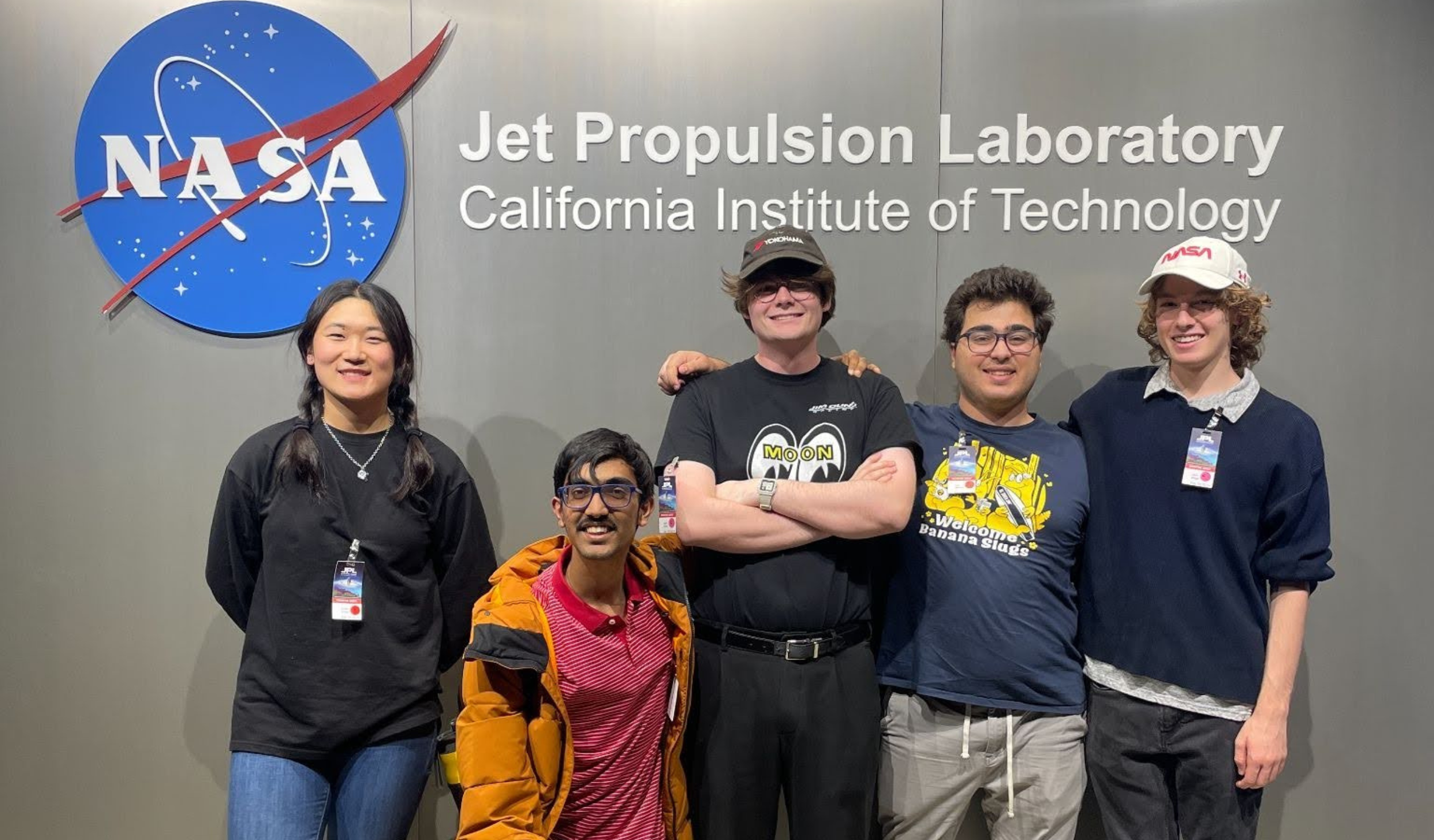
SlugSat visiting NASA Jet Propulsion Laboratory.
SANTA CRUZ, Calif. — A CubeSat designed and built by students at UC Santa Cruz deployed from the International Space Station on July 2, 2026, marking the university's first student-built satellite to reach space.
The satellite was developed by SlugSat, UC Santa Cruz's satellite engineering student organization, as part of NASA's CubeSat Launch Initiative, a competitive program that provides launch opportunities for student-developed small satellites used for research and education. The achievement adds to Baskin Engineering's expanding role in space research and technology.
SlugSat's involvement began when Baskin Engineering alumnus David Uniack (B.S. '26, robotics engineering), who led the 10-student team for three years, attended the CubeSat Developers Workshop in San Luis Obispo. There he connected with Cal Poly Pomona's Bronco Space CubeSat program, which led UC Santa Cruz to partner with Cal Poly Pomona, Texas State University, Northeastern University, and Columbia University. Each school built its own CubeSat using Cal Poly Pomona's open-source PROVES platform.
"Being selected for NASA's CubeSat Launch Initiative and joining this group of universities was very exciting," Uniack said. "One of my mantras is to get yourself into situations you can't easily get yourself out of because it forces you outside of your comfort zone."
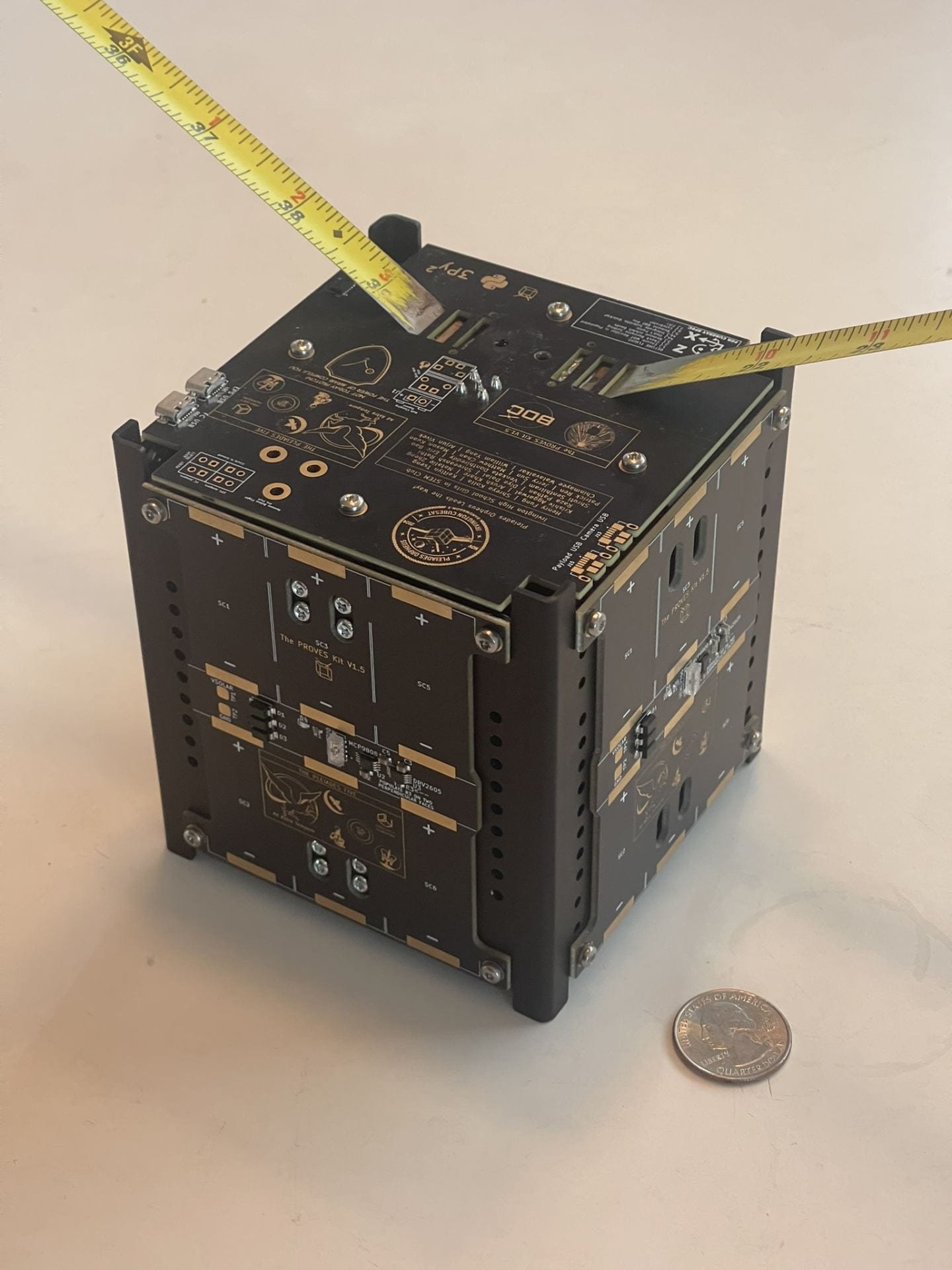
SlugSat’s Cubesat satellite next to a quarter.
From June 2024 to December 2025, the team built and tested the satellite at Slugworks, UC Santa Cruz's student creatorspace, developing its communications system, wiring, and hardware while coordinating with agencies including the FCC, NOAA, and NORAD.
"My electrical engineering courses across the board were incredibly helpful, especially when it came to designing circuits," Uniack said. "The labs taught me how to test what I was building, and anything involving radio frequency design was directly applicable."
"I went through all the phases of starting a job and feeling like you're screwing up all the time," Uniack said. "The most important lessons weren't technical. This is what it feels like to work in industry, getting things across the finish line and not taking no for an answer."
"It was R&D, R&D, R&D, and then once we were ready, we built the satellite in two weeks," Uniack said. "That's the miracle of it all."
In December 2025, the team traveled to NASA's Johnson Space Center for vibration testing to confirm the satellite could survive launch conditions. The completed satellite was then handed to Voyager Technologies and shipped to NASA's Kennedy Space Center ahead of launch.
The CubeSat launched aboard NASA's NG-24 resupply mission on April 11, 2026.
"It was maybe the best day of my life," Uniack said. "I was with all of my friends and family, and the students from all the other universities we worked with. For me, it was a feeling of relief. It was unreal."
After arriving at the space station, the satellite remained aboard until its July 2 deployment. It is now transmitting data to SlugSat's ground station, where Uniack monitors its health and prepares software updates.
Looking ahead, the club plans to pursue another CubeSat Launch Initiative mission.
"Life is about the friends you make along the way and identifying opportunities, even if it takes unusual dedication," Uniack said.