

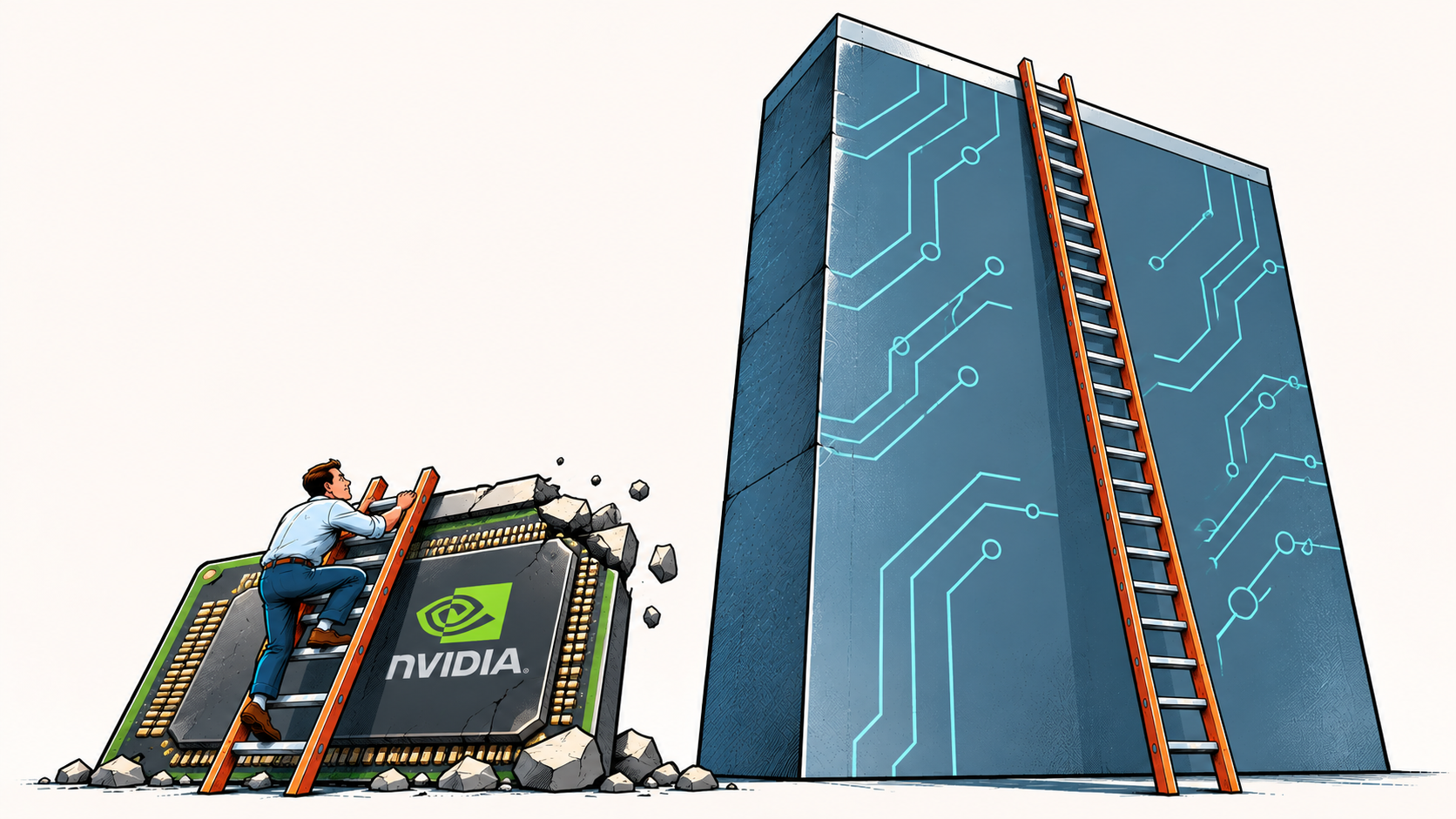
Most companies don't fail because they execute poorly. They fail because they keep executing well on yesterday's business.
Steve Blank's latest essay, What's Next for Nvidia?, is a thoughtful look at this problem. Jensen Huang has resigned, 33 years after co-founding Nvidia, and the board now faces the hardest question any company can face: who do we need to become next?
Huang's record is worth studying because it shows adaptation as a habit, not a single event. In 2006 he launched CUDA and funded it for years before it earned revenue. In 2012, after researchers used Nvidia chips to win ImageNet, he pointed the company toward deep learning. In 2020, Mellanox moved Nvidia from selling boards to selling AI datacenter racks. Each move was a bet that the market was shifting, made while the existing business was still healthy. That is the uncomfortable part. You have to move before the data fully proves you right.
Netflix learned this when it started streaming while DVD-by-mail was still growing. The temptation is always to protect what works. The discipline is to ask what your real strength is and where the market will need it next.
Blank's examples show the cost of getting this wrong. Microsoft under Steve Ballmer tripled revenue to $78 billion yet missed search, smartphones, and cloud, until Satya Nadella reorganized around Azure. These were not bad leaders. They were optimizing a system the world was moving away from.
What concerns me most in Blank's analysis is culture. He warns that execution-focused successors tend to add process and management layers, which can drive out creative people. Process feels safe. But rules multiply, talent density falls, and the people most capable of seeing the next shift quietly leave. Organizations that give people context rather than control adapt faster, because more people can act on what they see.
Nvidia's largest customers are now building their own chips. The trend is visible. The question is whether the next leadership team has the freedom and the courage to respond to it.
For any company, the lesson is simple. Keep looking for where your market is heading. Be honest about which strengths will matter there. And make the move while you still have the luxury of choosing.
As Blank puts it: "Execution pays your salary, innovation pays your pension."
Sources: Steve Blank – What's Next for Nvidia?
Related Articles
Nvidia’s New Era: Why the Monterey Bay Is Suddenly on the Global AI Map — How Nvidia partnerships are helping position the region as an AI hub that brings together aerospace, ocean science, and computing.
The Question Nobody in AI Wants to Ask — Why computing is shifting from rented systems to devices people own, and how Apple may be quietly winning the AI race.
They Said AI Would Make Engineers Obsolete — Philippe Kahn rejects the idea that AI will replace engineers and argues for humble, rigorous engineering.
Apple’s New AI Siri — David Pogue tests Apple’s new Siri, which can work with personal data, control apps, and handle complex requests.