

From Berlin to the Grid: How Community Helped Maxwell Philp Find Heron Power
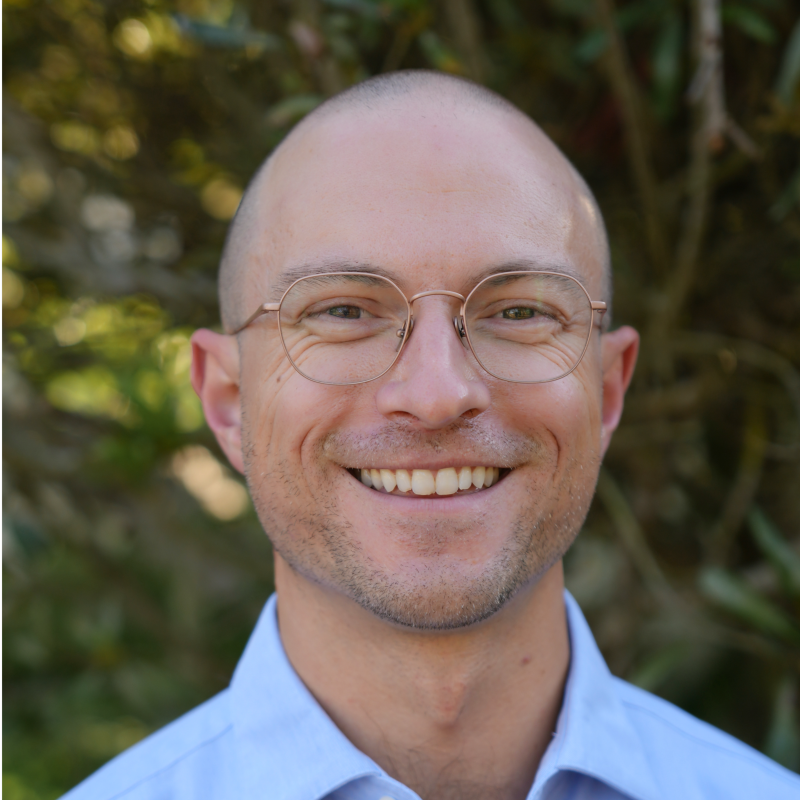
Maxwell Philp
When Maxwell Philp landed back in California in January, he had a resume most communications professionals would envy. He'd studied at NYU, worked at Stanford on police training programs addressing racial bias, then joined Plug and Play and relocated to Berlin to help the Silicon Valley accelerator expand its international footprint.. After earning a master’s in international affairs, he led communications and public affairs at Plugsurfing, one of Europe's largest electric vehicle charging platforms, working across Berlin and Brussels to navigate the commercial and political complexities of Europe’s energy transition.
Then he did what a lot of accomplished people eventually do: he came home. Family pulled him back to Santa Cruz, and he arrived with world-class experience in one of the fastest-growing sectors on the planet, clean energy infrastructure, and no local job.
Here's what he didn't do: sit at a laptop firing resumes into the void.
"In the current AI-driven job market, online applications alone are less effective than ever," Maxwell says. When hundreds of algorithmically optimized applications flood every posting, even exceptional candidates disappear into the pile. His advice to job seekers is refreshingly analog: show up. Go to the job fairs. Attend the networking events. Talk to local organizations. Let people meet the human being behind the resume.
Maxwell took his own advice. Looking to understand Santa Cruz's innovation ecosystem, he began connecting with people in the community, eventually leading him to Santa Cruz Works and events like Santa Cruz Launchpad, the annual job fair and startup competition event in Santa Cruz County. That's where he encountered Heron Power, the Scotts Valley company founded by former Tesla executive Drew Baglino that's building solid-state transformers to modernize America's aging grid. For someone who had spent years in Berlin thinking about charging infrastructure, grid bottlenecks, and why California can't easily share power with neighboring regions, it was an almost eerie fit. He applied for the Director of Communications role, this time with a face and a conversation already behind the application. After being put through his paces in Heron Power’s rigorous hiring process, he landed the role.
It's a pattern familiar to seasoned professionals across every industry: the most meaningful opportunities rarely come through an online application alone. They come through a person, someone met at an event, helped along the way, or simply asked a genuine question. That's Maxwell's second lesson, and maybe the more important one. Curiosity is a career strategy. Ask people what they're working on. Ask what excites them. In a tight-knit community like Santa Cruz, those conversations compound. The person you meet over tacos at a New Tech Meetup may be your colleague, or your hiring manager, six months later.
There's a nice symmetry here. Maxwell spent his Berlin years telling the story of the energy transition from the demand side: cars, chargers, drivers. Now he's telling it from the supply side, at a company reimagining the hardware between power generation and everything that uses it. And he found that opportunity the old-fashioned way, in a community that still believes careers are built face to face.
The grid, it turns out, isn't the only network that matters.
Related Articles
Heron Power in Scotts Valley Raises $140M for Next Generation Power Grid: How Drew Baglino's Scotts Valley startup landed $140M to scale solid-state transformers for data centers, solar, and batteries.
Joby, Heron Power Lead Launchpad 2026 Hiring Lineup: The hiring companies that headlined this year's Launchpad job fair at the Santa Cruz Beach Boardwalk.
Santa Cruz Launchpad Returns: Bigger and Better!: The annual student startup competition and community job fair connecting hundreds of job seekers with local employers.