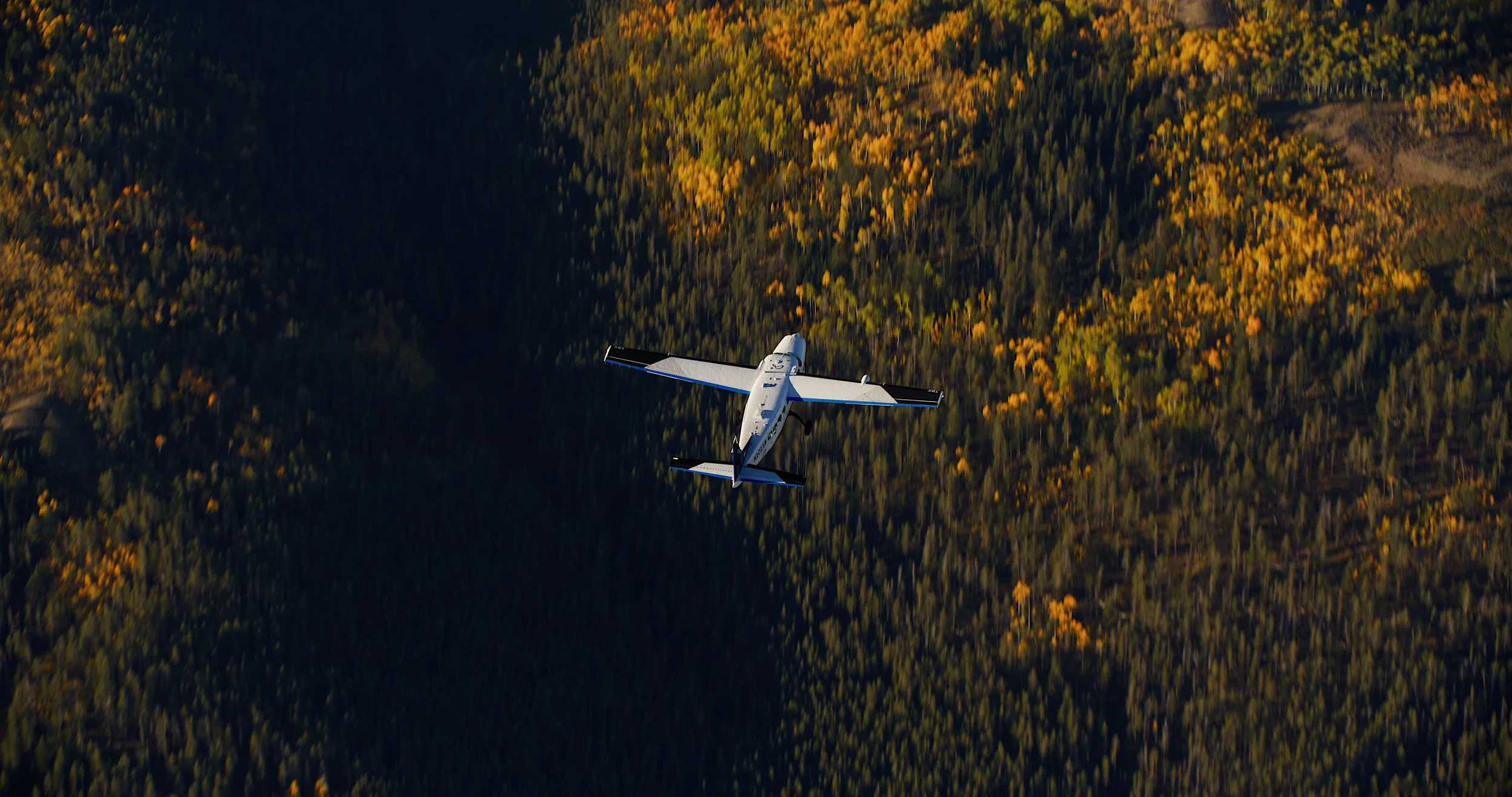
Image credit: Joby Aviation
Santa Cruz’s Joby Aviation (NYSE: JOBY) has received additional U.S. Air Force funding for its autonomous flight technology, bringing the Air Force’s total commitment to nearly $37 million and raising the ceiling on its operational testing contract to $50 million. The funding, awarded through AFWERX, the Air Force’s innovation arm, will support continued autonomy software development and expanded testing in the Pacific.
The news follows Joby’s record-setting coast-to-coast tour, part of its 2026 Electric Skies campaign. Joby’s autonomy system flew a modified Cessna Caravan from Concord, California to North Carolina’s Outer Banks with zero control inputs from its onboard safety pilot. The multi-leg trip covered 24 states, with autonomous taxiing, takeoffs, navigation, and landings supervised remotely from as far as 2,537 miles away.
Built on technology acquired from Xwing in 2024, the system has now completed more than 400 fully autonomous flights. It has also proven itself in military exercises, including a 2025 Pacific deployment where an aircraft in Hawaii was operated from Guam, nearly 4,000 miles away, and an Agile Flag exercise where it delivered replacement parts 24 hours faster than conventional logistics. Joby’s planned acquisition of Resonant Sciences, expected to close in early 2027, should further boost its defense capabilities.
“This contract expansion is a powerful validation of the adaptability of Joby’s autonomy stack,” said JoeBen Bevirt, Founder and CEO of Joby Aviation. “We designed this system to be platform-agnostic, letting us quickly bring advanced autonomy to a wide range of high-utility aircraft. This funding will accelerate our path to sustained uncrewed operations, delivering a single software solution that solves critical logistics challenges for both the U.S. military and cargo industries.”
“AFWERX is supporting the development and evaluation of autonomous airlift technologies to strengthen Air Force logistics resilience. Our goal is to sustain cargo operations in contested environments while reducing risk to aircrews and preserving crewed aircraft for missions that require them,” said Kate Brown, Contested Logistics Tactical Airlift Lead, AFWERX.
Possible Use in Peace and Humanitarian Efforts
Disaster relief after typhoons and earthquakes. The military is often the first responder when island infrastructure collapses. Uncrewed Caravans could fly water, food, generators and shelter kits around the clock. They can use short or rough strips, and they don’t need rested crews.
Medical resupply to remote communities. Blood, vaccines, antivenom and insulin could reach Pacific atolls, Alaska Native villages or outlying bases on demand. This builds on the White House-backed eVTOL Integration Pilot Program in Utah and North Carolina, which is establishing routes for medical supplies and cargo. santacruzworks
Flying where crews shouldn’t. Some areas are too dangerous for pilots: radiation zones like Fukushima, chemical spills, volcanic ash, or a pandemic hot zone. An autonomous aircraft can deliver supplies there or collect samples without putting a pilot at risk.
Wildfire support. These aircraft could resupply fire camps, carry equipment to remote crews, and fly in smoke or at night when crewed flights are grounded.
Search and rescue. Autonomous aircraft can fly long, tedious search patterns over open ocean or wilderness, and they can drop rafts, radios or survival kits once someone is found.
Food aid in conflict zones. Airdrops to besieged or famine-stricken areas are dangerous for crews. Uncrewed drops would lower that risk and keep deliveries steady.
Polar and research station resupply. Missions like Antarctic logistics involve long, hazardous legs in bad weather. That suits remote supervision, which Joby has already shown at long range: a 2025 Pacific deployment had an aircraft in Hawaii operated from Guam, nearly 4,000 miles away. santacruzworks
Faster parts and equipment. In a recovery effort, the right part or pump arriving a day early matters. In one exercise, the system delivered replacement parts 24 hours faster than conventional logistics. santacruzworks
Beyond defense, Joby’s autonomous flights are part of the White House-backed eVTOL Integration Pilot Program in Utah and North Carolina, helping establish routes for medical supplies and cargo while generating data to shape future FAA rules for autonomous flight.
Related Articles