NPS to Showcase Five Breakthrough Technologies at Reverse Pitch Event
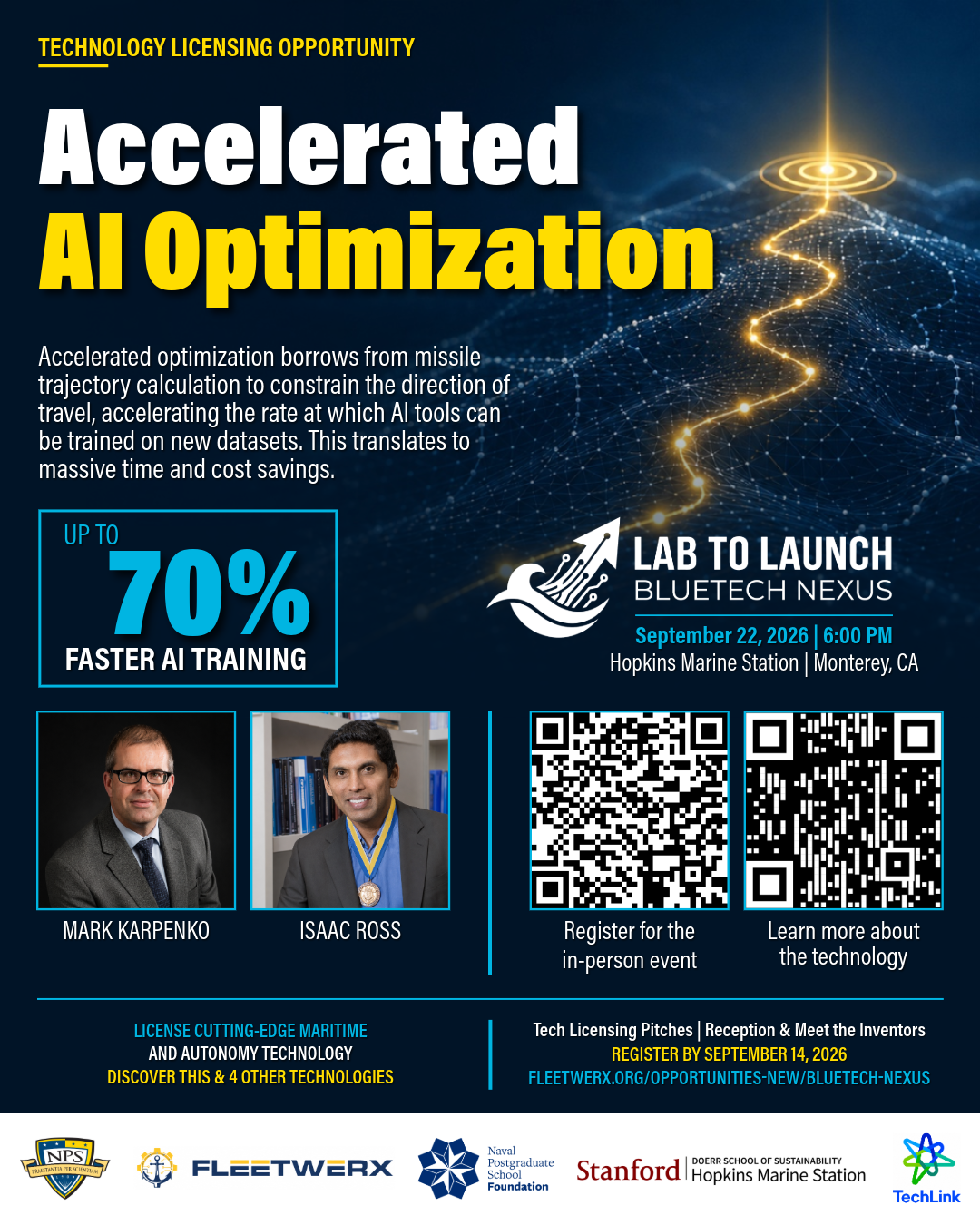
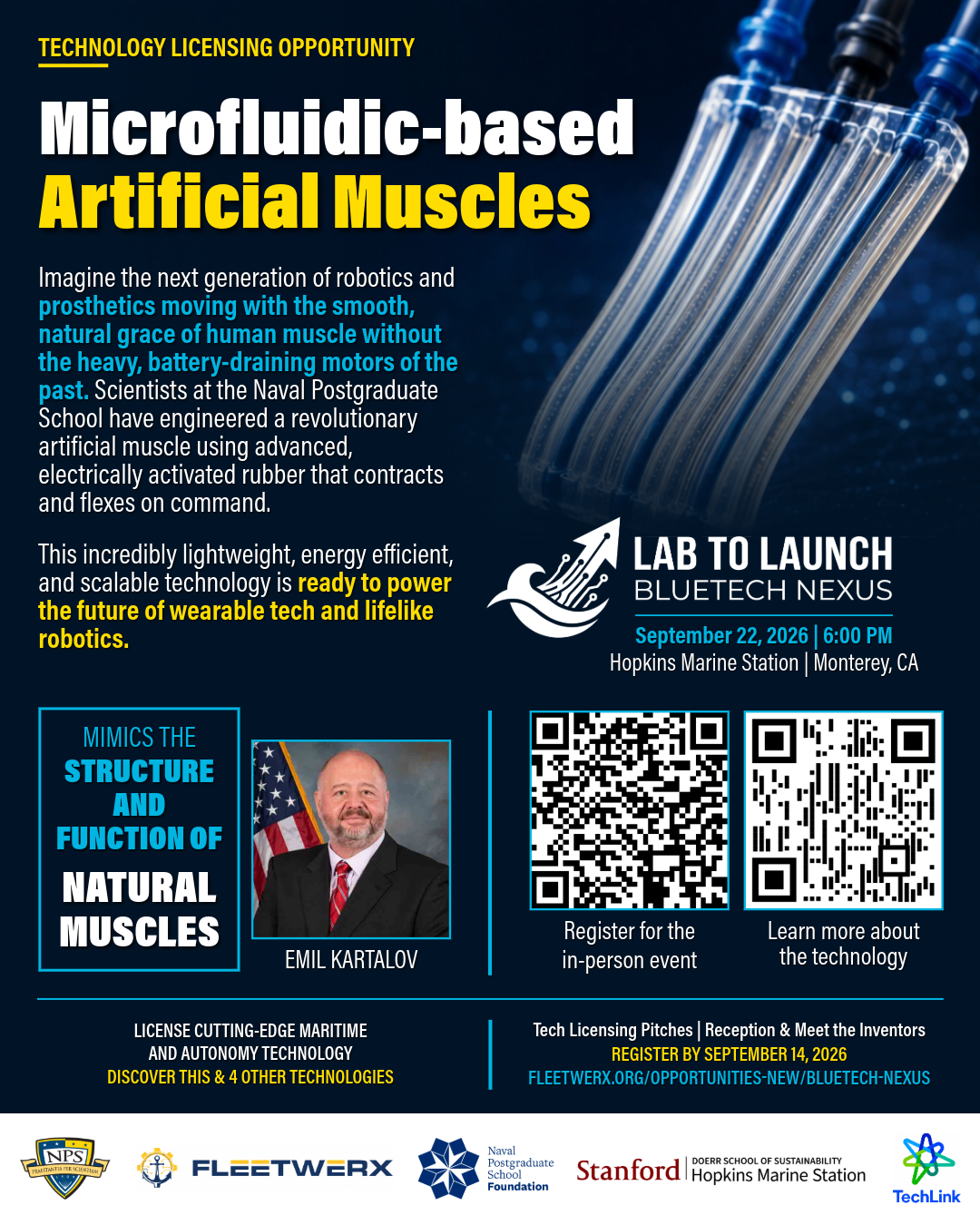
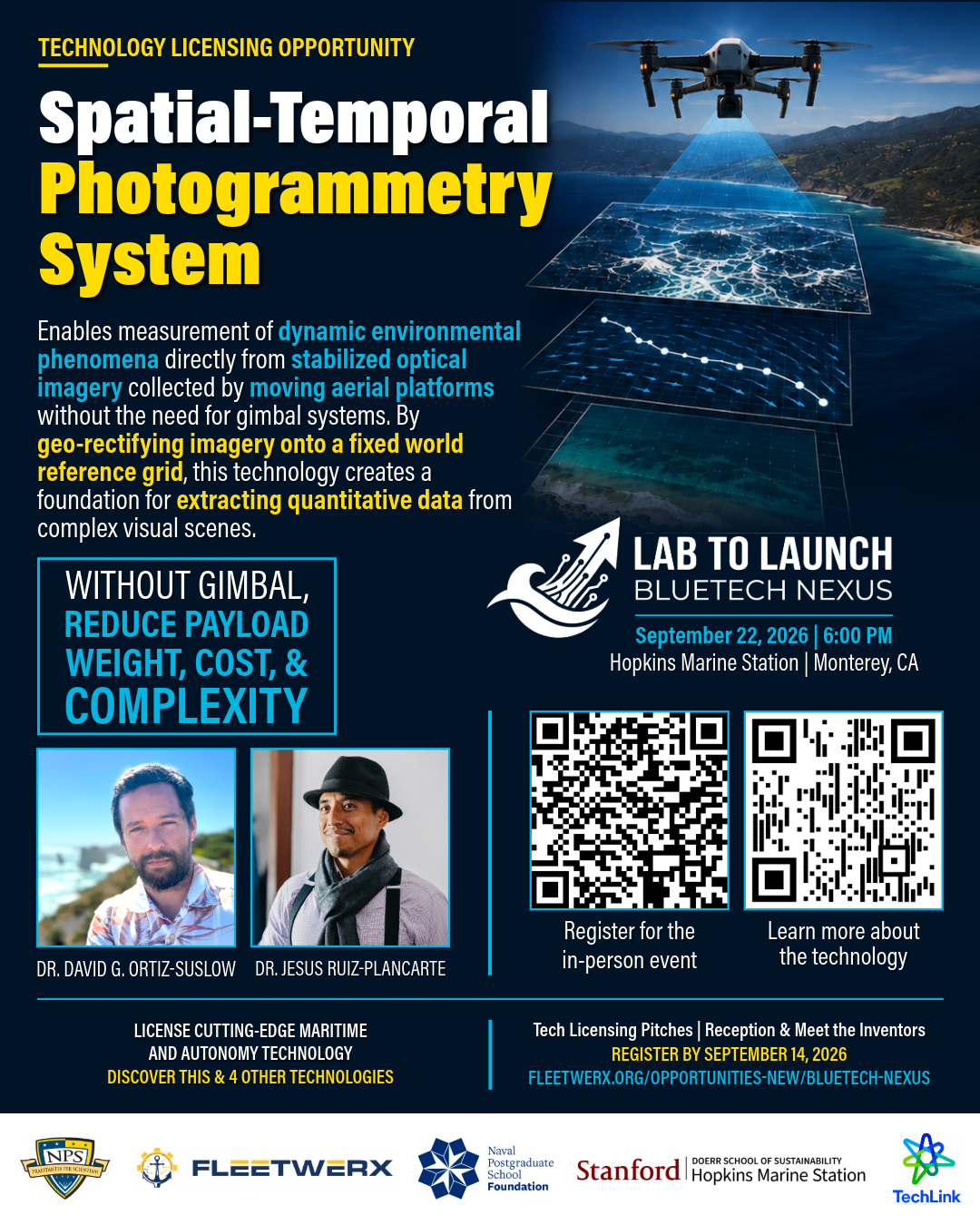
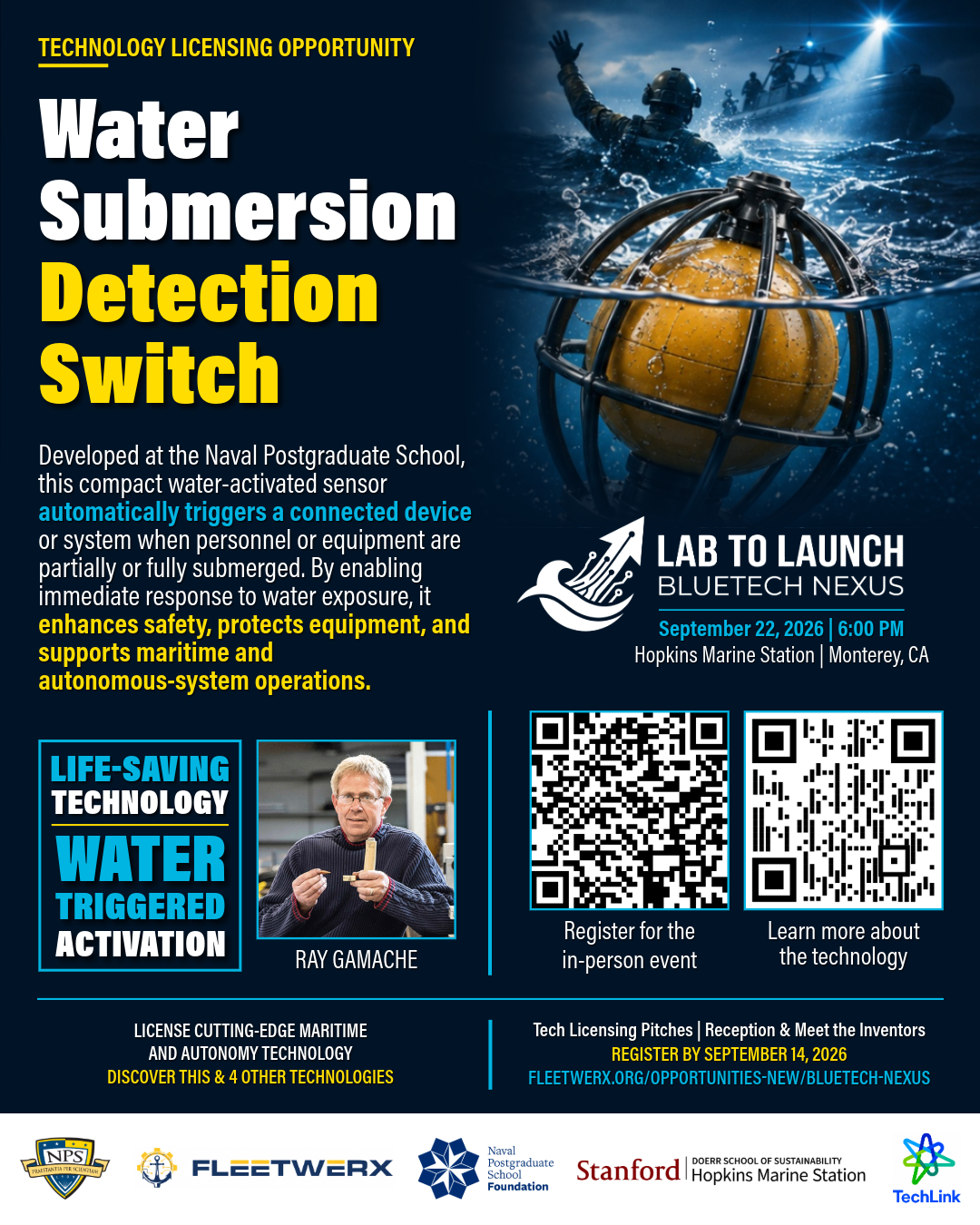
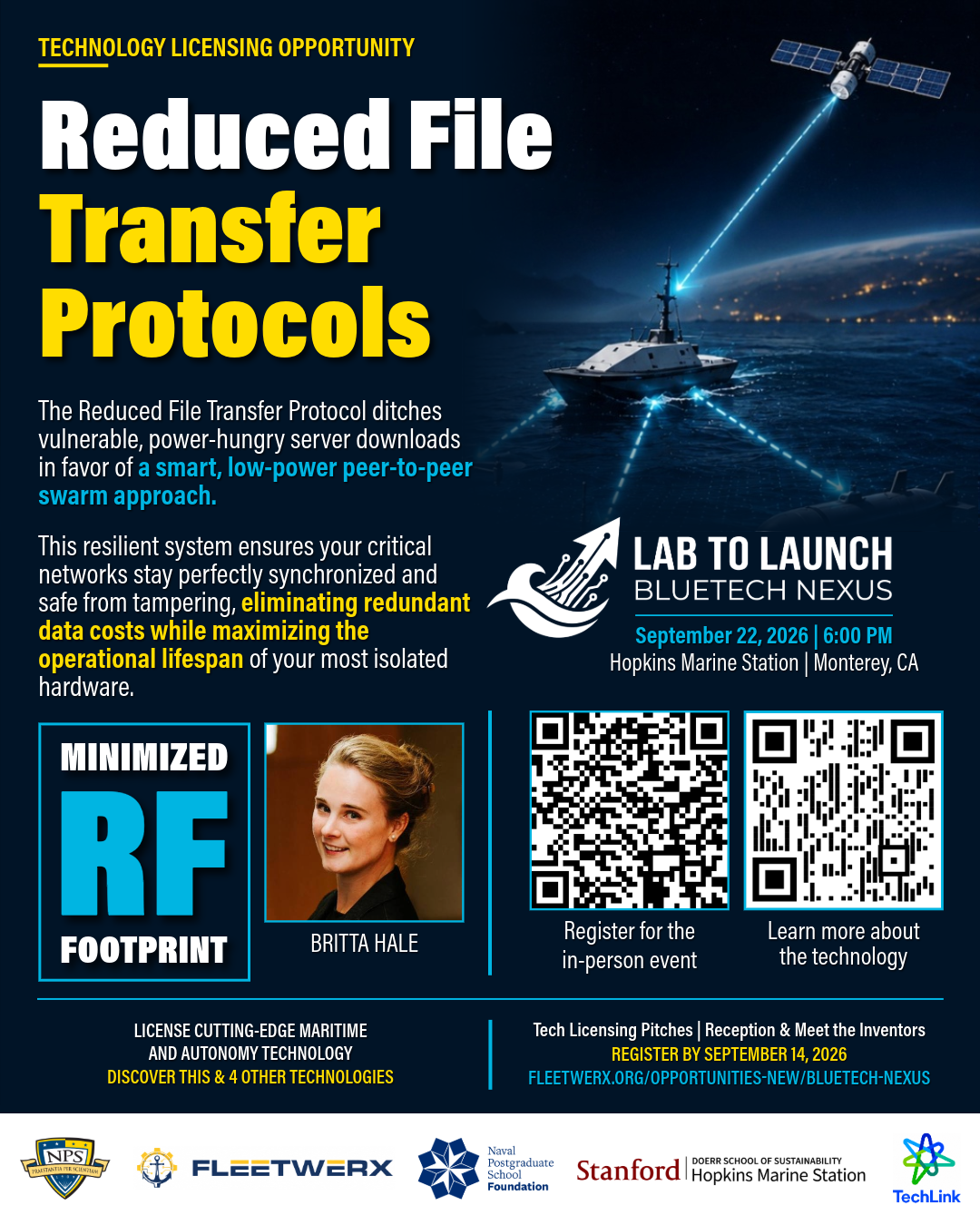
The Naval Postgraduate School (NPS) Office of Research and Innovation (OR&I) is teaming up with FLEETWERX, Stanford's Doerr School of Sustainability, the Naval Postgraduate School Foundation, TechLink, and California State University Monterey Bay to host an exclusive in-person reverse pitch event on Tuesday, September 22nd at 6:00 PM at Hopkins Marine Station in Monterey.
Industry professionals, investors, and technologists are invited to attend briefings on five technologies developed by NPS researchers, followed by an after-event networking mixer.
The Technologies
3D Printed Microfluidic Muscles A monolithic, 3D-printable artificial muscle that uses microfluidic capacitors to generate significant biomimetic force without the bulk of traditional motors. It can lift heavy loads while remaining acoustically stealthy, offering strong potential across the robotics, exoskeleton, and autonomous vehicle markets.
Accelerated AI Optimization An optimization method that borrows from missile trajectory calculations to speed up AI model training by up to 70 percent. Delivered as a lightweight software framework rather than a hardware upgrade, it targets cost savings within the $34 billion deep learning market.
Spatial Temporal Photogrammetry A modular sensor software system that stabilizes optical measurements for unmanned aerial and surface vehicles by up to 70 percent, without heavy gimbals or ground references. It works even over featureless surfaces like open ocean, aimed at the $4.1 billion geospatial software and commercial UAV sectors.
Water Detection Submersion Switch A patented, omni-directional submersion switch that replaces bulky marine safety sensors with a compact, buoyant geometric cage design. It triggers flotation or beacon deployment instantly upon submersion, with applications in tactical body armor and marine IoT devices, targeting the $10.2 billion global marine safety equipment market.
Reduced File Transfer Protocol An ultra-low-power data transfer protocol that shifts remote communication from centralized servers to peer-to-peer synchronization, cutting reliance on costly SATCOM bandwidth. It extends battery life for autonomous drone swarms, offshore wind farms, and defense networks, with an eye on the $483 billion Industrial IoT and autonomous fleet markets.
Additional technologies from NPS, the Stanford Doerr Hopkins Marine Station, and other partner institutions will also be featured.
Space is limited. Register for the event here by September 14.