

The Most Radical Thing at Cat & Cloud Is the Conversation
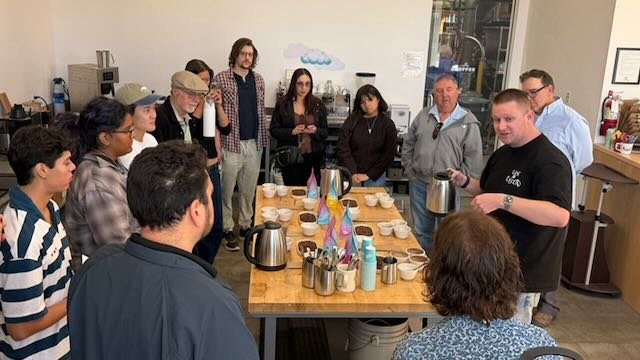
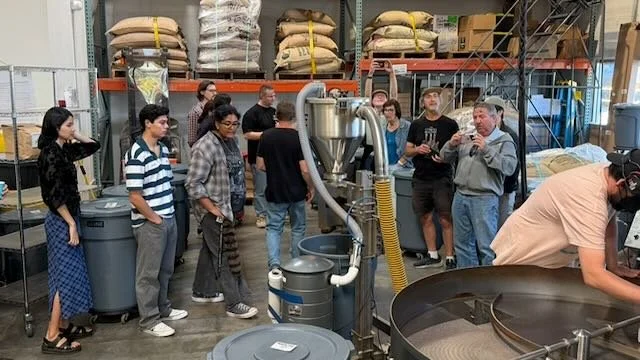
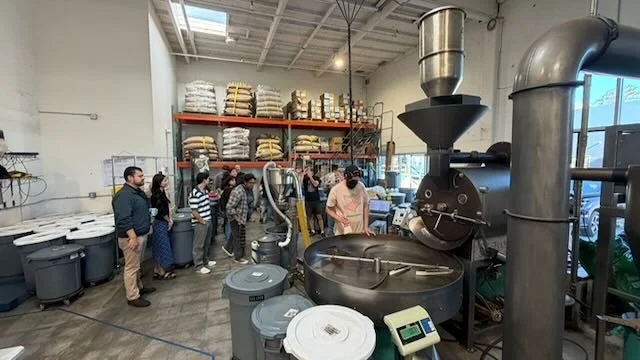
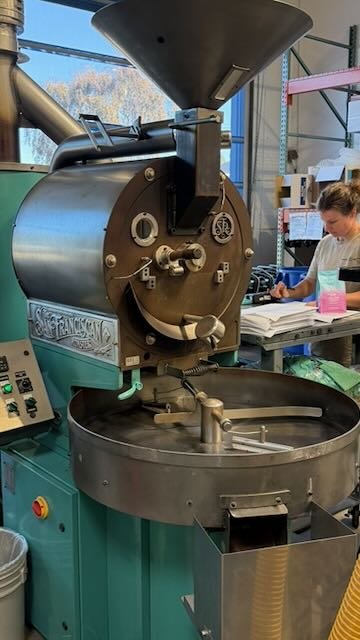
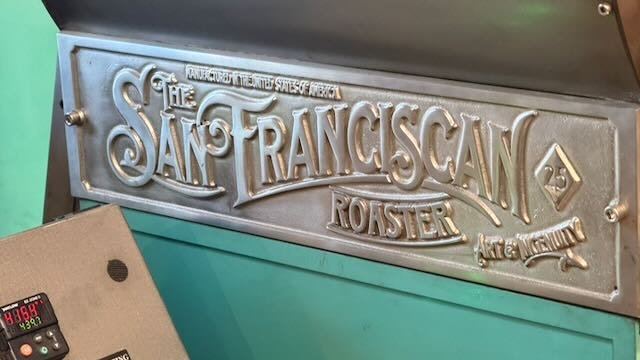
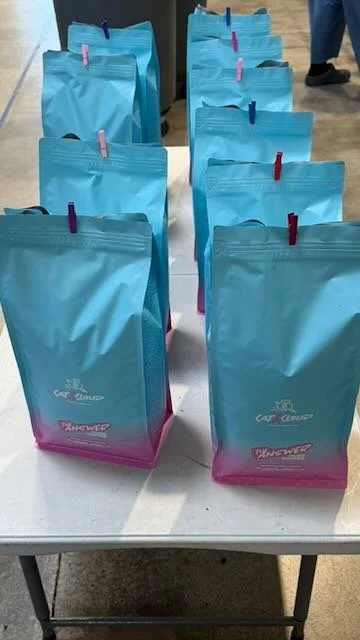
In our Company Spotlight tour of Cat & Cloud on October 16, 2026, we learned how one Pleasure Point café grew into four shops and a roastery by betting on clear values and real human connection.
Here is a puzzle worth sitting with. Santa Cruz County may have more serious coffee per capita than almost anywhere in America. Within a block of Cat & Cloud's Westside café, you can find several other places pulling excellent espresso. Coffee quality, in other words, is not scarce here. So why does Cat & Cloud keep growing?
I think the answer is that they were never really just selling coffee.
Cat & Cloud opened in 2016 at 3600 Portola Drive with eight team members and big dreams. Its founders, Jared Truby, Chris Baca, and Charles Jack, had all held leadership roles at Verve, the roaster that helped define the region's coffee identity. Truby and Baca were championship baristas. They knew how to make a technically perfect cup. What they wanted to build was something else.
Even the logo tells you that. The cat is Baca. The cloud is Truby. A friend sketched them for a podcast the two hosted before the company existed. Before there was a café, there was a conversation.
Today Cat & Cloud runs four cafés (Eastside, Westside, Aptos Village, and downtown), a standalone roastery, and wholesale partners around the world. Food & Wine named it California's best coffee roaster in 2022. But spend a morning with the team, as we did on our recent Company Spotlight tour, and the thing you notice isn't the equipment. It's how often people look each other in the eye.
That sounds soft. It isn't. It's a strategy, built on values the company treats as operating instructions rather than wall art. Its mission is to inspire connection by creating memorable experiences. The founders call their philosophy "Making People Happy," and it runs from the counter to the wholesale accounts. Baca has said they watched the industry treat baristas like commodities and decided employees should be ambassadors instead. On their long-running podcast, Baca and Truby talk openly about how the mission and values guide hard decisions.
Now widen the lens. In 2023, the U.S. Surgeon General called loneliness and isolation an epidemic, with health effects comparable to smoking up to 15 cigarettes a day. Since then, the technology meant to connect us has mostly found new ways to substitute for connection. Feeds optimize for engagement, not belonging. A fast-growing category of AI companions offers something that feels like friendship without the friction: always available, endlessly agreeable, asking nothing in return.
No one has thought harder about this than MIT's Sherry Turkle, author of Alone Together, who has spent four decades studying what technology does to our relationships. Her new book, Artificial Intimacy, published last month, makes a stark argument: if social media came for our attention, AI is now coming for our capacity for attachment. Chatbots, she says, offer "pretend empathy," a performance of care from something that cannot care. The danger isn't only that we accept it. It's that we start to believe it's enough.
What strikes me most is her point about friction. Real relationships are demanding, and that's the point. Turkle argues that when we seek out relationships without vulnerability, we lose the thing that makes empathy possible. Vulnerability, she told NPR, "is really where empathy is born." A machine that never needs anything from you can't teach you how to show up for someone who does.
Turkle isn't a technophobe, and I don't think these tools are villains either. But they reveal what we've started to underprice: the small, unoptimized, in-person exchange. The barista who remembers your order. The stranger at the next table who asks about your dog. Researchers call these "weak ties," and studies suggest they matter more to daily well-being than we assume. They're also exactly the interactions that vanish when every errand moves into an app. In her earlier book, Reclaiming Conversation, Turkle pointed to research showing that even a silent phone on the table makes conversation shallower and less empathetic.
This is where Cat & Cloud's bet starts to look less quaint and more prescient. A café is one of the last places built for low-stakes human contact. Much of the industry has spent a decade engineering that contact away: mobile ordering, pickup shelves, the whole transaction compressed into a QR code. Cat & Cloud went the other direction. It invested in the people behind the counter, in training, in a culture that rewards warmth. Then it made that culture the product. Turkle's prescription has always been disarmingly simple: reclaim conversation. Cat & Cloud built a business on it.
There's an economic lesson here, and Santa Cruz founders should take it seriously. Values aren't a cost center. When they're real, when they decide who gets hired, how people are trained, and what gets measured, they become the thing competitors can't copy. Anyone can buy a good roaster. Nobody can buy a decade of a team that believes hospitality is the point.
As Cat & Cloud marks ten years, it's worth asking what kind of businesses we want our region to grow. The startup world tends to celebrate scale and automation. Cat & Cloud is a reminder that some of the most durable value comes from doing something machines can't: making a person feel seen at 7 a.m. on a Tuesday.
That's not nostalgia. In an age of isolation, it might be the most valuable thing on the menu.
Related Articles
Breakfast at Future Motion: A Santa Cruz Works Company Spotlight — A behind-the-scenes look at the Santa Cruz company behind Onewheel, from our Company Spotlight series.
Breakfast at Spanner: A Santa Cruz Works Company Spotlight — Prototypes, technical stories, and community at Spanner's downtown studio.
Mixt & Co. Brings a Fresh Approach to Event Catering in Santa Cruz — Two longtime friends build a local hospitality business around shared experiences.
From Santa Cruz to Nasdaq: Congratulations to West Coast Community Bank — Proof that a community-first company can scale without losing its roots.