

Parallel Flight + Alpha Unmanned: Heavy-Fuel UAS for the U.S. Navy
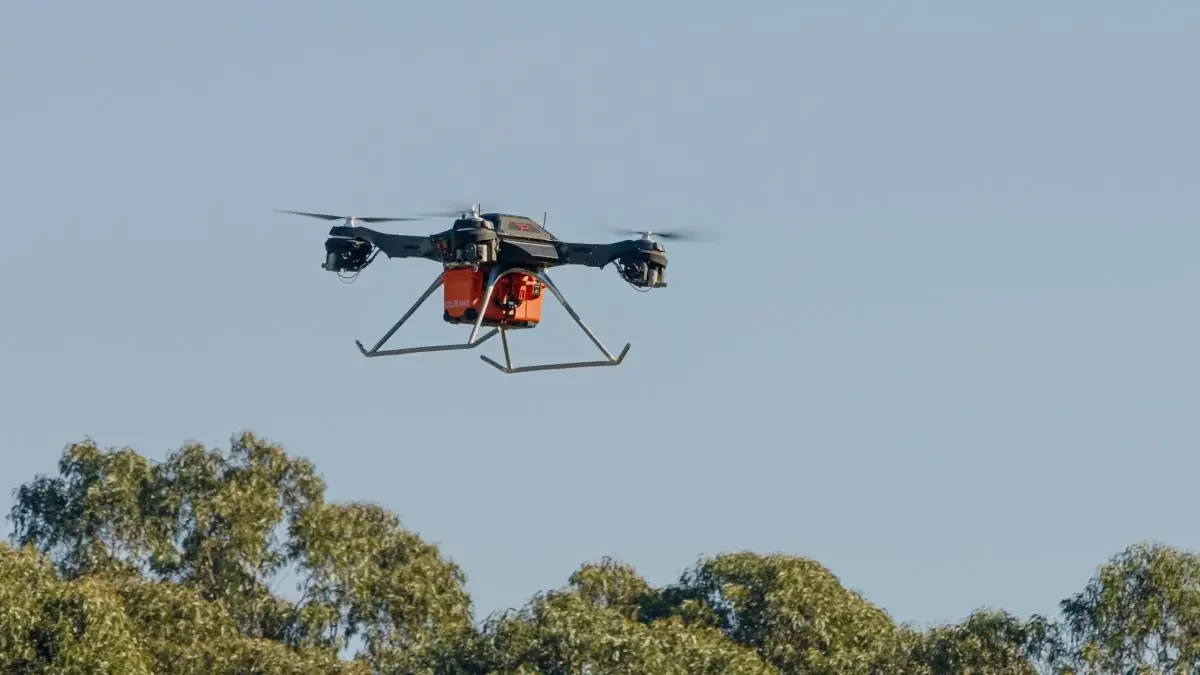
Parallel Flight Technologies (La Selva Beach, CA) and Alpha Unmanned Systems (Madrid) have announced a collaboration aimed at one of the least glamorous but most mission-critical problems in unmanned aviation: propulsion that can go long, lift heavy, and plug into real-world military logistics. The work supports a U.S. Office of Naval Research (ONR) effort to adapt Parallel Flight’s Firefly UAS to operate on heavy fuel, a shift designed to expand endurance and operational reach for demanding maritime and expeditionary missions. (AP News)
At the center of the announcement is Firefly’s hybrid architecture and Parallel Flight’s proprietary Parallel Hybrid Electric Multirotor (PHEM) propulsion system. The companies say Alpha’s decade-plus experience designing and operating heavy-fuel helicopter UAVs for defense, maritime, and security applications will help accelerate Firefly’s conversion to heavy-fuel compatibility. The logic is straightforward: heavy fuel aligns better with existing military fuel infrastructures, potentially reducing logistical friction while enabling longer-duration operations where batteries alone can be limiting. (AP News)
Parallel Flight CEO Craig Stevens frames Alpha’s contribution as “real-world experience” that helps refine and validate the hybrid approach for naval and expeditionary demands, while Alpha CTO Alvaro Escarpenter emphasizes heavy-fuel engines as essential in challenging defense and maritime environments. (AP News)
The release also reiterates Firefly’s positioning as a heavy-lift workhorse: an NDAA-compliant Group 3 UAS, described as two-person portable and optimized for expeditionary defense and industrial missions. Parallel Flight highlights performance claims including payloads up to 100 lb (45 kg), endurance “10x greater than all-electric UAS,” and 2 kW of continuous in-flight power available for payloads. The platform is also described as protected by five patents and supported by organizations including DIU, USDA, NASA, and NSF. (AP News)
For readers who want the full context (including the technical rationale, partner roles, and stated mission impacts), the press release is worth a closer look. (AP News)