

The Grid’s Unsung Hero: Drew Baglino of Heron Power in Scotts Valley
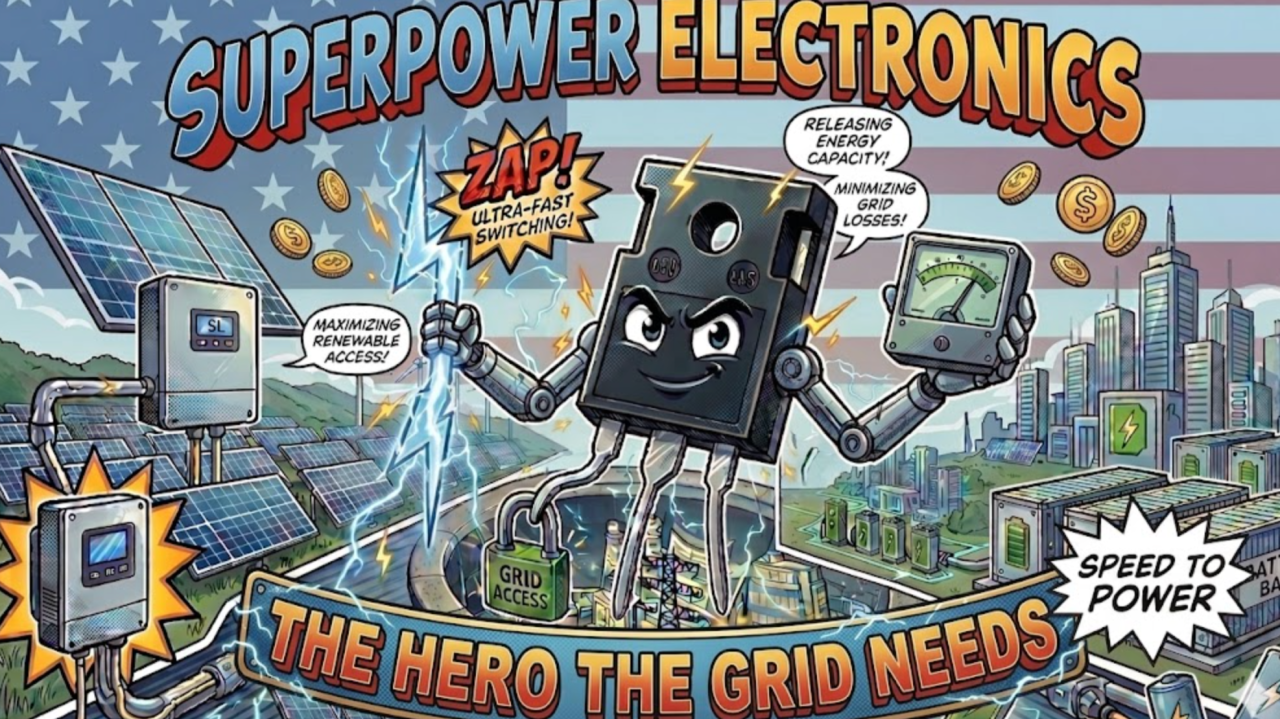
artwork credits: Heron Power
Drew Baglino’s article, Power Electronics: The Hero the Grid Needs, is really about one of civilization’s weirdest habits: building dazzling futuristic technology on top of infrastructure that often feels like it was last upgraded when people still trusted fax machines.
Baglino’s main point is that power electronics are the invisible overachievers of the modern world. They are the systems that convert, direct, and manage electricity, and they sit quietly behind a huge chunk of technological progress. Electric vehicles, solar, battery storage, AI data centers, industrial automation, and other shiny symbols of the future all depend on these systems doing the unglamorous work of controlling energy with precision. They are less like the movie star and more like the brilliant stage crew keeping the whole production from collapsing.
The problem, he argues, is that while the technologies attached to the grid have evolved at high speed, the grid itself often has not. A lot of it still operates like an old highway system suddenly being asked to handle a nonstop flood of self-driving trucks, ambulances, motorcycles, and space shuttles. The issue is not simply making electricity anymore. In many cases, we know how to generate it. The issue is moving it, shaping it, and delivering it in ways that match the demands of an electrified, digital, high-performance economy.
That mismatch creates a giant bottleneck. Renewable projects get delayed. Factories get stuck waiting. Storage systems cannot be connected fast enough. New electrical loads pile up. So the obstacle is no longer just invention. It is the painfully physical reality that much of the system carrying all this progress is old, rigid, and not built for the job.
This is where Baglino introduces the article’s real hero: the solid-state transformer. Traditional transformers are important, but they are mostly static devices. Solid-state transformers, by contrast, could act more like intelligent traffic controllers for electricity. Instead of just stepping voltage up or down, they could also manage power quality, isolate faults, balance phases, regulate frequency, and respond dynamically in real time. In plain English, they would make parts of the grid programmable instead of passive.
That is the larger takeaway. Baglino is not pitching some sci-fi fantasy. He is saying that advances in semiconductors, especially silicon carbide, have finally made it possible to rethink one of the grid’s most basic building blocks. And if electricity is becoming the operating system of modern life, then upgrading the grid’s internal machinery is not optional. It is overdue.
Readers who want the full argument should dig into the original article HERE.
Drew Baglino is founder and CEO of Heron Power in Scotts Valley.