

He Invented the Camera Phone. Now His AI Is Transforming Sleep.
Few inventors have left a deeper imprint on modern technology than Philippe Kahn. With more than 246 issued patents, the most in Santa Cruz County, all of which he personally authors and files, Kahn’s career reflects an unusual combination of technical depth, creative range, and long-term consistency. His inventions span fields as varied as artificial intelligence, IoT, wearables, wireless communications, mobile computing, and medical technology. Among these contributions, one stands apart for its global cultural impact: the invention of the camera-enabled smartphone.
At a time when mobile phones were designed solely for voice communication, Kahn imagined something radically different—the integration of digital imaging, software, and wireless networks into a single handheld device. That idea would go on to reshape journalism, social media, commerce, and daily life, transforming the phone into the primary way the world captures and shares information. What is now taken for granted was once a bold rethinking of what mobile technology could be.
A significant portion of Kahn’s intellectual property—more than 138 patents—is assigned to Fullpower®-AI, the company he founded to accelerate the development of AI-driven, data-intensive solutions in health and wellness. Fullpower has become a leader in contactless biosensing, extracting meaningful physiological signals without the need for wearables or intrusive devices. Early innovations such as MotionX-GPS Drive demonstrated how AI-powered motion sensing could scale across industries, powering applications for Nike’s Running App, influencing the Swiss watch industry, and enabling the first commercially available navigation app on the iPhone. He holds the most filed patents in Santa Cruz County.
Today, Fullpower-AI® processes billions of biosensing data points daily through its core platforms, KOA™ and Sleeptracker-AI®. These systems combine predictive AI with large, action-oriented generative models to move beyond data visualization and toward real-world intervention. Their effectiveness is continuously evaluated in collaboration with Stanford Medicine and UCSF, reinforcing the company’s credibility at the intersection of AI and clinical science.
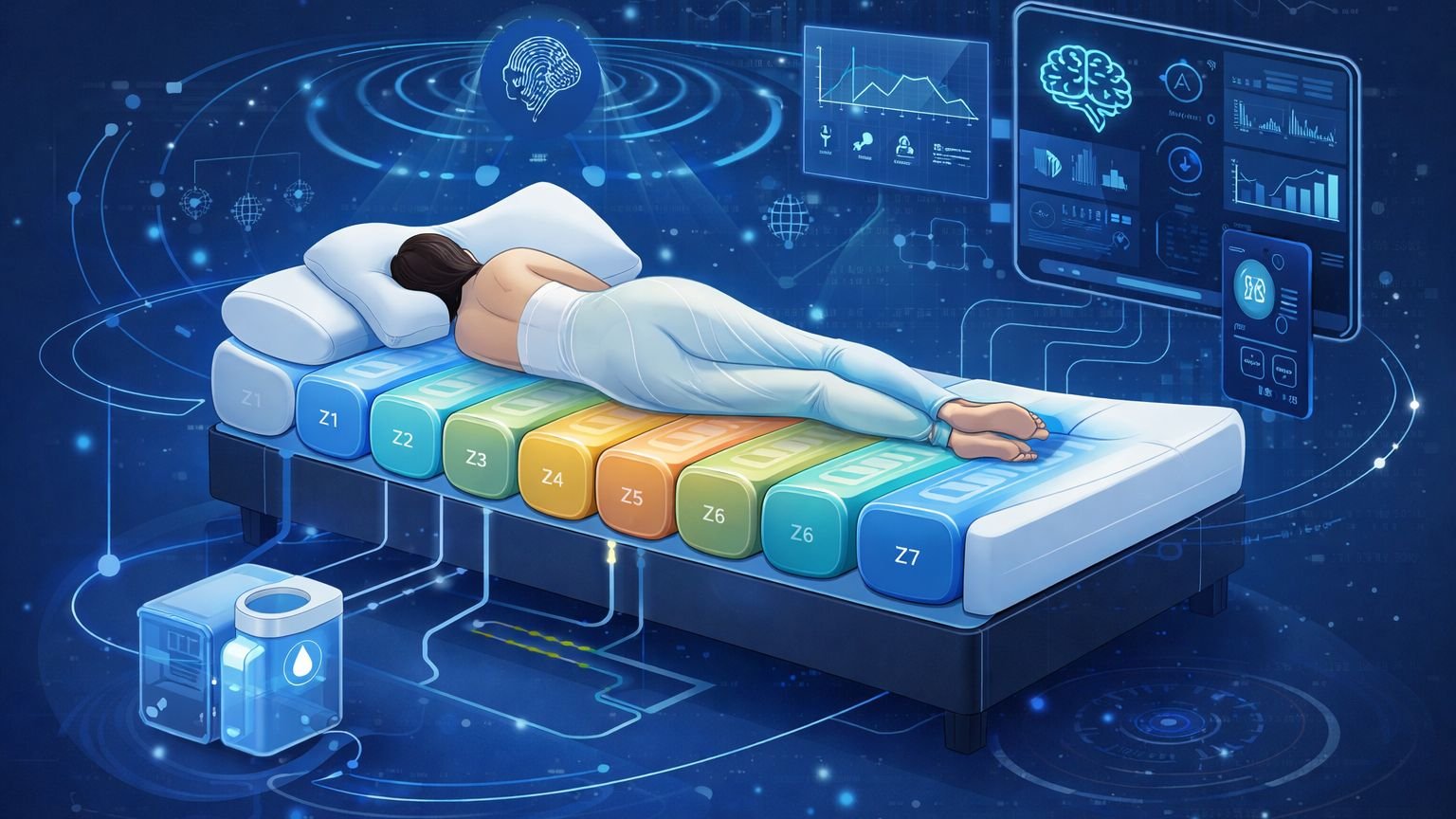
That trajectory continues with the recent granting of U.S. Patent 12,514,377 B1, a multi-zone, self-adjusting smart bed. The patented system uses AI-driven sensing to automatically adapt mattress firmness in real time based on posture, movement, sleep stage, environment, and individual characteristics. Designed for both single and multiple sleepers, it incorporates population-level learning and automated hygiene intelligence.
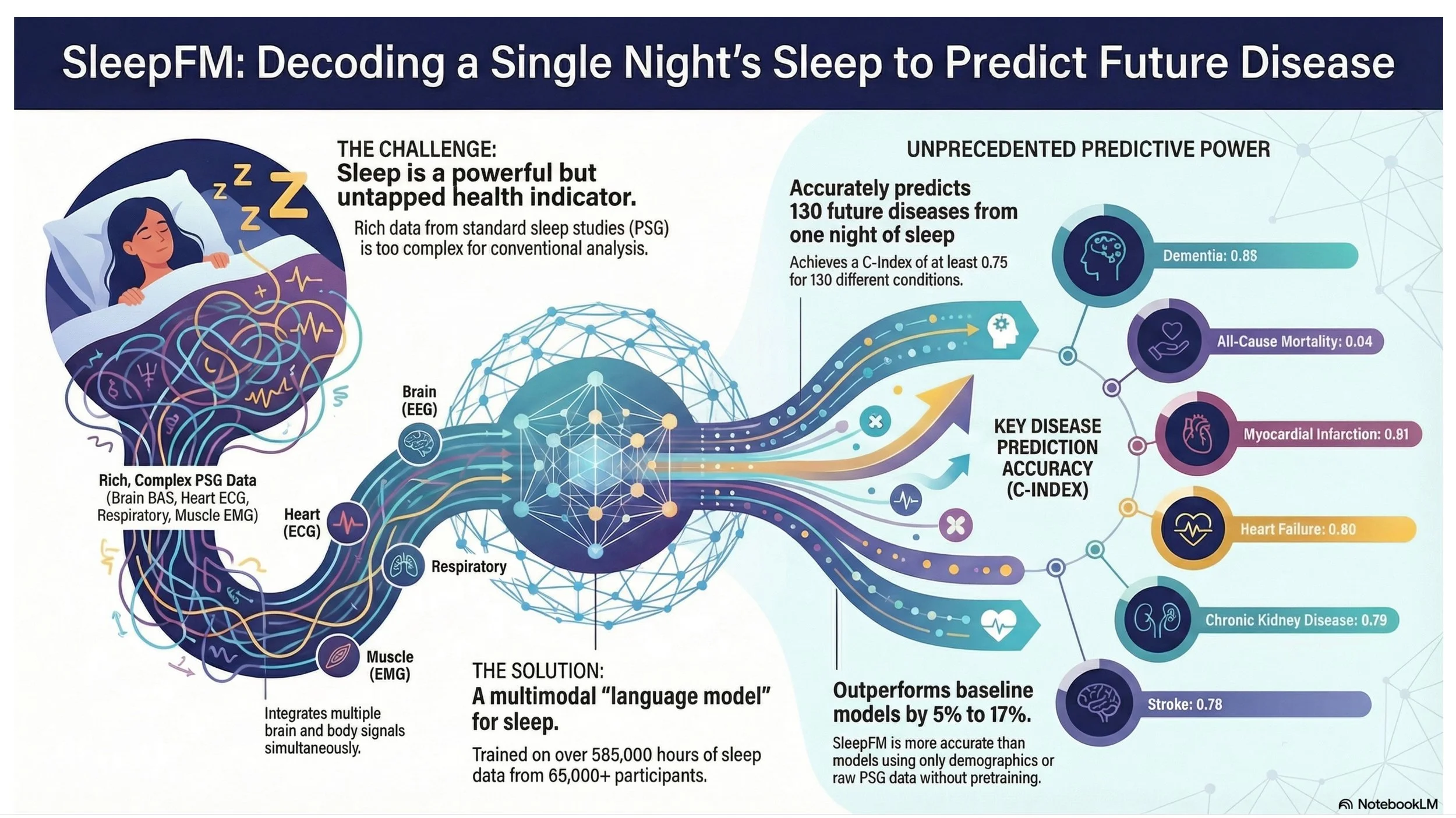
This patent marks a fundamental shift: sleep technology evolving from passive monitoring into autonomous physiological support. As emerging sleep foundation models show that a single night of data can predict long-term health outcomes, Kahn’s work points toward a future where sleep environments actively improve health. With over 246 self-authored patents, his influence continues to shape how AI, biology, and human-centered technology converge.
Related Articles:
Beyond Hours: Philippe Kahn, Fullpower-AI, and the New Science of Sleep Quality (Santa Cruz Works)
Seeks Local Sales Leaders to Drive the Next Frontier in Smart Sleep (Santa Cruz Works)
Fullpower-AI Announces the Issuance of Three New U.S. Patents (Santa Cruz Works)
Fullpower-AI Launches Sleeptracker-AI, Empowering Healthcare With the World’s Largest Sleep Dataset (Santa Cruz Works)
AI: Pioneering Sleep Tech, Now With Extra Patents! (Santa Cruz Works)
Fullpower-AI Receives Two Key Patents to Fortify Its ... (Santa Cruz Works)
Measure D: Santa Cruz Luminaries Weigh In (Santa Cruz Works)
Halloween: A Real-World Stress Test for the Human Sleep System (Santa Cruz Works)
Tempur Sealy and Fullpower Form Strategic Partnership to Deliver Smarter Sleep Experiences Through AI-Powered Technology (Santa Cruz Works)
Santa Cruz Companies Pivot to Remote Employees (Santa Cruz Works)
Fullpower-AI Achieves SOC 2 Type II Attestation (Santa Cruz Works)
