

A Clear Path for Santa Cruz: The RTC Finally Moves Toward a Reality-Based Interim Trail
Question of the Week
Each week, we’ll post new questions. All responses are anonymous. The email field will only be used to verify human over bots and multiple entries.
Public policy rarely arrives with a clean narrative arc. It tends to stagger forward, pulled by competing constituencies, half-finished analyses, and the simple human fear of choosing one future over another. Last Thursday’s RTC vote on the interim trail was exactly that kind of moment: imperfect, overdue, but unmistakably a pivot in the story of the corridor. For the first time in more than a decade of drift, the commission aligned itself with what the community has been saying with remarkable consistency: build a safe, functional trail now, with the resources we actually have, and keep options open for the future.
What Shifted
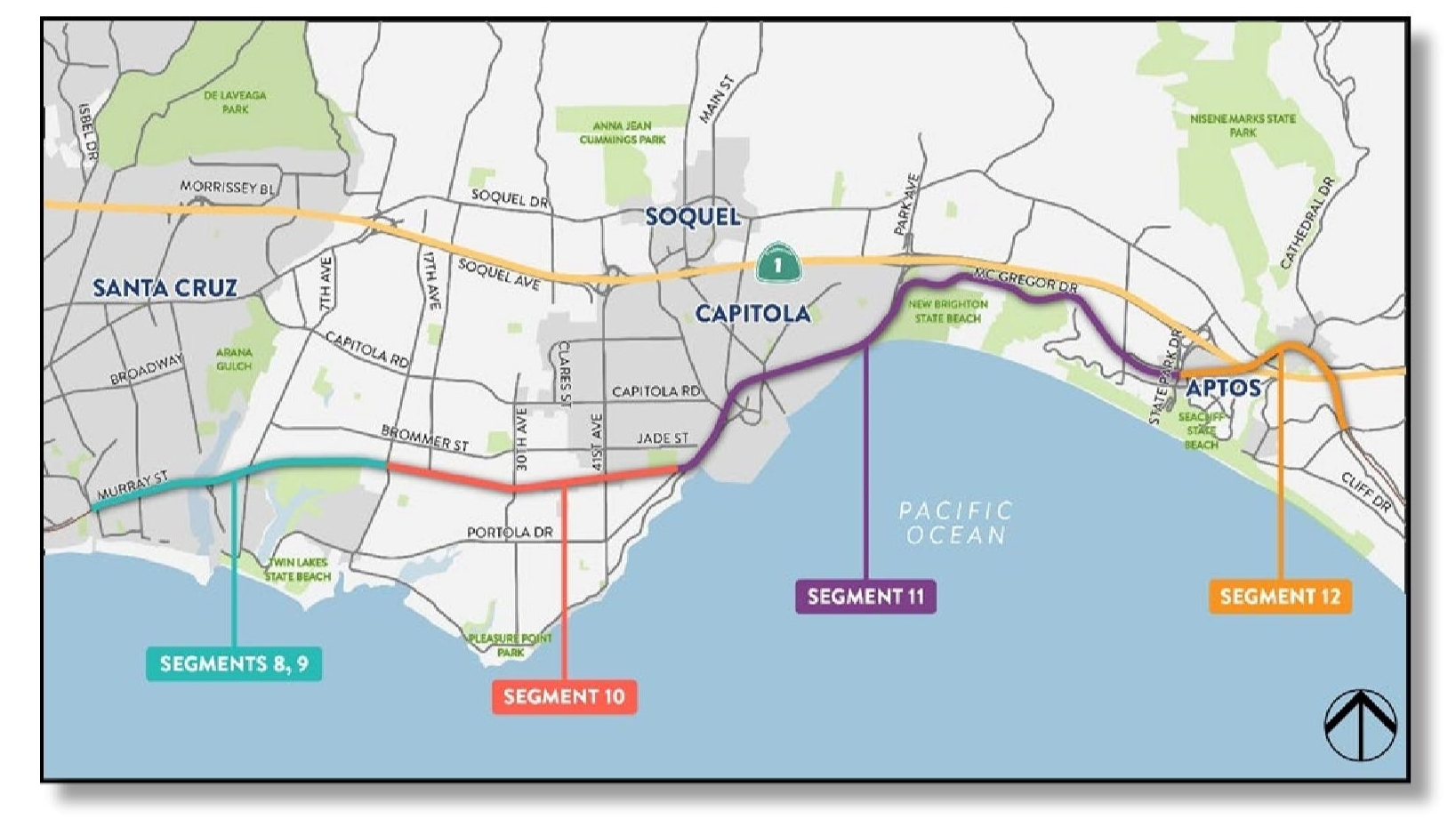
What shifted yesterday wasn’t ideology. It was gravity. Economic gravity. Engineering gravity. The unavoidable math that has haunted every conversation about Segments 9 – 11. The “Ultimate Trail” configuration never penciled out: not with the funding we have, not under the timelines imposed by state and federal grants, and not within the physical constraints of the corridor. The longer the county clung to that vision, the more paralyzed the process became.
The interim alignment breaks that paralysis. It’s not a consolation prize. It’s an acknowledgment that the corridor must serve people before it serves abstractions. It gives residents in the mobile home parks long-overdue clarity. It acknowledges showstopper issues like the Capitola trestle and Beach Street. It protects funding that would otherwise evaporate. And it permits staff to design something buildable, instead of contorting themselves around engineering impossibilities.
You can hear, in the conversations leading up to this vote, a familiar tension that runs through California public policy: the instinct to preserve optionality at all costs. Many commissioners felt compelled to restate their allegiance to a long-term rail concept, not because the economics support it, but because abandoning it outright would trigger a different regulatory and political battle. That posture keeps grant eligibility intact, but it doesn’t change the underlying facts. The interim trail is the only project aligned with real timelines, real budgets, and real public use.
What makes this moment notable is that the RTC chose to act even with that tension unresolved. The vote was not unanimous, and the opposition still insists the corridor can do everything for everyone without tradeoffs. But the commission’s majority acknowledged what planners, analysts, and—most importantly—residents have been saying for years: the status quo is untenable, and doing nothing is a decision with its own costs.
Then there was the unexpected wrinkle: Commissioner Gerry Jensen’s request for staff to assess allowing people to walk and bike across the Capitola Trestle. It is, as policy gestures go, small. But in the politics of infrastructure, symbolism frequently precedes substance. Opening the trestle, even temporarily, would signal that access and connection—not nostalgia or theoretical future systems—are the priorities guiding the corridor’s evolution. For many in the community, it’s the strongest hint yet that this board is finally seeing the corridor not as an idea to be protected, but as a civic asset meant to be used.
Hostage Released
This decision doesn’t end the county’s division over the corridor. Some commissioners will continue championing a rail future that asks voters to ignore the $4.3 billion cost (for starters), the engineering, and the twenty-year timelines attached to it. Those debates aren’t going anywhere. But they no longer hold the trail hostage.
And that is the quiet but profound shift. For the first time, the interim trail is not theoretical. It is something staff has been directed to advance quickly, something that preserves $100 million of existing grants, something that can be built within the decade rather than imagined into perpetuity.
After years of delay, yesterday’s vote doesn’t bring closure. It brings momentum. In public policy, that is often the more important gift.
Santa Cruz finally has a path forward. Now it can ride and walk.
Related articles