

From Maple Syrup to the Salad Bowl: Farmblox Brings Its Farm Automation Platform to Santa Cruz
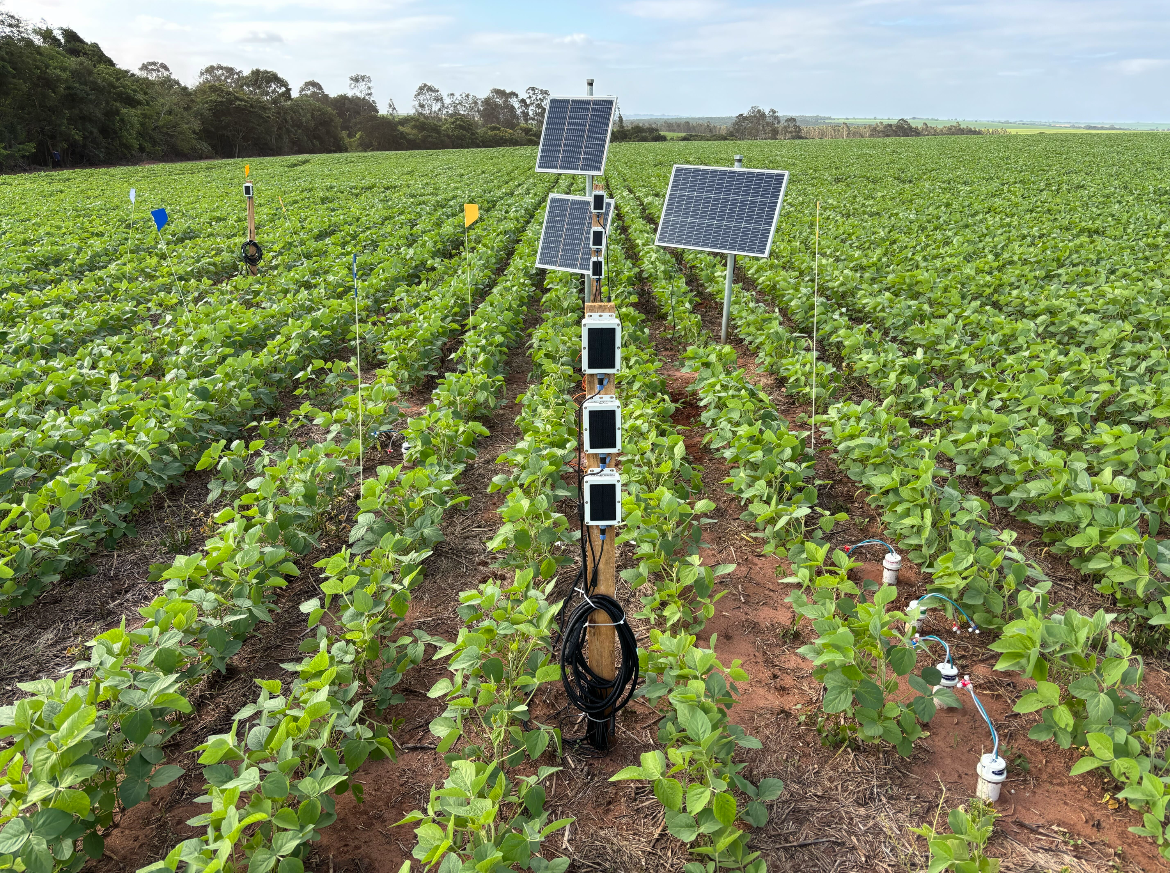
Boston-born ag tech company Farmblox has relocated its headquarters to Santa Cruz, bringing a sensor-agnostic farm automation platform to the heart of California's specialty crop country — with ambitions well beyond the farm gate.
Every great startup has an origin story
Farmblox's begins in the sugarbush. The company spun out of Worcester Polytechnic Institute in Massachusetts, where its first mission was helping maple syrup producers find leaks in miles of sap collection tubing strung through New England forests. It's a charming first chapter, but look closer and you'll see the shape of a much bigger problem: too much ground to cover, too little labor to cover it, and critical infrastructure failing silently until the repair bill arrives.
That insight carried Farmblox west. After landing work with some of California's largest growers — 10% of all irrigated acres in California — CEO and co-founder Nathan Rosenberg made a decision that says a lot about where ag tech is headed: he moved the company's headquarters not to Silicon Valley, but to Santa Cruz. "Santa Cruz gives us the best of both worlds: proximity to Silicon Valley's innovation ecosystem while remaining rooted in active farming communities," Rosenberg said of the move. The location puts the team minutes from the Watsonville–Salinas ag corridor — the Salad Bowl of the World — and still just one direct flight from their Boston roots.
The building blocks of automation
Farmblox likes to call its system the building blocks of automation for agriculture. Growers connect in-field sensors and equipment — soil moisture probes, tank level sensors, valve pressure gauges, weather stations — through a universal monitoring box into a simple app on a phone, tablet, or computer. From there, the platform detects leaks, weather risks, or equipment failures and can automatically trigger fixes, whether that's shifting an irrigation schedule or alerting a crew before a small problem becomes a lost block of trees.
The traction is real: more than 5,000 units deployed across roughly 150 customers, a team of 11, and seed funding in the bank. The company has focused on permanent specialty crops — orchards, vineyards, and the like — where the stakes of a missed leak or a failed pump are measured in years of lost growth, not just one season.
A neighborhood built for this
Farmblox's new neighbors matter, too. The company is working with Reservoir Farms, the recently launched robotics-first test farm where technology leaders, growers, and entrepreneurs collaborate on the most urgent challenges facing global agriculture. For a sensor platform, that's exactly the kind of proving ground you want next door — real crops, real conditions, and real farmers giving unvarnished feedback.
It's also a signal that the Monterey Bay region is becoming the place where agricultural technology gets built, tested, and scaled. Farmblox chose this ecosystem deliberately, and the ecosystem is better for it.
Beyond the farm
Here's where it gets interesting. Agriculture, it turns out, isn't the only industry with valuable assets scattered across remote terrain and not enough people to watch them. Farmblox is seeing market pull from a number of other essential industries — energy, water utilities, mining, and manufacturing among them — all of which need rugged, reliable monitoring equipment that works far from the nearest IT department.
You can already see the crossover in action. Farmblox's COP-R-LOCK Security System — originally built to fight theft on farms — now protects electrical conduit systems, water and irrigation district infrastructure, solar installations, wind machines, fencing, and chemical and fertilizer tanks. The system detects tampering the moment it happens, triggers on-site alarms and lights, and sends real-time alerts to your phone, all running on solar power and wireless connectivity in locations with no internet or wired power. With equipment repairs from a single theft incident running $20,000 to $300,000, the same sensor platform that watches a walnut orchard's irrigation lines turns out to be exactly what a utility substation or a remote solar array needs.
That's the pattern worth watching: every industry with distributed physical infrastructure — pumps, tanks, wires, fences, panels — has the same fundamental monitoring problem farms do. Farmblox is exploring those opportunities carefully, including potential partnerships with established players in each vertical rather than going it alone. It's telling that the team increasingly talks about "field" rather than "farm" — a quiet hint at where the platform could go next. The building blocks, after all, don't care what they're monitoring.
Farmblox will present at our New Tech Meetup on October 7th. Come meet the team that went from tapping maple trees to monitoring the essential infrastructure of the Central Coast — and beyond.
Related Articles
Reservoir Farms Opens Applications for 2026 AgTech Startup Programs in Salinas — The Salinas ag tech proving ground opens its DEVELOP and DEPLOY tracks for startups ready to test and validate their technology on real farmland.
A Big Win for Monterey Bay AgTech: Bonsai Robotics Acquires farm-ng — The acquisition of Watsonville's farm-ng validates the region's potential as a hub for cutting-edge agricultural robotics.
Santa Cruz COE Builds Student AgTech Robotics Program with Farm-NG — County students build and troubleshoot Amiga farm robots in a hands-on summer robotics challenge, growing the local ag tech talent pipeline.