Betting Big on AI: Lessons from Omni's 10x Scale-Up
How a scrappy team of ex-Lookers turned Santa Cruz roots into a $1.5B AI-powered data company, and what they learned along the way.
When a wave of Looker veterans left Google in search of their next big idea, few could have predicted just how fast that idea would take off. Omni, the business intelligence platform founded in 2022 by Colin Zima, Jamie Davidson, and Chris Merrick, has grown 10x in two years and is now valued at $1.5 billion.
The company's roots trace back to a tight-knit community of former Looker employees, many with ties to Santa Cruz, who reunited to build something new. As Santa Cruz Works reported in an earlier interview with Omni's Diego Jara Simkin, roughly 22 of the company's first 30 employees came directly from Looker. That shared history shaped Omni's mission from day one: help people see and trust their data, without the tradeoffs between speed and governance that plagued earlier BI tools.
Omni's platform lets teams work in SQL, a governed semantic layer, or a spreadsheet-style interface interchangeably, with AI chat layered on top to help less technical users ask questions directly of their data. The bet was that AI could make data more accessible without sacrificing accuracy, a balance many companies still struggle to strike.
That bet paid off. Omni's growth has been driven in large part by companies migrating off Looker in search of a more modern alternative, along with a broader shift toward AI-assisted analytics across industries from healthcare to logistics.
Scaling 10x in two years hasn't been without its speed bumps. Building a company around AI means constantly reevaluating what the technology can reliably do, where it adds real efficiency, and where it still needs guardrails. Omni's team has had to balance rapid growth with keeping data trustworthy, a tension at the heart of any AI-driven business.
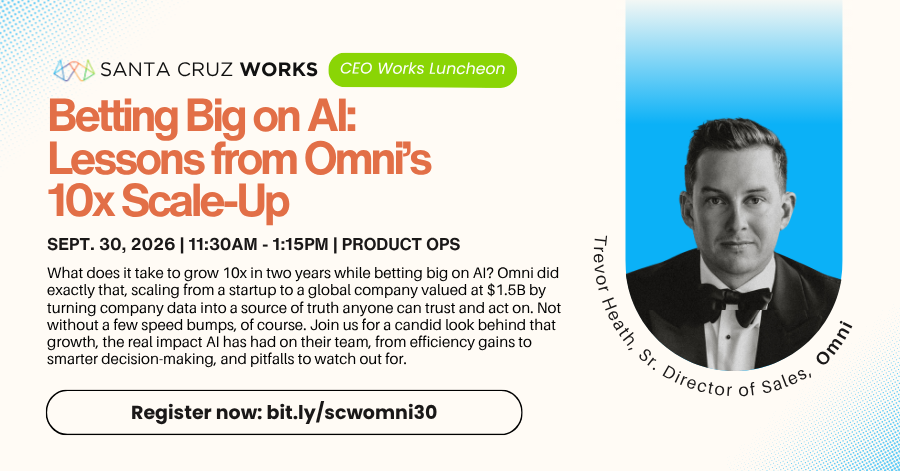
At the upcoming CEO luncheon, Omni's Senior Director of Sales, Trevor Heath, will share a candid look at what that growth actually required: the efficiency gains AI delivered, the decision-making it improved, and the pitfalls other companies should watch for as they make their own bets on AI.