UC Santa Cruz’s Colligan Clinical Diagnostic Pediatric Cancer Lab Earns Gold Standard Accreditation
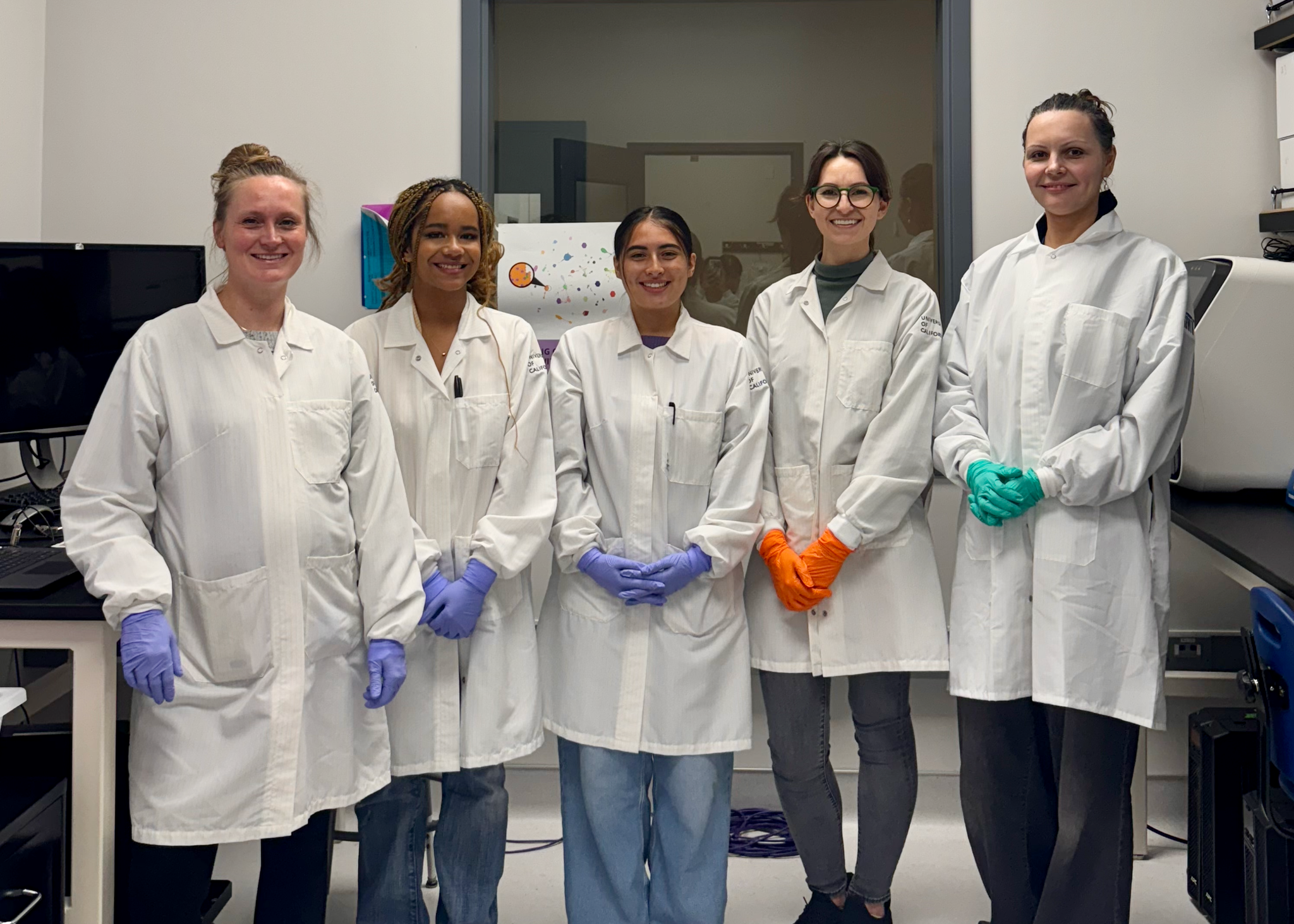
Anouk van den Bout, Jaidan Jenkins-Kiefer, Joanna Moreno, Maryke Grobler, and Professor of MCD Biology Olena Vaske in the Colligan Clinical Diagnostic Lab for pediatric cancer, which recently earned CAP accreditation.
Childhood cancer research has long received far less funding than research on adult cancers, leaving young patients, their families, and their care teams with limited data to guide treatment. The Treehouse Childhood Cancer Initiative at the UC Santa Cruz Genomics Institute was created to help change that. Now its clinical arm, the Colligan Clinical Diagnostic Laboratory, has received accreditation from the College of American Pathologists (CAP).
CAP accreditation is voluntary and known for its demanding standards. It is widely seen as the benchmark for clinical lab quality, confirming that the lab's pediatric tumor analyses meet a high bar for accuracy and patient safety.
A different way to read tumors
Standard genomic tests search a tumor's DNA for mutations. Childhood cancers typically have far fewer mutations than adult cancers, so these tests often come back without useful results. The Treehouse Comparative Analysis of RNA Expression (CARE), created by UC Santa Cruz Professor Olena Vaske and her team, examines RNA instead, revealing which genes in a tumor are active or silent.
The team then compares each patient's results against one of the world's largest public collections of pediatric gene expression data, curated by the Treehouse lab. Genes behaving unusually, called outliers, can point to drugs or clinical trials that mutation testing would miss.
Each CARE report combines RNA sequencing with an easy-to-read summary, gene fusion findings, possible treatment or trial matches, a consultation with the Treehouse team, and a research addendum on the outlier genes. The service supports both pediatric oncology and undiagnosed genetic conditions.
Expanding access
The lab currently works closely with UCSF, and the team hopes accreditation will help secure insurance coverage for the test, opening it to many more families. CAP standards exceed the required federal CLIA certification and place the lab alongside genomic testing labs at UC medical campuses.
"CAP is widely recognized as the gold standard when it comes to NGS clinical testing, and by going for it we knew we were setting the bar high," said Anouk van den Bout, the lab manager who led the accreditation effort. "Our lab serves a vulnerable population, and it was extremely important to us to work with a body that specializes in this kind of testing. It's been challenging, especially without the framework of a medical institution, but that makes the milestone extra rewarding."
When Vaske's group began, there was no dependable way to identify over- and under-expressed genes in an individual patient, so the team built its own outlier analysis. In a published study of relapsed, refractory, and rare cancers, CARE uncovered potentially meaningful clinical findings for 94% of patients.
One early case involved a young boy with a rare, relapsed cancer who had exhausted his treatment options. Using the Treehouse analysis, his doctor identified a therapy that controlled his tumor for several years.
What comes next
The team now aims to develop its outlier analysis, currently a research addendum, into a fully validated standalone clinical test by the end of 2026. Seeing the test's real impact has kept them motivated through the long process of building a clinical lab from the ground up.
"This is a dream come true and represents the culmination of so many years of dedicated effort and so many personal sacrifices by the team," said Vaske, the lab's technical supervisor. "I could not be more proud of the team than I am at this moment."
Related Articles