Nine Projects Receive Seed Funding from UCSC’s Genomics Institute
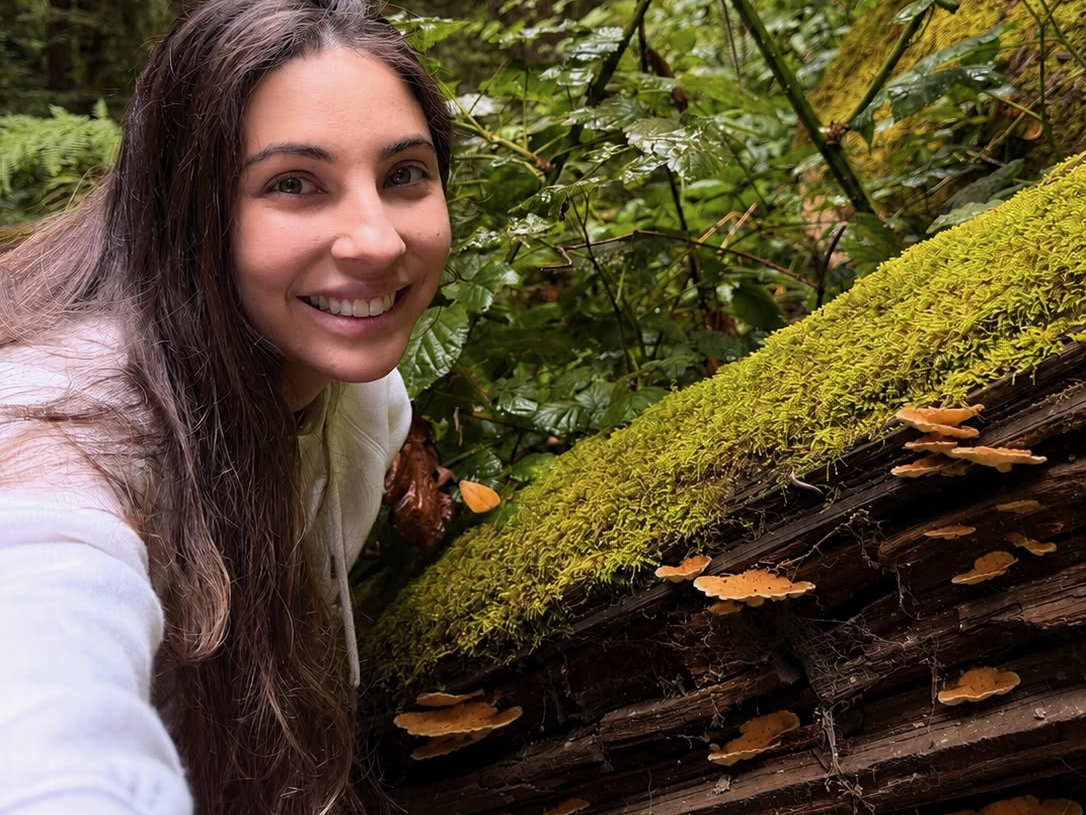
Ella Ferraz, a graduate student at UC Santa Cruz, is working on a project to understand how fungal networks communicate through electrical signals after wildfires that just received seed funding from the UC Santa Cruz Genomics Institute. Photo credit: Ella Ferraz.
The UC Santa Cruz Genomics Institute has awarded up to $50,000 each to nine bold new research projects through its annual seed funding program. This year's cohort spans an extraordinary range of science: the biology of aging, cancer, evolutionary history, pollinator health, and even the hidden electrical language of fungal networks underground.
The seed program exists to give ambitious, unproven ideas a chance to prove themselves, providing researchers the resources to build proof of concept before pursuing larger grants, donor gifts, or industry partnerships. Every project is led by co-investigators from at least two different departments, and several pair scientists and engineers who had never collaborated before.
"What excites me most about this year's cohort is the sheer imagination on display," said David Haussler, scientific director of the UC Santa Cruz Genomics Institute. "There are some dream-team collaborations represented here, applying and in some cases building the most cutting-edge AI models and sequencing methods to projects that could have a tremendous impact."
Funding comes from the Genomics Institute's Healthier World Fund, supported by a 10-year gift from an anonymous donor.
This Year's Cohort

Uncovering the genetics behind telomere length Carol Greider and Karen Miga are using the human pangenome to understand why telomeres, the protective caps on our chromosomes, vary so much in length between people and even between chromosomes in the same person. Since short telomeres are linked to aging and long ones to cancer, this work could open new paths to treating both.
Decoding fungal networks after wildfire Colleen Josephson and Mircea Teodorescu are building tools to "listen" to the electrical signals fungal networks use to communicate underground. Adapting technology originally built to read neural tissue, they aim to tell whether a forest's underground infrastructure is healing after a fire, or still broken.
Teaching AI to read the full genome Nilah Ioannidis, Karen Miga, and Benedict Paten are training AI models on newly complete, long-read genomes that older methods couldn't fully capture. Around half of rare disease patients get no answers from standard genetic testing. This project aims to change that.

Mapping disease spread in urban gardens Iris Rivera, Stacy Philpott, Rachel Meyer, and Ingrid Parker are studying how city garden layouts affect pathogen spread among bees. Their goal is to help design gardens that protect pollinators rather than accidentally become disease hotspots.
Predicting how genes become proteins Angela Brooks, Yuyin Zhou, and Nilah Ioannidis are building an AI model that predicts protein isoforms, the different versions of proteins made from a single gene. Isoforms are common but understudied, and some are known drivers of cancer and drug resistance.
Mapping the full genealogical history of humans Razvan Marinescu and Russ Corbett-Detig are using machine learning and ancestral recombination graphs to build the most complete map yet of human genetic history, one that could reshape how scientists trace disease variants and ancestry alike.
Linking immune genetics to infection risk Alexander Ioannidis and Omar Cornejo are mining population-scale biobanks for viral genomic traces, looking for links between the HLA region of the genome and susceptibility to infection. The work could eventually help personalize how doctors predict infection risk.
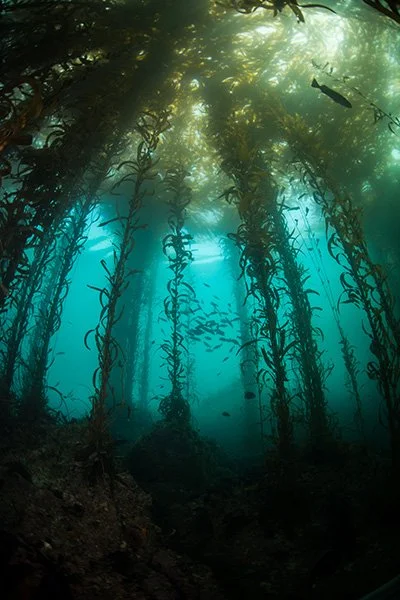
Helping kelp forests survive warmer waters Malin Pinsky, Karen Miga, and Benedict Paten are searching giant kelp genomes for the genetic changes behind heat tolerance, work that could guide restoration efforts for California's kelp forests as ocean temperatures rise.
Investigating cancer spread after viral lung infection Shaheen Sikandar, David Boyd, Jing Zhu, and Mary Goldman are building on last year's seed-funded discovery that lung infections like flu or COVID-19 leave immune cells "exhausted" and less able to fight cancer. This round will test interventions that might restore immune function and reduce metastasis.
Building the Infrastructure to Match the Ambition
Behind this expanding research portfolio is a growing need for physical lab space. UC Santa Cruz and SCWorks are currently exploring options to fund a wet lab that would support the many research projects emerging from UCSC, giving these growing programs a dedicated home to run experiments, process samples, and scale up their work.
Fueling the Next Breakthrough
Projects like these exist because of donor generosity. Philanthropic support lets the Genomics Institute back bold ideas before traditional funding catches up, giving researchers room to turn a promising concept into real impact. Last year's inaugural cohort is already producing results. If you'd like to help fund the next round of discoveries, consider making a gift to the Genomics Institute.
Related Articles
An Organoid's View of the Future of the Lab — Open Culture Science's Autoculture lab tech.
UCSC Research Drives Breakthroughs in Diagnostics and Energy-Efficient Technology — UCSC's Innovation Catalyst program.
How Open Culture Science Is Rewriting the Future of the Petri Dish — a UCSC-born startup automating cell culture.
Genomics Mixer: Unlocking the Code of Health and History — Alexander Ioannidis on genome variation and disease risk.
Genomics Mixer: Fighting Cancer with AI — Benedict Paten and Karen Miga on computational genomics.
UCSC Genomics Institute "Seed" Funds 6 Projects — last year's seed funding round, the direct predecessor to your article.