

Measure D and the Blue Wall’s Coastal Protections
This article written by Dan Haifley
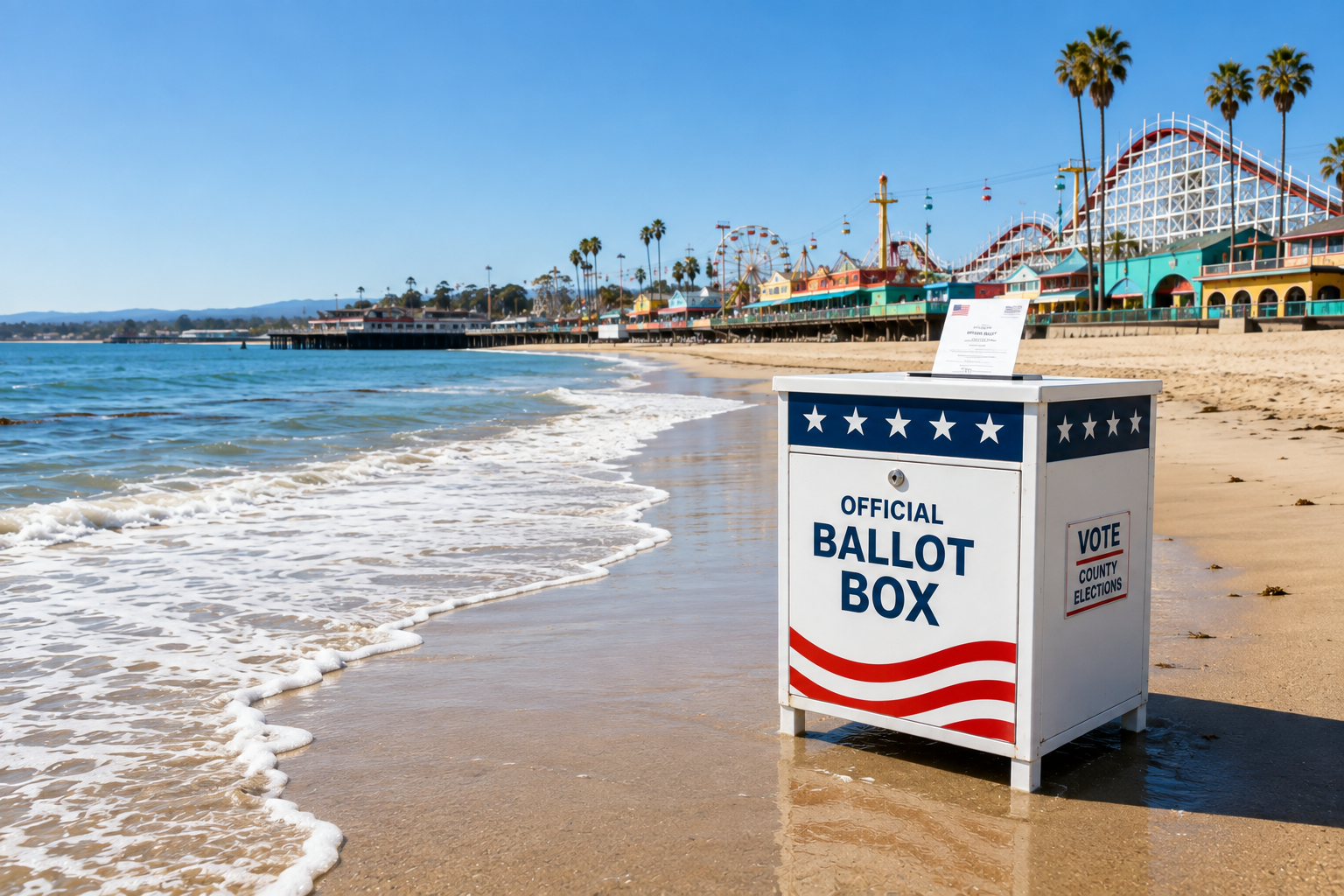
Voter control over onshore facilities for offshore oil, gas and seabed mining can be locked in by voting yes on Santa Cruz County’s Measure D, placed on the November 3 ballot by County Supervisors and Save Our Shores. The Santa Cruz City Council modified its own law to begin fortification of the Blue Wall of 27 cities and counties that it started, and Save Our Shores built, four decades ago.
Offshore oil and gas started near Santa Barbara in 1896 on rickety piers extending thirteen hundred feet from the beach, and today we host 27 platforms. The catastrophic 4 million-gallon Santa Barbara blowout in 1969 and the 143,000-gallon Refugio oil spill in 2015 nearby are just two examples of what can happen, including wildlife deaths, fouled beaches, smothered habitats, and harm to the fishing and tourism industries. Offshore development results in increased air pollution, accelerates climate change, pollutes with toxic drilling muds, and industrial support facilities can do harm on and offshore.
Oil development occurred at Waddell Creek and the Santa Cruz Mountains in the mid-1900s. In the early 1980s the area between Santa Cruz and San Francisco was a target for offshore development but today Monterey Bay National Marine Sanctuary and voter-approved onshore facility ordinances provide protection, which the administration could try to circumvent.
US companies are also being encouraged by three 2025 presidential orders to mine federal waters 3-200 miles offshore, and international waters beyond, for copper, nickel, cobalt, manganese, and rare earths for consumer electronics, health care, defense and energy even though improved technology, reuse and recycling can extend product lives. Remote-controlled vehicles deployed from a vessel would harvest polymetallic nodules or dig into the crust of the seafloor or seamount, brought to the ship through a vertical riser.
The US is targeting waters on the border of National Marine Sanctuary of American Samoa and off the Northern Mariana Islands plus Alaska and Virginia. California could be next. Mining would harm millions-years-old structures and deep-sea life and habitats by creating harmful plumes, and wastewater would be pumped back into the ocean. Helicopters pads, dewatering facilities, and harbor space for ships would be needed onshore.
Because central coast waters could be leased as early as next year, County Supervisors put Measure D on the November ballot to modify Measure A, approved by 78% of voters in 1986 requiring voter approval for onshore facilities for drilling. Measure D adds voter approval for onshore facilities for mining, which wasn’t an issue in 1986. Even if we aren’t chosen for drilling this time around, Measure D guarantees future leverage, an idea that, like four decades ago, will spread. A website will be up soon at stopthedrillsc.org and the measure’s text can be found here. Checks can be made out to Stop the Drill Santa Cruz County, PO Box 557, Santa Cruz, CA 95061. Thank you!
Related Articles
Speak Up by Aug. 22: California Fights Federal Review Threatening Its Coast — California pushed back on a federal review of its Coastal Management Program that critics say is designed to clear the way for expanded offshore drilling and pipeline restarts.
Seymour Studios: Offshore Drilling and the Blue Wall with Katie Thompson — Save Our Shores' director breaks down how the Blue Wall's local ordinances choke off the onshore infrastructure offshore drilling depends on to operate.
High School Robotics Team Wins World Championship — Local students piloted ROVs to identify ghost gear and support simulated offshore energy and subsea monitoring missions at a world robotics competition.
