

Only 18% of Homes Lost in the CZU Fire Have Been Rebuilt. Why?
Copyright: Shmuel Thaler
Santa Cruz County created a faster permit process after the disaster. For many survivors, the largest barriers appeared before a complete building application could even be submitted.
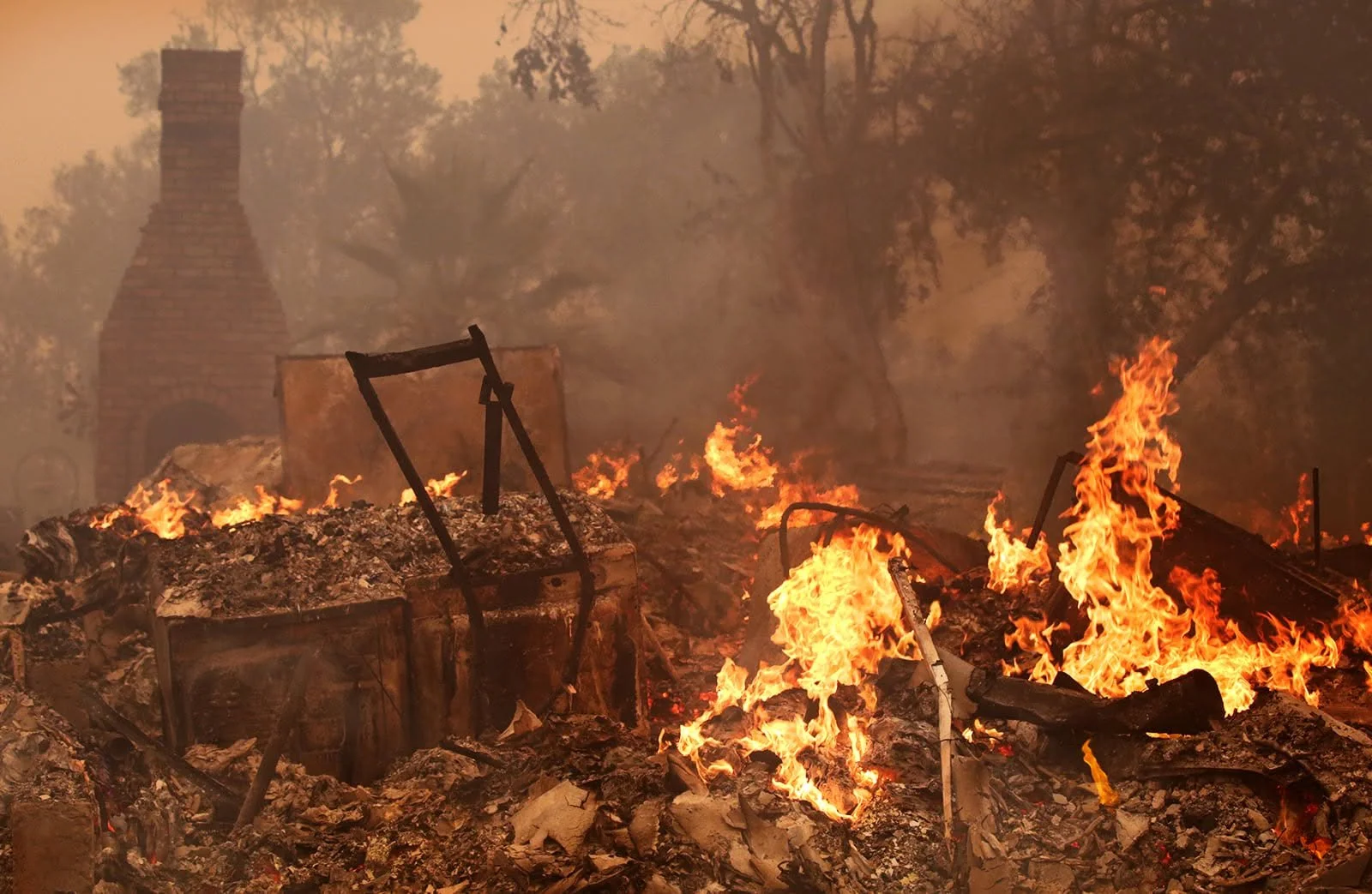
In December 2025, the San Lorenzo Valley Post reported that 160 of the 900+ homes destroyed by the CZU Lightning Complex Fire had been rebuilt.
That is about 18 percent, or fewer than one in five homes, more than five years after the fire. For many families, those years were spent in rentals, with relatives or in temporary housing while they navigated insurance disputes, permitting requirements and construction costs that continued to climb.
The loss also deepened a housing shortage that was already affecting nearly every part of life in Santa Cruz County. When workers cannot find housing they can afford, local companies, startups, schools, hospitals and small businesses face greater difficulty recruiting and retaining employees.
This is the first installment in a three-part series examining how Santa Cruz County produces housing, why projects become stalled and what the region might learn from other communities.
The first question is how a disaster that prompted such an energetic early government response resulted in so few completed homes.
The answer is not simply that the county ignored survivors or failed to issue permits quickly. Santa Cruz County created a specialized recovery system that often moved completed applications through review much faster than its normal process.
The recovery slowed because many homeowners could not reach that stage. Insurance shortfalls, construction inflation, septic requirements, geologic hazards, fire access and a fragmented review process created years of work and substantial expense before a building permit application was ready for expedited review.
The county moved quickly
Within weeks of the fire, the county connected survivors with federal assistance and opened a recovery center offering help with housing, insurance, debris removal and rebuilding.
On Sept. 15, 2020, the Board of Supervisors unanimously approved a broad set of measures intended to accelerate the recovery. According to the county’s announcement of the rebuilding plan, supervisors directed the Planning Department to add permitting resources, reduce or delay certain fees, expand temporary housing options and eliminate demolition permits for owners participating in approved debris-removal programs.
The county also promised to explore flexibility for septic upgrades, temporary utility connections and properties where the pre-fire home did not have complete permit documentation.
On Dec. 4, 2020, the county announced the opening of a dedicated Recovery Permit Center. The center offered technical assistance, pre-application guidance and a separate permitting path for fire survivors.
The county contracted with 4Leaf, a consulting company with disaster-recovery experience, to operate the center. Creating a separate operation was considered necessary because the existing Planning Department was not staffed to absorb hundreds of complicated rebuilding cases.
The 2024 Santa Cruz County Civil Grand Jury report found that Planning Department staffing had declined by approximately 30 percent over 22 years while its workload had increased by approximately 30 percent.
What worked
The specialized Recovery Permit Center appears to have been one of the most successful parts of the county’s response.
The Grand Jury found that homeowners and building professionals generally viewed the 4Leaf-operated center more favorably than the normal planning process. It credited the center with dramatically reducing the time required to review complete building applications and formally commended its work with survivors.
The county established a target of approximately 10 business days for the initial review of a complete application, followed by faster reviews of corrected plans. That represented a major improvement over a conventional permit process that could take months.
The county also introduced several policies aimed at responding to the unusual conditions of a disaster.
It created a pre-clearance system designed to identify problems involving septic systems, geology, zoning and fire access before homeowners paid for complete architectural and engineering plans.
In September 2021, the county adopted the CZU Rebuild Directive, which allowed eligible original owners rebuilding approximately in kind to proceed without some of the county’s normal geologic peer-review requirements.
The county also established the Office of Response, Recovery and Resilience and worked with nonprofit organizations providing case management, financial support and construction assistance.
These measures helped many homeowners. But they did not eliminate the larger obstacles between a burned parcel and a complete building permit application.
Where the recovery stalled
The central weakness in the recovery system was that the expedited permit review occurred relatively late in the process.
The county’s step-by-step rebuilding guidance shows that homeowners generally needed to resolve environmental health, fire access, geologic, zoning and design questions before submitting a complete building application.
They also needed architects, engineers, surveyors, soils specialists and septic professionals to produce the necessary plans and reports.
A homeowner could therefore receive a building permit review in 10 business days after spending a year or more preparing the application.
If the home’s size, bedroom count, location or septic design changed during that process, parts of the pre-clearance work might have to be repeated.
Insurance did not keep pace with rebuilding costs
For many households, the most important obstacle was money.
The Grand Jury found that many survivors were uninsured or underinsured. Insurance payments were often based on estimates developed before the pandemic-era increase in labor, materials and contractor costs.
A 2022 survey cited in the report estimated that construction costs had increased from roughly $200 to $300 per square foot before the fire to between $700 and $800 per square foot. Those figures came from a survivor survey rather than a complete review of construction contracts, but they illustrate the size of the gap many households faced.
Some homeowners spent tens of thousands of dollars on designs, surveys and technical studies before learning that they could not afford construction.
One survivor interviewed by the Grand Jury reported spending more than $1.2 million out of pocket while still waiting for a final insurance settlement.
The shortage of architects, contractors, engineers and geologists also increased costs and delays. The fire occurred during a regional construction boom and the COVID-19 pandemic, when many qualified professionals were already committed to other work.
Homeowners with experienced professional teams were generally better positioned to navigate the process. Those without the money to hire consultants sometimes submitted incomplete plans or paid for work that had to be revised.
Septic systems became a major bottleneck
Many homes in the Santa Cruz Mountains relied on septic systems installed decades earlier. Some homes had also been expanded or altered without corresponding changes to their permitted bedroom count or wastewater capacity.
When those structures burned, the county had to determine whether the existing septic system could legally support the proposed replacement.
The Grand Jury reported that septic upgrades costing approximately $30,000 to $40,000 before the fire could exceed $100,000 during the recovery. Interviewees estimated that more than half of affected homeowners needed new systems and that about one-quarter needed advanced treatment systems.
Those percentages were based on interviews and were not presented as a comprehensive countywide count. Still, the cost of septic compliance was repeatedly identified as one of the recovery’s most serious obstacles.
The Board of Supervisors disputed the Grand Jury’s conclusion that Environmental Health failed to provide timely guidance.
In its formal response, the county argued that the pre-clearance system was intended to identify septic requirements early, before homeowners invested in complete building plans. It reported that 360 of 478 Environmental Health pre-clearance applications had been approved by September 2024.
The county also said some difficult cases involved homes that had been expanded without permits or septic systems that had been modified before the fire.
That distinction mattered. A homeowner might have wanted to reconstruct the home as it physically existed, while county records recognized a smaller home with fewer legal bedrooms. Rebuilding the larger structure could require an expensive septic upgrade.
Some owners reduced the size of their plans. Others concluded that rebuilding was no longer financially possible.
Mountain geography added time and expense
Geologic review was another major source of delay.
Many destroyed homes were located on steep parcels exposed to landslides, erosion and debris-flow risks. The Grand Jury found that geologic and geotechnical work could add $20,000 to $40,000 to a project.
Some homeowners reportedly waited six months to a year for reports because qualified professionals were in short supply.
The county eventually adopted the CZU Rebuild Directive to reduce some of those requirements for eligible owners. The replacement home generally had to remain in approximately the same location and could not be more than 10 percent larger than the destroyed structure.
The directive provided meaningful relief, but it was approved more than a year after the fire, after some homeowners had already spent months pursuing reports and reviews.
Fire access created a separate challenge.
Many mountain properties were served by narrow private roads, damaged culverts, small bridges or driveways that did not meet modern emergency-access standards. Rebuilding could require wider roads, turnouts, fire-engine turnaround areas, water storage or residential sprinklers.
Those requirements addressed genuine safety concerns exposed by the CZU fire. They could also add costs extending far beyond the house itself, particularly when an access road or bridge served multiple properties.
The system remained fragmented
The Grand Jury also identified communication and coordination problems between county agencies.
Homeowners could move among Planning, Environmental Health, fire districts, geologic reviewers, engineers and outside permit-center staff. Requirements were not always communicated consistently, and some applicants reported receiving new comments during later review rounds.
The transition from the 4Leaf-operated Recovery Permit Center back to the regular county system created additional concerns about staffing, record transfers and differences in procedure.
The county rejected some of the Grand Jury’s findings, emphasizing that many delays resulted from private financing, insurance, professional shortages and conditions on individual properties.
That defense has merit. The low rebuild rate cannot be attributed solely to county government.
At the same time, the recovery shows how delays compound. A six-month wait for a technical report can push construction into another winter. That delay can extend temporary housing expenses, increase contractor bids and consume insurance benefits. A project that initially appeared financially possible can become impossible before construction begins.
An incomplete recovery, but a useful model
The county continues to provide expedited assistance for eligible CZU survivors, and there remains a substantial pipeline of unfinished homes.
In 2025, the Community Foundation Santa Cruz County reported that 155 single-family homes had been completed and another 142 dwellings had outstanding permits. The county’s 2025-26 budget separately reported 144 replacement homes under construction and 21 applications under review. Those categories may overlap and should not be added together.
Nonprofit organizations have also filled gaps left by insurance and government programs. The Community Foundation’s Fire Recovery Fund has awarded more than $7 million, while the Santa Cruz County Long Term Recovery Group has helped survivors with case management, appeals, unmet financial needs and construction support.
The county is now using its Streamline Santa Cruz County initiative to bring review departments together for appointments with owners whose projects remain stalled.
The CZU recovery did produce a workable model in the Recovery Permit Center. Its strength was not simply that it promised faster permits. It gave homeowners a specialized team that could coordinate across departments and help resolve problems before they became another rejection or another year of delay.
The remaining challenge is to finish the recovery and determine whether that coordinated approach should remain a disaster exception or become part of how Santa Cruz County handles difficult housing projects more broadly.