

Santa Cruz Can't Punish Joby by Breaking Its Own Promise
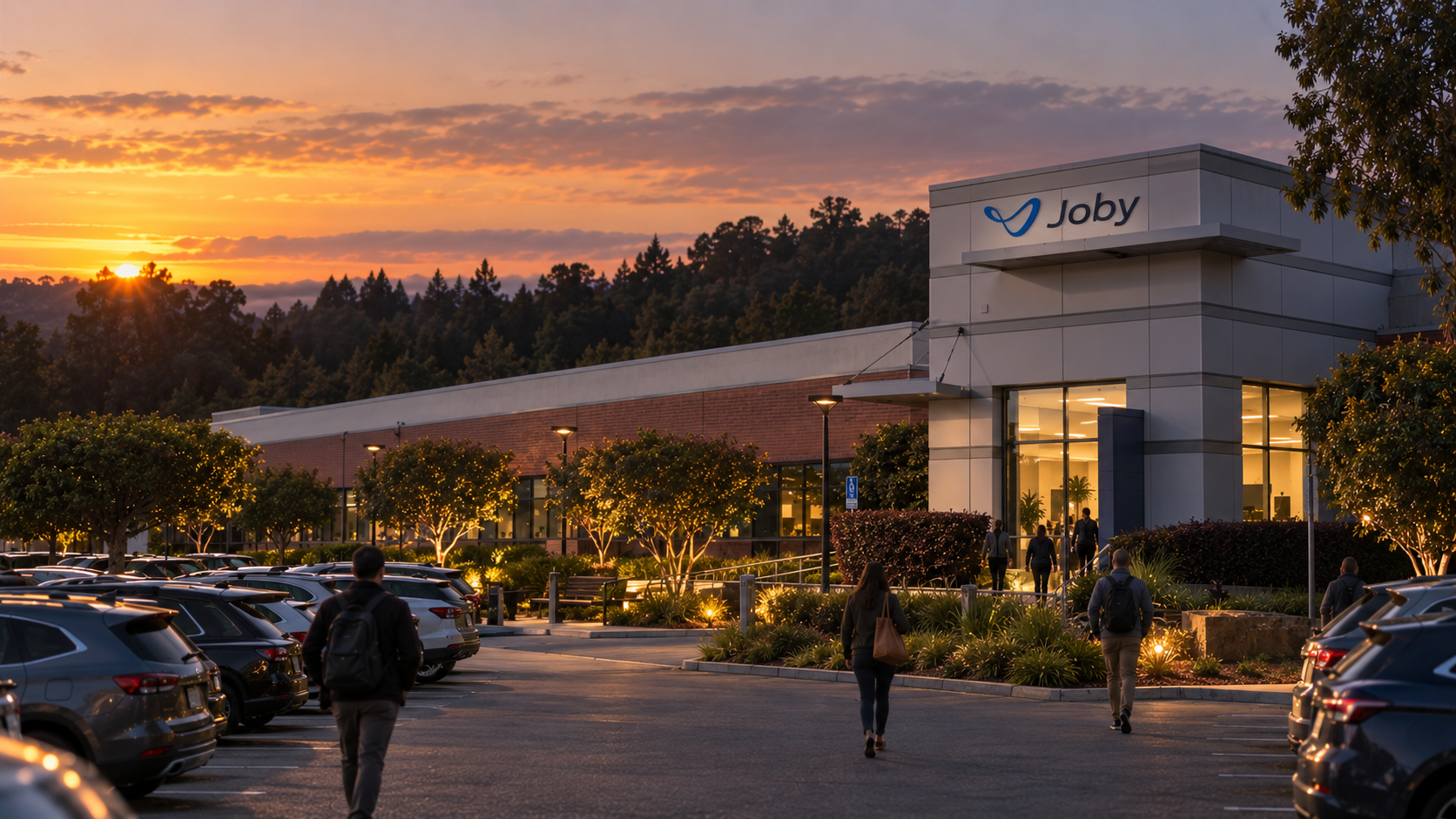
A candidate for mayor has told UCSC students the City should walk away from its agreement with Joby Aviation. Here's what the agreement actually says — and why breaking it would cost Santa Cruz, not Joby.
On February 27, 2024, the Santa Cruz City Council voted 6 to 1 to lend Joby Aviation up to $500,000 from the City's Economic Development Trust Fund. It was not a gift. It was a forgivable loan with strings attached: $2,000 for every new full-time job, capped at $200,000 a year, and forgiven annually only after the City verifies the jobs through an employment survey. Move the headquarters out of Santa Cruz before 2038, or shrink local headcount over five years, and Joby owes the City a prorated share back.
Now a candidate for mayor is telling UCSC students the City should walk away from or reconsider that agreement. The agreement has been mischaracterized. Here is what it actually does, and who built it.
Santa Cruz got this right
This wasn't a giveaway rushed through by a business-friendly council. It was a deliberately structured deal, designed by the City's Economic Development staff and approved by a council that is, by any national standard, deeply progressive. The safeguards are the tell: money released only as jobs are verified, a hard annual cap, and a clawback that reaches all the way to 2038.
The council members who voted yes weren't abandoning their values. They were acting on them: a climate technology company, hundreds of local jobs, and a commitment to stay, secured for a fraction of what other cities pay to attract far less. That is what competent, values-driven local government looks like. Santa Cruz should be proud of it, not talked out of it.
The clawback only works if the City keeps its word
The City can't recover money by breaking its own promise. The repayment clause exists because Santa Cruz held up its end. If the City tears up the agreement, whatever has been disbursed stays with Joby, the 2038 commitment disappears, and a company that could headquarter anywhere is suddenly free to go.
The City wouldn't be punishing Joby. It would be releasing it.
That's the part no one is saying at the campus events. The leverage runs one direction. Honor the deal and Santa Cruz holds a long-term anchor on high-wage jobs through 2038. Break it and Santa Cruz holds nothing.
We've watched this movie before
Netflix started here. So did Seagate. Plantronics built the very building on Encinal Street that Joby now occupies. All three grew up in Santa Cruz and left, taking payroll, tax base, and a generation of career paths with them.
Joby buying the Plantronics campus was the town getting a rare second chance: a founder raised in Bonny Doon choosing Santa Cruz over San Francisco or the Valley when he had every reason not to. The Council's agreement was the City's way of making sure this time the story ended differently. Roughly 300 people worked at that headquarters at the ribbon cutting, by the company's own estimate, and the company has been hiring since.
Tech in Santa Cruz means your neighbors
The campaign against "tech" assumes tech is somewhere else. A glass tower in Palo Alto. A billionaire in a hoodie. In Santa Cruz, it isn't.
The county's tech and startup economy supports thousands of jobs across more than 600 companies: biotech labs, agtech firms serving the Pajaro Valley, ocean-science startups, health companies, and the machine shops and suppliers that keep them running. "Tech company" here means Paystand, Unnatural Products, Heron Power, and Versa Vascular, and founders who moved back from the Bay to raise families. It means the machinists, battery engineers, and UCSC graduates who didn't have to leave town to build a career.
Reject "tech," and you're not rejecting Silicon Valley. You're rejecting the people who already live here and chose to stay.
The purity test doesn't survive contact with the county
The candidate has also proposed excluding companies that directly or indirectly support the military. Take that seriously and follow it to its end. It excludes Cisco, Amazon, Google, and Microsoft, the tools every small business in the county runs on. It excludes federally funded research at UCSC. It excludes a large share of Santa Cruz's private-sector payroll.
But the real question isn't whether Santa Cruz can keep its hands clean by pushing a company out the door. It's whether the community benefits more from being inside that company's decisions or outside them. A city that hosts Joby's headquarters has a voice. A city that drove it away has a grievance.
Students deserve better than a slogan
Every fall a new class arrives at UCSC, and every spring one leaves. They vote here, and they should. But most of them will be gone before the consequences of this decision arrive.
The story they're being told, the small city standing up to Big Tech, is satisfying. It is also a story about someone else's job. The people who stay are the ones who pay when a long-term commitment is traded for an applause line.
This isn't a fight between Santa Cruz and business. Santa Cruz's elected government already made its choice, carefully and on the record. The question in November is whether the next mayor will keep the City's word. Keeping it costs nothing. Breaking it costs the one thing this town has spent forty years trying to hold onto.
Santa Cruz Works is an 18-year-old 501(c)(6) nonprofit led by UCSC alumni. We don't endorse candidates. We do think the community deserves an accurate account of the agreements made on its behalf.
Related Articles
Elevating Santa Cruz: Joby Vision Takes Flight with City Council's Support — The full story of the Council's 6–1 vote and the terms of the $500,000 Employment Incentive Loan.
Joby Aviation Ribbon Cutting at New Santa Cruz HQ — How a Bonny Doon kid's commute became a headquarters in the old Plantronics building.
Joby Aviation Acquires Additional Facility to Expand Operations — Joby's $15 million Hollister expansion and why the Central Coast is becoming the Silicon Valley of the skies.