

Santa Cruz Faces a More Extreme Climate as Historic El Niño Takes Shape
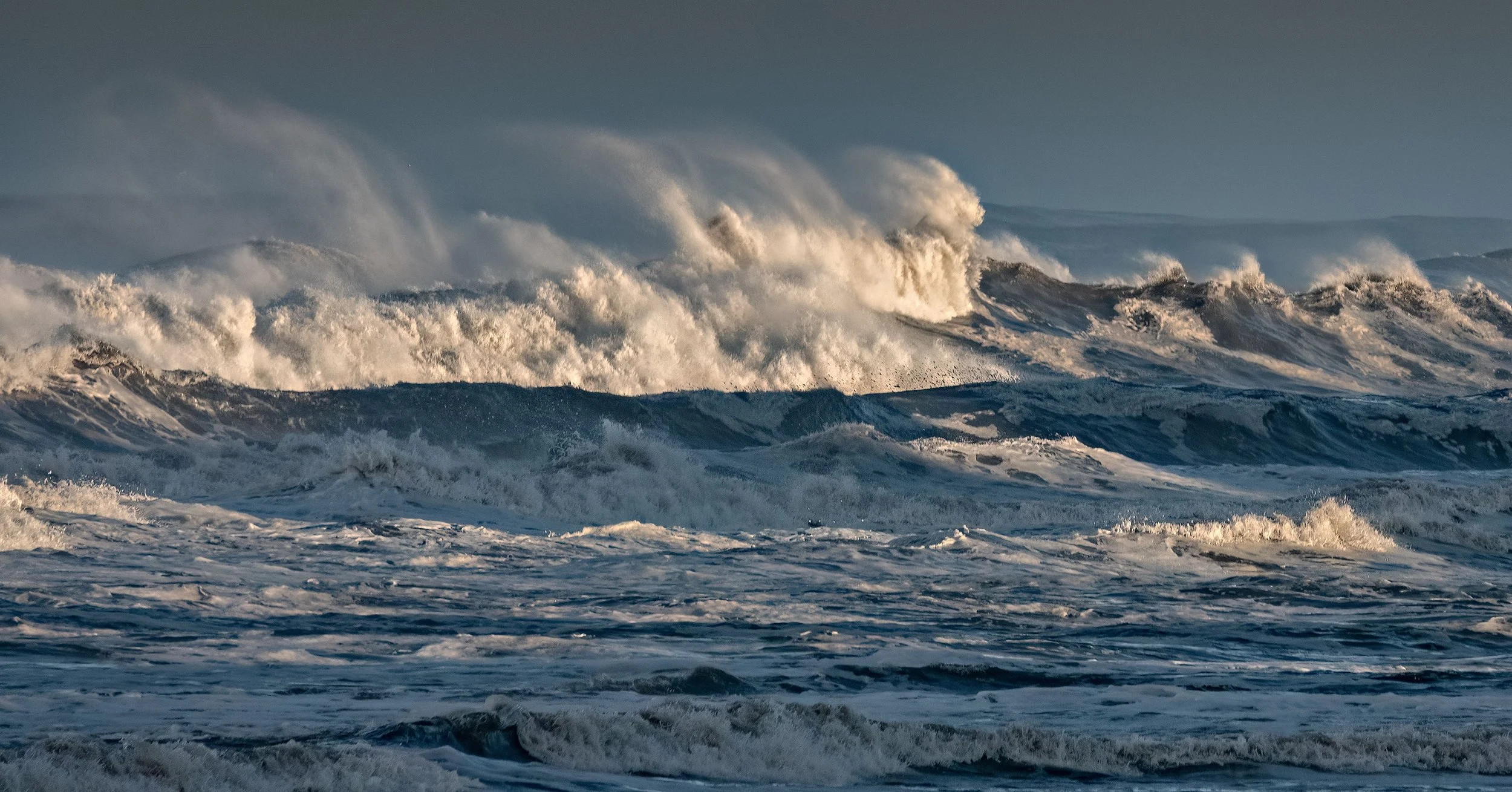
New research from UC Santa Cruz warns of stronger storms, worsening droughts and mounting coastal risks. With an unusually powerful El Niño developing in the Pacific, the region may soon face another test.
Santa Cruz reopened the end of its municipal wharf in April, more than a year after powerful waves tore away part of the structure. Nearby, Capitola completed a $10.6 million reconstruction of its own storm-damaged wharf in 2024.
Those repairs illustrate the growing cost of protecting communities along Monterey Bay. According to a new climate assessment led in part by UC Santa Cruz researchers, the Central Coast faces a future of more intense storms, longer dry periods and increasingly dangerous heat.
Released October 19 as part of California's Fifth Climate Assessment, the report projects that the region's wettest days could bring up to 30% more precipitation than historically observed. Meanwhile, rising temperatures are expected to accelerate evaporation, leaving the region more vulnerable to drought even as extreme rainfall intensifies.
Researchers describe the pattern as hydroclimate whiplash, with longer stretches of dry weather interrupted by increasingly powerful storms.
For Santa Cruz County, the consequences extend beyond coastal erosion. Agriculture faces mounting pressure from groundwater depletion and saltwater intrusion, while businesses, roads and public utilities remain exposed to flooding. The devastating 2023 Pajaro River levee breach demonstrated how those disasters can disproportionately affect farmworkers and lower-income households.
Could This Winter Bring a Super El Niño?
While the assessment examines changes unfolding over decades, forecasters are watching a more immediate development in the Pacific Ocean.
In its October 8 forecast, the National Oceanic and Atmospheric Administration reported that El Niño was strengthening rapidly, with an 83% chance of reaching historic intensity during October through December 2026, potentially exceeding the strength of previous events in records dating to 1950.
The possibility has renewed discussion of a super El Niño, an informal term for exceptionally powerful events. The World Meteorological Organization cautions that the phrase is not an official scientific classification.
NOAA's 2026–27 winter outlook favors above-average precipitation across much of California, as warmer Pacific waters influence atmospheric circulation and storm tracks.
But a powerful El Niño does not guarantee flooding in Santa Cruz. Individual storms, their timing and their paths remain difficult to predict months in advance.
The risks extend beyond rainfall. During the powerful 2015–16 El Niño, U.S. Geological Survey researchers found that winter beach erosion was 76% above normal across 29 monitored West Coast beaches, illustrating how unusually powerful ocean waves can reshape shorelines.
The Growing Cost of Protecting the Coast
The new assessment arrives alongside another significant development from UC Santa Cruz: CoSMoS Adapts, a coastal modeling project developed with the U.S. Geological Survey.
The interactive platform allows communities to examine flooding risks block by block and evaluate the potential benefits of restoring dunes, wetlands and offshore reefs.
The financial implications are substantial. Researchers estimate that restoring coastal dunes could prevent more than $40 million in annual flood damages in Santa Cruz under modeled conditions. Those figures represent potential avoided losses, not guaranteed savings.
Ruth Langridge, the UC Santa Cruz researcher who coordinated the regional assessment, also points to progress in water recycling, groundwater recharge and nature-based coastal protection. Such investments could help communities manage the increasingly unpredictable distribution of rainfall.
California now requires coastal communities to develop sea-level-rise adaptation plans by 2034. For Santa Cruz, those decisions will affect far more than beaches. They will shape infrastructure spending, business continuity, agricultural productivity and the long-term affordability of living along the coast.
The approaching winter offers a reminder of the region's immediate vulnerability. The new climate assessment makes the longer-term question more difficult to ignore: how much will Santa Cruz invest in protecting its coastline, and how much will it cost if those investments come too late?
Related Articles
Center for Coastal Climate Resilience Signs $2.75M Agreement With the U.S. Army Corps of Engineers
Using Technology and Games to Build Climate Resilient Communities
Only 18% of Homes Lost in the CZU Fire Have Been Rebuilt. Why?
NSF Awards $20M Grant to UCSC Research Hub to Use Nature to Protect Coastal Communities