

They Said Photography Wasn't Art, Either
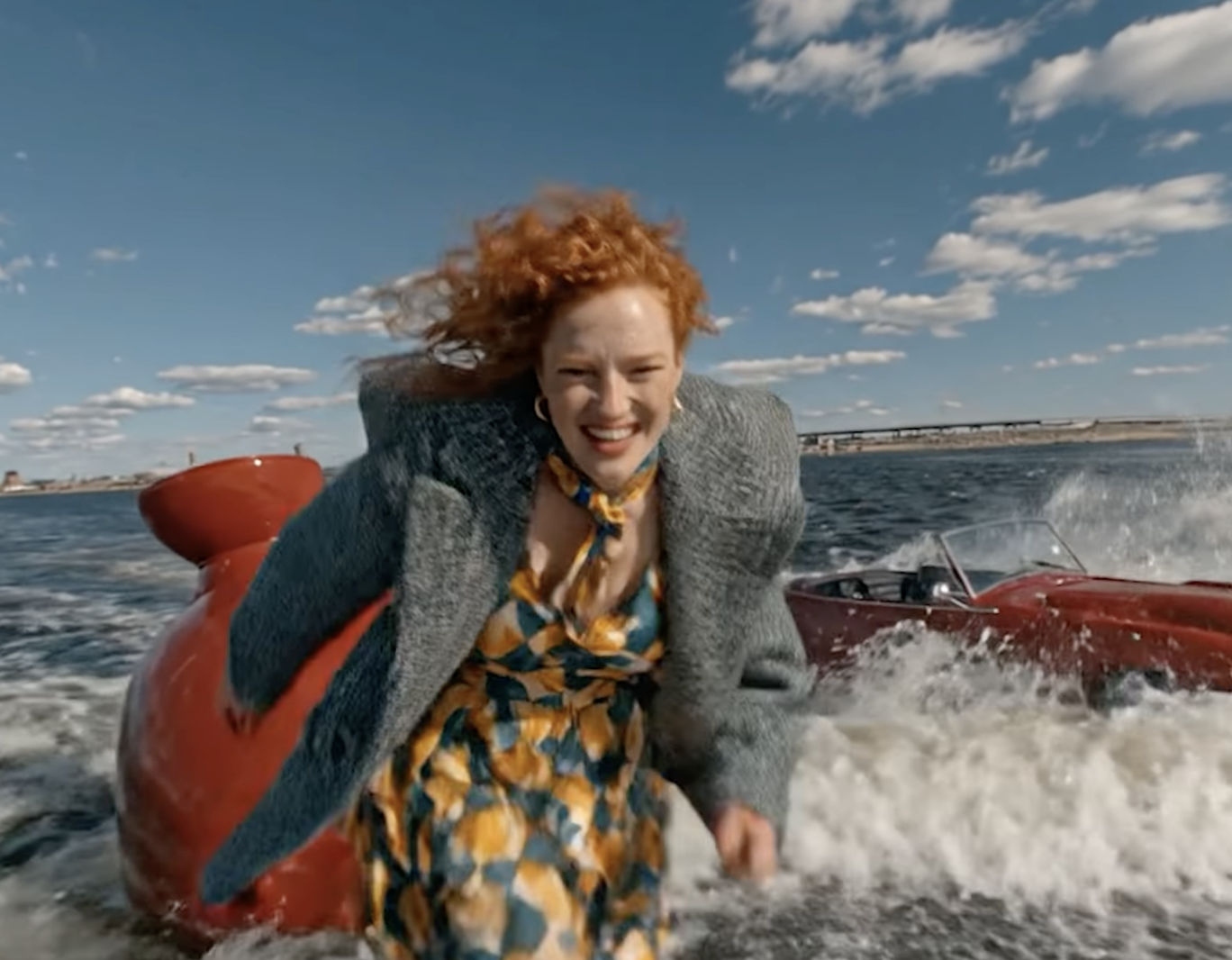
Critics once dismissed the camera as a machine for failed painters. It took more than a century to win the museum wall. AI art is on the same path — moving much faster.
In 1859, Charles Baudelaire, then the most feared art critic in Paris, reviewed the first Salon to admit photographs. He was not kind. Photography, he wrote, was the refuge of failed painters, the lazy and the untalented. It could serve art the way printing or shorthand does. It could never be art.
The logic was simple. The machine does the work. No hand, no skill, no soul.
Sound familiar?
The artist who says otherwise
Kelly Boesch spent 17 years at IMAX. Three years ago she went all-in on generative AI. Today she has millions of followers, an album on Nettwerk, a London gallery show, and a TED talk, posted this month, titled "How AI Unleashed (Not Replaced) My Creativity."
She takes on the two questions everyone asks her: How do you make it? and Is it really art? Her answer is that AI has enabled the best creative work of her life.
The tool didn't supply her taste. Two decades of craft did.
The market agrees
As I wrote in June, Scott Galloway noted on Pivot that IBM now employs more designers and creatives, as a share of its workforce, than a year ago. AI drags everything toward the middle, so originality commands a premium.
We've run this experiment before
In 1884, the question reached the U.S. Supreme Court, over a portrait of Oscar Wilde. The defense argued that a photograph is a machine's output, with no author and therefore no copyright.
The Court disagreed. The photographer posed the subject, chose the light, and composed the frame. Those choices were authorship.
Acceptance still crawled. The Museum of Modern Art didn't open a photography department until 1940, 101 years after the daguerreotype.
The last mile took pioneers
Even then it wasn't settled. Frish Brandt, President Emerita of San Francisco's Fraenkel Gallery, got her start at the Imogen Cunningham Trust. She remembers the landscape: "In the late 1970s, there was no such thing as a famous photographer." Most museums and universities had no photography department at all.
Jeffrey Fraenkel opened his gallery in 1979 with Carleton Watkins's 19th-century photographs of California. Brandt joined in 1985 and made partner in 1989. She spent nearly four decades helping move photography from curiosity to blue-chip, with Arbus, Friedlander, and Sugimoto on the walls.
Acceptance isn't automatic. Someone has to hang the work, make the argument, and build the market. For photography, that took 140 years.
The proof lives here
Want to see where that arc ends? Look around town.
Frans Lanting lives in Santa Cruz. The Dutch-born National Geographic photographer has spent decades in the field, from the Amazon to Antarctica. In 2024 he took our New Tech stage with Bay of Life. The New Yorker's verdict: "No one turns animals into art more completely than Frans Lanting."
Into art. With a machine. Baudelaire would choke.
One caution. Lanting's images carry something no model can generate: he was there. Painting survived the camera by going where it couldn't follow. Photography will survive AI the same way, as witness.
Where the analogy breaks
Cameras weren't trained on painters' canvases. Generative models were trained on artists' work, mostly without consent or payment. That fight is real, it's unresolved, and artists are right to press it.
But it's a choice, not a law of the medium.
A Banana Slug's answer
David Young (UCSC Crown '86) spent two decades in tech before becoming an artist. For his Learning Nature series, he trained a model only on his own photographs: flowers shot over a single summer on his farm in upstate New York. He used a handful of images, not millions. He calls it "little AI."
With so little data, the machine misreads and invents. Young keeps the mistakes. The ghostly results echo the Hudson River School painters who worked that same landscape. Nobody's work was taken.
And his description of the process? He selects from the machine's outputs "much like photographers would use a contact sheet."
Boesch uses big commercial tools. Young uses tiny handmade ones. In both cases the art is in the choosing.
My bet
AI art follows photography's arc, compressed. Boesch went from first prompt to a London gallery and the TED stage in three years.
But it will need its own Fraenkels and Brandts: gallerists, curators, and collectors willing to make the case before it's safe.
Nobody asks anymore whether a photograph is art. They ask whether it's a good photograph. That question is coming for AI.
The tool was never the art. The eye was.
Related Articles
AI Is Not the Death of Creativity. It Is the Death of Mediocrity. — The prequel: why AI replaces friction, not judgment, and why originality just got more valuable.
Super Tech with Frans Lanting — Lanting and Chris Eckstrom on the New Tech stage, making the case that Monterey Bay is like no other place on Earth.
David Young is Transforming the Field of AI-driven Digital Artwork — The full profile of the UCSC alum who trains small models on purpose and turns the machine's mistakes into art.
Now Is the Write Time: Lasting Letters with Frish Brandt at Tumbleweed Found — The gallerist who helped put photography on museum walls, in Santa Cruz for her Lasting Letters project.
New AI-driven Multimedia Lab Bridges Art and Technology — UCSC's A4 lab opens with an Oscar winner and a Pixar editor disagreeing about whether AI frees or stifles creativity.