


America's infrastructure is failing in ways we can no longer ignore. From nationwide technology outages to Santa Cruz's deteriorating roads, the cost of postponing maintenance is coming due.
In the span of six days, America experienced an extraordinary series of technology failures. The FAA grounded flights nationwide. JPMorgan Chase customers lost access to banking services. Apple's iCloud, Apple Pay, and App Store went dark. Microsoft, Amazon Web Services, and even the National Security Agency experienced disruptions.
No coordinated cyberattack has been established. In several cases, the culprits were software defects, equipment changes, or routine maintenance gone wrong.
The FAA incident was particularly revealing. A router replacement overwhelmed legacy telecommunications equipment, disrupting 17 of the nation's 22 en route air traffic control centers. One seemingly ordinary change exposed vulnerabilities across a critical national system.
We spend billions developing technologies that promise to transform our future. Yet the systems supporting our present are increasingly complex, vulnerable, and difficult to maintain.
Innovation gets the headlines. Maintenance gets the leftovers.
Bringing It Home
Santa Cruz County offers a troubling parallel.
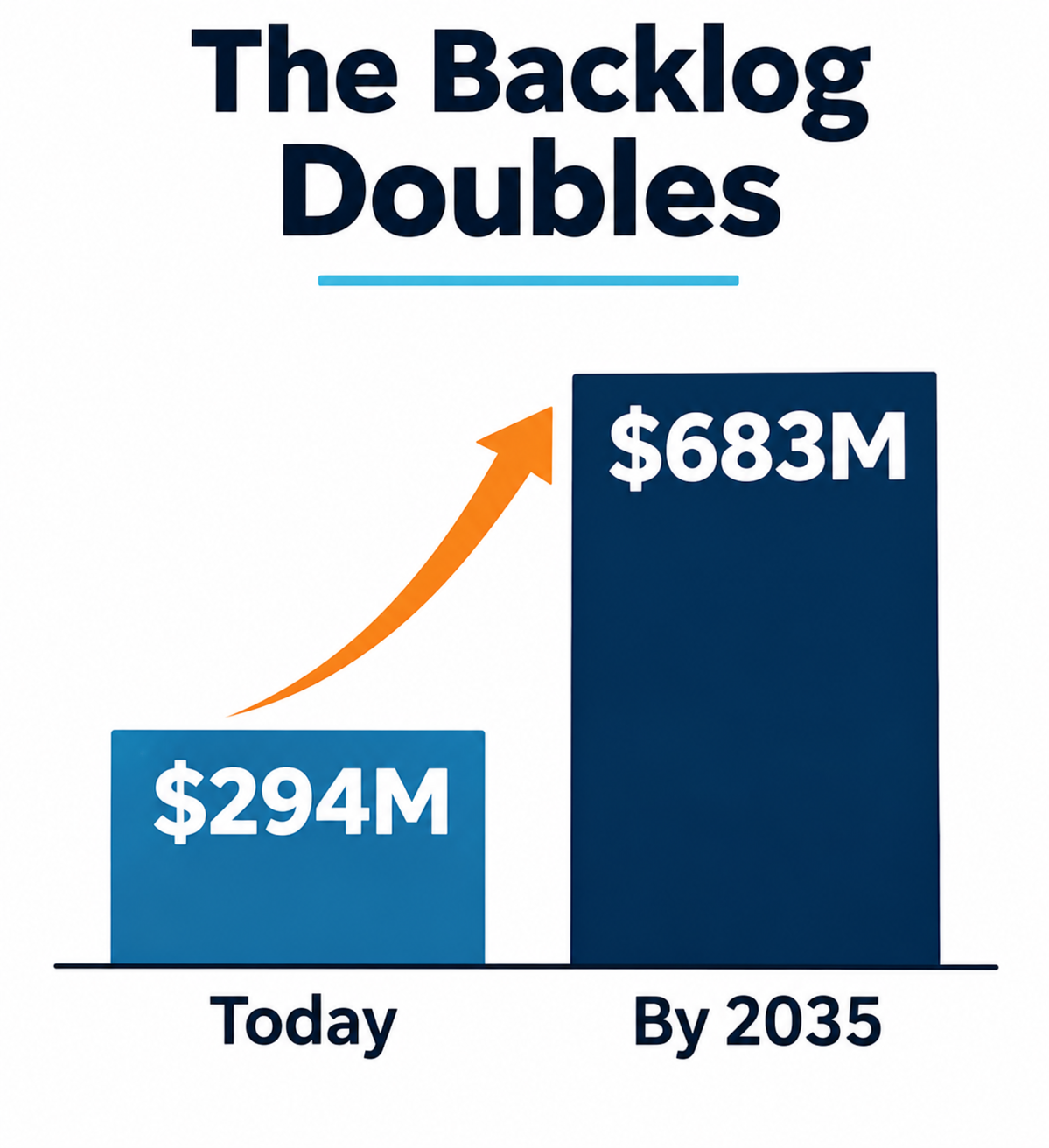
Our county maintains nearly 600 miles of roads. Its 2025 pavement assessment rated their condition at 57 out of 100, barely within the "fair" category. The same report estimated $294 million would be needed over ten years simply to maintain that condition. Existing pavement funding of $55 million over that period would let the average rating fall from 57 to 36 within a decade.
Meanwhile, the County's 2025–26 budget put annual road operations at approximately $11 million against roughly $9 million in supporting revenue.
And winter is coming.
NOAA says a strong-to-very-strong El Niño is likely through early 2027. That doesn't guarantee destructive storms in Santa Cruz, but it raises the stakes for a community already familiar with washed-out roads, flooding, landslides, and damaged culverts.
The County reports that hundreds of roadway culverts are in poor condition. Only $250,000 a year is allocated for smaller culvert replacements. The County's own estimate is that $1 million a year is needed just to start a reliable rehabilitation program.
We know where many of the vulnerabilities are. We also know that repairing infrastructure after a disaster can cost considerably more than preventing the failure.
The Opportunity Cost
Which brings us to another uncomfortable Santa Cruz conversation: transportation priorities.
The RTC's Zero Emission Passenger Rail and Trail concept carries a $4.28 billion capital cost, plus $34 million to $41 million a year to operate. It projects 4,200 to 5,400 weekday boardings. No funding source has been identified.
Meanwhile, the County's road maintenance backlog stands at $294 million and is projected to reach $683 million by 2035. That bill is real, and it grows every year we wait.
Rail grant money can't be moved to potholes. But staff time, attention, and political will can be. The RTC and the Board of Supervisors should spend them on infrastructure that is necessary and attainable: road and culvert repairs, trail segments we can actually build, and better bus service.
For working families, a washed-out road or missed bus can mean lost wages or a lost job. They can't wait for a $4 billion maybe.
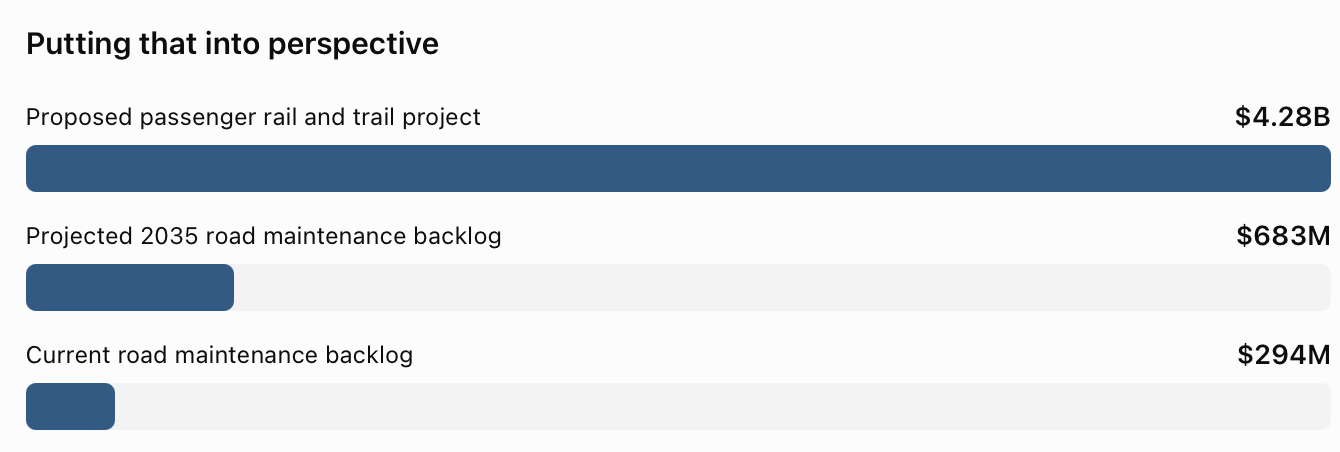
The proposed project would cost approximately 14.6 times the current road maintenance backlog.
The Infrastructure We Already Own
Perhaps our City and County governments should publish annual infrastructure scorecards: actual maintenance expenditures, deferred-maintenance liabilities, road conditions, storm vulnerabilities, and progress toward reducing the backlog.
And perhaps every major new infrastructure proposal should demonstrate how its benefits compare with maintaining and improving what already exists.
The national outages remind us that sophisticated systems can fail spectacularly when vulnerabilities accumulate. Santa Cruz's roads remind us that the same principle applies to asphalt, bridges, and drainage.
We celebrate the next big thing. Perhaps it's time we paid more attention to keeping the last big thing working.
Sources: FAA report on the November 13 ground stop, NOAA's November El Niño outlook, Santa Cruz County's 2025 pavement assessment, County road operations and culvert funding figures, RTC rail-and-trail cost and ridership estimates, RTC's $3.45 million state grant, and RTC 2023 grant program awards.
Related Articles
The Call Is Coming From Inside the Server Room — Why routine maintenance, not hackers, took down the FAA, Chase, Apple, and the NSA in a single week.
Murray Street Bridge Emergency — How a three-year retrofit closure hit Seabright and harbor businesses, and the community push to open the rail bridge.
MBEP's 2026 State of the Region: What's Next for the Monterey Bay — A look at the regional economy, housing, and policy priorities shaping the Monterey Bay.
Most Companies Don't Die From Competition. They Die From Comfort. — Complacency, not rivals, is the real threat, whether it's a company or a community.