UCSC Professor’s Partnership with Oxford Nanopore Technologies Aims to Advance Early Cancer Detection
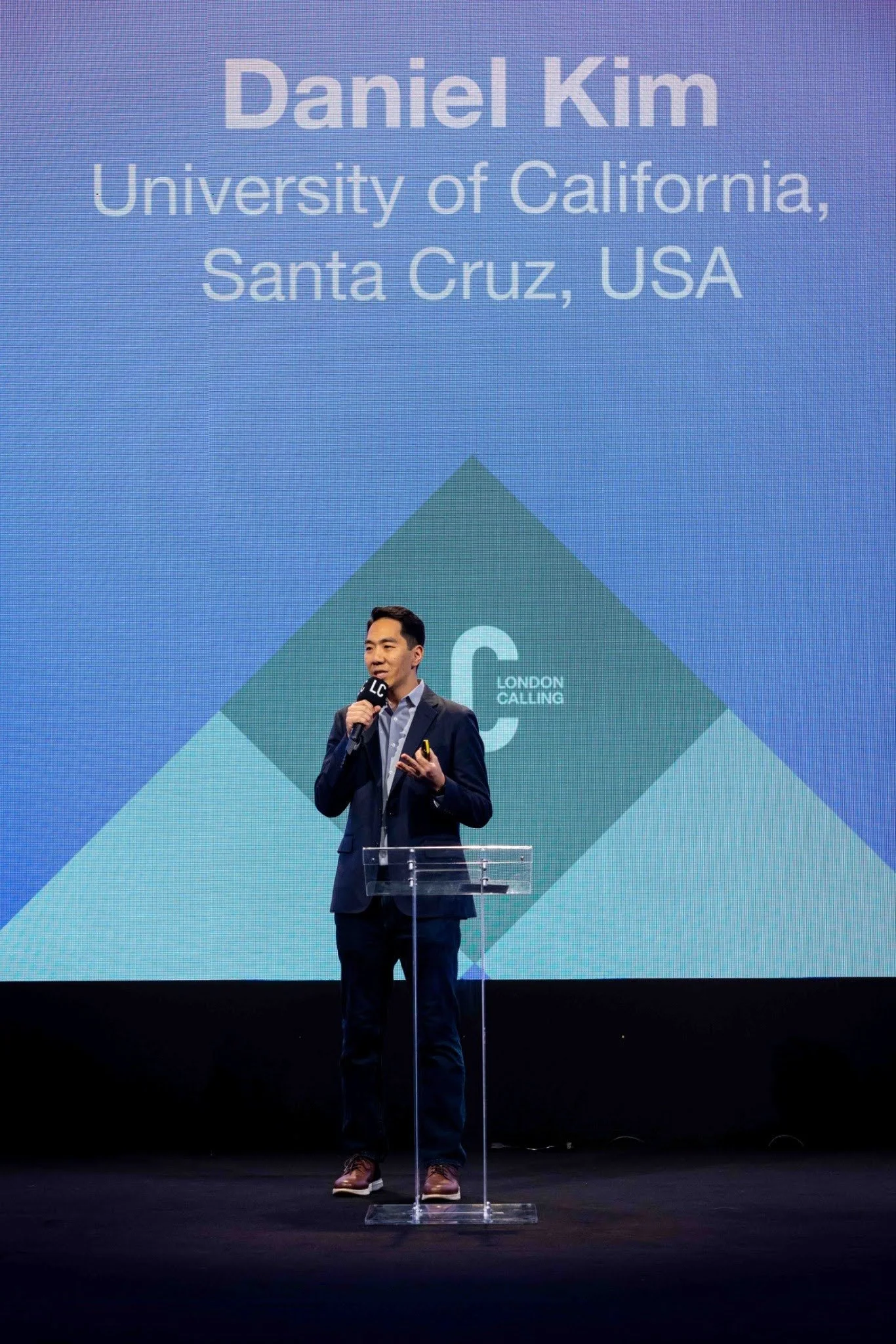
Esophageal cancer kills quietly. By the time most people find out they have it, the odds are already stacked against them. Only about 1 in 5 patients survive five years. But a UC Santa Cruz scientist is working to flip that script entirely. Professor Daniel Kim isn't just trying to catch cancer earlier. He's trying to catch it before it's even cancer.
When cells communicate, they send out tiny packages called extracellular vesicles, carrying non-coding RNA as cargo. These packages circulate in the bloodstream, and Kim's team realized they could be read as early warning signals. Using nanopore sequencing, his lab profiles the full transcriptome of this cell-free RNA, and has already identified thousands of biomarkers never documented before. A machine learning model then learns to recognize the patterns tied to disease. In a recent preprint study (not yet peer reviewed) with collaborators Karen Miga at UC Santa Cruz and Rebecca Fitzgerald at the University of Cambridge, the team demonstrated that early-stage esophageal cancer and a precancerous condition called Barrett's esophagus can be detected from blood alone.
Kim has now partnered with Oxford Nanopore Technologies to scale the work: expanding trials, refining the technology, and looking beyond the esophagus to other cancers. The same RNA irregularities that flag disease early could also point to dysregulated pathways worth targeting with drugs. That could open a second front in what Kim calls cancer interception.
“Our long-term goal is not only to detect cancer at the earliest stages, but also to detect these precancerous conditions at very early stages before they become cancerous, so that hopefully we can understand how to prevent cancer in the future,” Kim said. “We are also working on establishing strategic partnerships with global pharmaceutical companies to discover novel drug targets for cancer interception—preventing progression from precancerous conditions to cancer.”
It's fitting that this work is happening at UC Santa Cruz, where nanopore sequencing itself was invented decades ago by professors emeriti David Deamer and Mark Akeson. Kim's research isn't just built on that legacy — it's aimed at a future where cancer isn't something we treat, but something we stop before it starts.
Related Content