

Santa Cruz County has only permitted 17% of planned homes. Why?
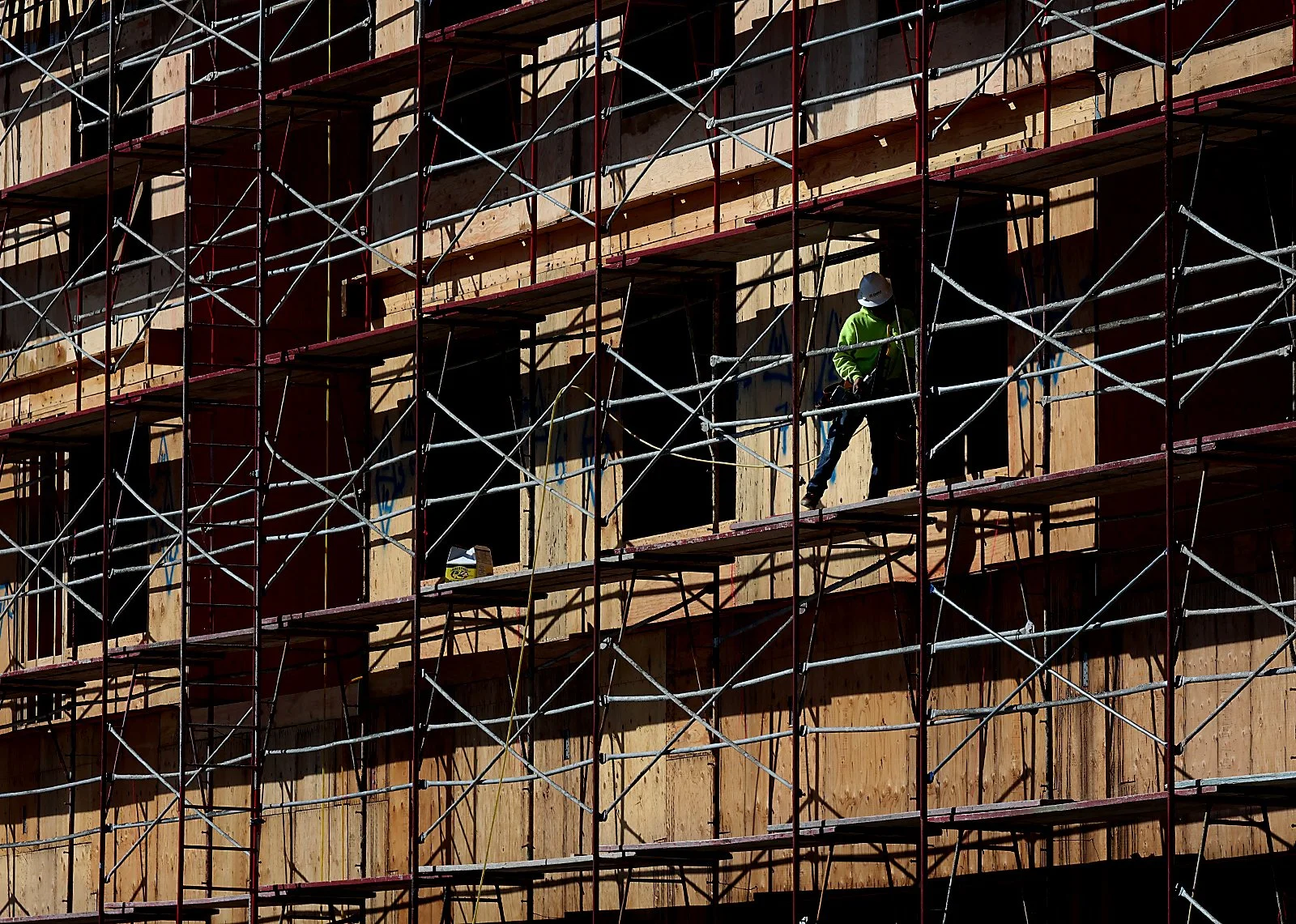
Image Courtesy of Shmuel Thaler
The county has identified enough land to meet its state housing target. Turning those plans into actual homes has proved considerably harder.
This is the second installment in a three-part Santa Cruz Works housing series. Part 1 examined why only 18 percent of the homes destroyed in the CZU Fire had been rebuilt more than five years later. Part two looks at the broader housing system and asks a similar question: Why does Santa Cruz County continue to struggle to turn planned housing into completed homes?
Santa Cruz County is more than a quarter of the way through an eight-year state housing cycle that requires the unincorporated county to accommodate 4,634 new homes.
By the end of 2025, it had issued building permits for 279.
That is just 6 percent of the target. To be roughly on pace at this point in the cycle, the county would have needed to permit more than 1,100 homes, according to a 2026 Santa Cruz County Civil Grand Jury investigation.
The slow pace is not new. The Grand Jury found that in 18 of the past 19 years, unincorporated Santa Cruz County permitted fewer than 150 homes annually. Meeting the current target would require something closer to 600 per year.
For a county where housing costs already affect the ability of companies, schools, hospitals and small businesses to attract and retain workers, the difference between planning for housing and actually building it matters.
These figures refer specifically to unincorporated Santa Cruz County, which includes communities such as Live Oak, Aptos and Soquel. The City of Santa Cruz operates its own planning department and has a separate state housing allocation.
The housing being proposed
One of the most revealing sets of numbers comes from the county's 2025 General Plan and Housing Element Annual Progress Report.
During 2025:
Developers proposed 733 housing units in 22 discretionary applications.
The county entitled 471 units across 19 projects.
Building permits were issued for 54 new units.
96 units were recorded as completed.
Those categories do not represent one group of projects moving through each stage during the same calendar year. A project entitled in 2025, for example, may not seek a building permit until 2026 or later. But the numbers illustrate the larger problem. There is considerably more housing entering the planning pipeline than emerging from it ready for construction.
The difference is especially pronounced for larger developments.
Of the 471 units entitled in 2025, 437 were in buildings containing five or more units. The county reported no building permits for units in that category during the year. By contrast, 42 of the 54 units that did receive building permits were accessory dwelling units. Of the 96 completed units, 67 were ADUs.
In other words, Santa Cruz County is approving larger housing proposals. The difficult step is getting those projects from land-use approval to a building permit, financing and construction.
A permit is not one review
There is no single "housing permit" that moves through one department.
A project can require review from Planning, Building, Public Works, Environmental Health, zoning staff and a fire agency. Depending on the site, applicants may also need approvals involving stormwater, sanitation, driveways, grading, soils, biological resources or septic systems.
The 2025 Santa Cruz County Civil Grand Jury investigation into permitting concluded that the process had become detailed enough that homeowners often need to hire professionals simply to prepare an acceptable submission. It also found that applicants struggled to track projects from beginning to end because the county's software did not fully follow an application across the entire process.
Environmental Health was singled out as a particular source of delay.
The Grand Jury said chronic understaffing in the department was frequently cited during interviews. That matters because much of unincorporated Santa Cruz County relies on septic systems rather than municipal sewer service. New homes, additions and some redevelopment projects can require Environmental Health to determine whether an existing system is adequate or whether a new one is needed.
The Grand Jury also heard complaints about requirements appearing during later stages of review, sometimes requiring applicants to hire additional experts, revise plans or repeat work.
Each additional round can carry a financial cost. A developer waiting on approvals is still paying architects, engineers, consultants, financing costs and, in many cases, carrying costs on the land.
The Grand Jury's conclusion was direct: excessive delays increase costs, and the complexity of the process itself can increase the amount applicants must spend before receiving permission to build.
The county says the problem is more complicated
County officials dispute the idea that government review is the primary cause of permitting delays.
In its formal response to the Grand Jury, the Board of Supervisors said the largest causes of delay are incomplete or insufficient applications, the amount of time applicants take to respond to correction comments and overall departmental workload.
The county went further, calling incomplete submissions the single largest source of delays and added costs.
A county planner cannot approve a project without the required engineering, environmental or construction information. If an applicant takes months to respond to corrections, those months appear in the project's overall timeline even though county staff are not actively reviewing it.
The county also argues that many of the requirements affecting housing projects come from state and federal law, not from local officials. Housing projects must comply with the California Building Code, state and federal environmental laws and, in much of the county, the Local Coastal Program. Some projects require reports prepared by licensed engineers, geologists or other professionals regardless of how quickly county employees review them.
This creates an even more complicated question:
If incomplete applications are the largest cause of delays, why are so many applications incomplete?
Part of the answer may be applicant error or slow responses. Part may also be a system complicated enough that determining exactly what constitutes a complete application requires significant professional help.
Both can be true.
Permitting is not the only reason projects fail to get built
Even a perfectly efficient planning department cannot make an unprofitable housing project financially viable.
That is the central argument of the 2026 Grand Jury housing investigation.
The county has successfully rezoned enough property to demonstrate to the state that 4,634 additional homes could theoretically be accommodated. But zoning capacity does not mean a developer can afford to build on every site.
Construction costs and interest rates influence whether a project works financially. So do expected rents or sales prices. Local government also controls important parts of that equation, including allowable density, height and development standards, impact fees and the time and expense required to secure permits.
The Grand Jury concluded that Santa Cruz County has not conducted a comprehensive financial feasibility analysis examining those factors together. Without that analysis, it is difficult to determine which local requirements are actually preventing otherwise viable housing from being constructed.
There is an unusual admission buried in the county's own Housing Element.
Although the state requires the county to accommodate 4,634 homes, the Housing Element's "quantified objectives" estimate that, even using its best efforts, only 2,541 units will actually be constructed during the cycle.
The 2026 Grand Jury concluded that, as of June, the county was not on pace even for that lower number.
That gets to the heart of the problem. Santa Cruz has demonstrated that enough housing can exist on paper. It has not yet demonstrated that enough of those projects can move through approval, secure financing and get built.
There are signs the pipeline is changing
The latest numbers are not entirely negative.
The 733 homes proposed in 2025 represented a substantial increase from 461 units proposed in 2024. More significantly, the county entitled 471 units during 2025, compared with just 38 units the previous year. Three applications from 2025 remained in process and were expected to receive decisions in 2026.
The county has also started changing the permit system itself.
In June 2025, supervisors approved Streamline Santa Cruz County, a 14-project work plan intended to make permitting faster, more predictable and easier to navigate. The effort followed an independent assessment of the county's development review process.
A month later, the county began requiring most residential applicants to use the Camino Online Permit Guide, which generates a project-specific checklist before an application is submitted. The idea is straightforward: if incomplete applications are causing delays, give applicants a clearer understanding of what they need before the review clock starts.
The county is beginning to report measurable improvement.
Its first-quarter 2026 permit metrics show median county review time for issued building permits falling from 79 days in the second quarter of 2025 to 66 days in the first quarter of 2026. Median time that applications spent back with clients for corrections was 46 days. The figures cover building permits broadly, not just new housing, but they provide an early benchmark for whether the reforms are working.
The larger test will be whether faster reviews translate into homes.
Santa Cruz County now has hundreds of units moving through its planning pipeline. The question is how many of those projects reach a building permit, begin construction and eventually become places where people can live.
The county has started to improve the machinery. It is also collecting better data than it did several years ago. The next step is determining which regulations, costs and review requirements have the greatest effect on whether housing can actually be built, then measuring whether changes to those policies produce results.
Part 3 of this series will look outside Santa Cruz County. We will compare the local system with communities facing similar pressures that have been more successful at turning housing plans into completed homes, and examine which of their approaches could realistically work here.