

CruzHacks 2026
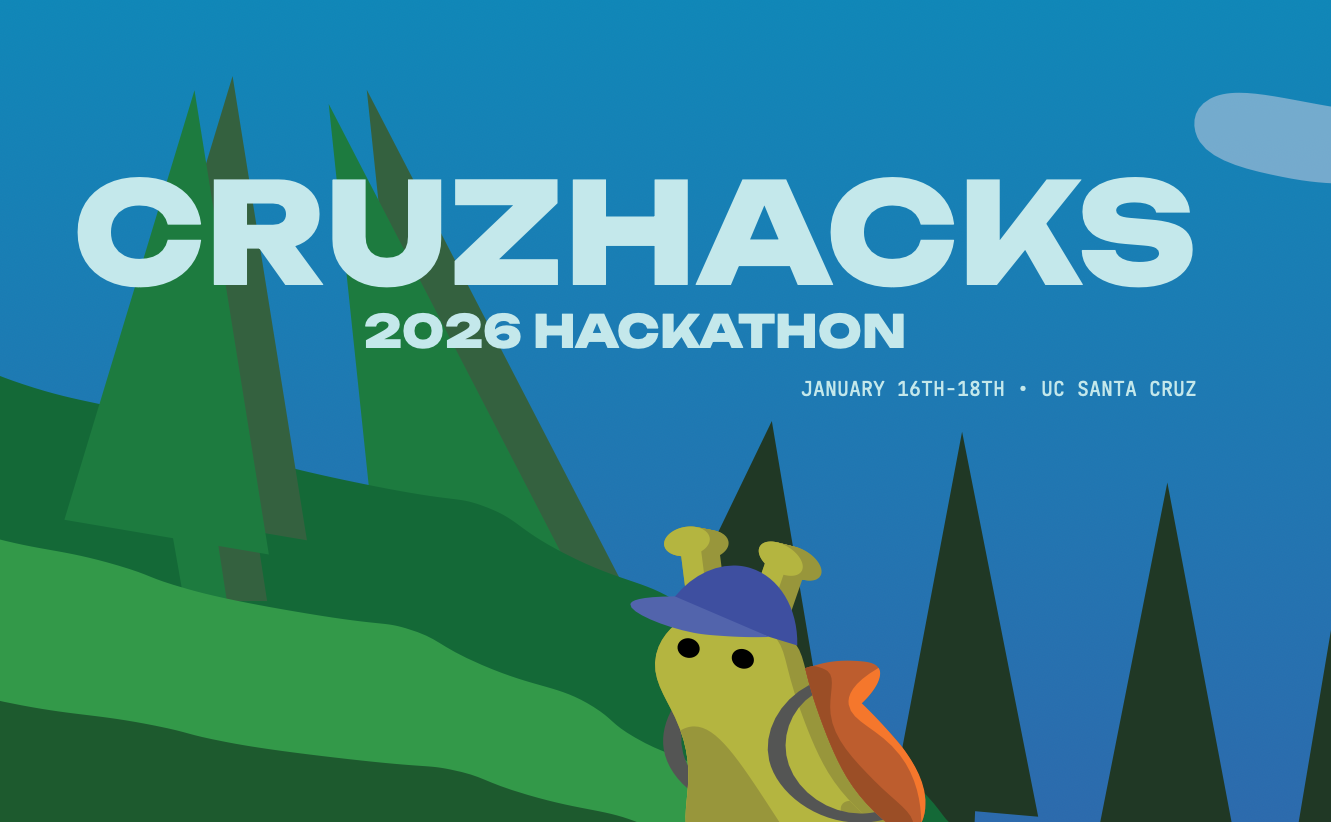
CruzHacks 2026 is in its 11th year, which is the point in an event’s life cycle where it stops being “a fun student thing” and becomes more like a migrating species. Every year, the herd returns. The veterans show up with muscle memory and caffeine tolerance. The first-timers show up with optimism and a backpack containing exactly one (1) charging cable for seventeen (17) devices. Nature is healing.
If you zoom out, a three-day, two-night hackathon is basically a controlled experiment in what happens when you lock smart people in a building, feed them Red Bull, and tell them they’re allowed to build something that might matter. The result is a weirdly wholesome blend of chaos and purpose: part invention lab, part summer camp, part “who needs sleep when you have GitHub?”
CruzHacks was co-founded by Mark Adams, Doug Erickson, and Brent Haddad, and from the beginning it’s been aimed at “tech for social good,” which is hackathon-speak for: “Please don’t build another app that helps people order boba faster.”
The heart of CruzHacks is its tracks, which act like big thematic magnets pulling projects into the orbit of real-world problems. Recent CruzHacks tracks have centered on Sustainability, Health, Justice, and Education (and in some years, Accessibility gets called out explicitly because, shockingly, making things usable for more humans is a good idea).
These tracks matter because they do something subtle but powerful: they shrink “the world’s problems” into “a project scope that can survive a weekend.” You cannot “solve healthcare” in 48-72 hours, but you can prototype a tool that removes friction for patients or clinicians. You cannot “fix education,” but you can build something that makes learning less like wandering a maze and more like following a trail of breadcrumbs that were placed by someone who likes you. That is the whole trick.
And CruzHacks has receipts.
In 2024, Santa Cruz Works highlighted how the main prize tracks revolved around social-good themes (justice, sustainability, education, healthcare), plus secondary categories that rewarded things like first-time hackers, strong UI/UX, AI use, and projects that benefited the UCSC community. That’s a pretty good snapshot of the CruzHacks philosophy: impact, inclusivity, and “also please make it not ugly.”
Then 2025 was a milestone year because the event scaled up and moved into the Santa Cruz Civic Auditorium, which is like taking your indie band from a garage to a real stage with real lights and real consequences. It was exciting and, in the finest tradition of ambitious events everywhere, it also meant discovering new logistical monsters in the wild. (Example: WiFi that chooses violence.) Santa Cruz Works documented how local ISP Cruzio jumped in and restored high-speed connectivity after the network failed, which is the kind of civic heroism that never makes movies, but absolutely should.
What’s interesting is how CruzHacks doesn’t just sit alone as “the hackathon.” It plugs into the wider Santa Cruz Works ecosystem of events that keep the innovation pipeline moving all year: New Tech nights where companies demo what they’re building, Titans Awards that celebrate the people doing the building, and mixers that pull researchers, founders, and community into the same room so ideas can cross-pollinate instead of dying quietly in isolation.
You can see that “pipeline” thinking explicitly in the Summer Rooftop Mixer, which Santa Cruz Works framed as a rooftop celebration and showcase of talent from CruzHacks and Launchpad. Translation: CruzHacks is not just a weekend. It’s a feeder system for the broader community’s startup energy, friendships, and future collaborations.
Which brings us back to CruzHacks 2026, and to the end of an era.
After CruzHacks 2026, Doug Erickson will step down as Chairman to work on building something even bigger: a hackathon that includes the entire community, not just students. That next move makes sense if you view hackathons as one of the most efficient “community engines” humans have accidentally invented: compress time, lower barriers, create teams, force momentum, then end with a demo so everyone has to stop philosophizing and ship something.
Future CruzHacks will continue to be student-centric event.
Related articles (Santa Cruz Works News)
CruzHacks 2025 Takes Over Santa Cruz Civic Auditorium April 11-13. (Santa Cruz Works)
CruzHacks 2025: Empowering Innovation for a Better .... (Santa Cruz Works)
Santa Cruz Works Hosting Summer Rooftop Mixer on June 4. (Santa Cruz Works)
Santa Cruz Works Summer Rooftop Mixer Photos. (Santa Cruz Works)
Nominate a Titan: Recognize Santa Cruz County's Most Inspiring Innovators. (Santa Cruz Works)