NASA Wants to Send Your Payload to Space and Give you $500,000 For It
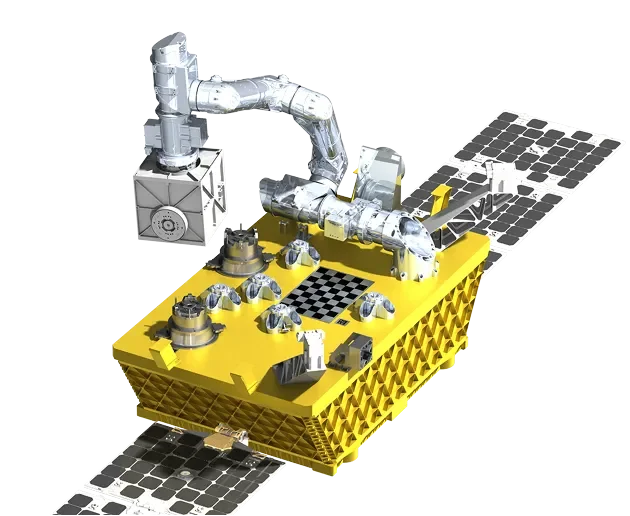
Imagine your technology floating 250 miles above Earth, grasped by a robotic arm, proving itself in the harshest environment humans have ever worked in. No atmosphere. No second chances. Just innovation, performing exactly as designed.
That’s not a distant dream. That’s the pitch NASA is making right now to entrepreneurs and startups through its Robotically Manipulated Payload Challenge — the fifth installment in the NASA TechLeap Prize series.
Yes this opportunity is real but the timeline is FAST.
NASA’s Flight Opportunities program is inviting teams to design a payload that can be manipulated by a robotic arm in low Earth orbit. Up to three winners will each receive up to $500,000 in prize money to develop a flight-ready payload. But the real prize? NASA intends to fly the winning payloads to orbit — at no additional cost — aboard a spacecraft that will rendezvous with the Fly Foundational Robots (FFR) platform, already in orbit and ready to demonstrate what persistent in-space infrastructure can do.
Target launch: early 2028. The clock is ticking.
Why This Moment Matters
We are standing at the frontier of a new space economy — one built not on single-use missions, but on in-space servicing, assembly, and manufacturing. Think robotic systems that repair satellites on orbit. Modular platforms assembled piece by piece, miles above the planet. Manufacturing in microgravity that’s simply impossible on Earth.
This isn’t science fiction. It’s the next decade of aerospace. And NASA knows that the boldest ideas won’t always come from the biggest contractors — they’ll come from scrappy, visionary teams who see what others miss.
The Robotically Manipulated Payload Challenge is designed exactly for those teams.
The challenge moves intentionally fast. NASA calls it “increasing the pace of space,” and the three-phase structure is built to push teams from concept to flight-ready hardware in under a year:
• Phase 1 — Concept & registration (closes August 12, 2026)
• Phase 2 — Design development (winners announced December 2026)
• Phase 3 — Flight-ready payload (winners announced May 2027)
• Launch — Early 2028
The compressed timeline isn’t a bug but a feature. It’s a signal that the era of decade-long space programs is giving way to something leaner, faster, and more entrepreneurial.
Who Should Apply?
If you’re building anything that touches robotics, autonomous systems, in-space manufacturing, materials science, or next-generation hardware — this challenge was written with you in mind.
You don’t need to be a legacy aerospace company. You don’t need a fleet of engineers or a sprawling R&D budget. You need a compelling idea, a capable team, and the conviction that your technology belongs in orbit.
A virtual information session on June 18, 2026 will walk prospective applicants through the technical requirements, evaluation criteria, and what NASA is really looking for. If you’re on the fence, that’s the event that could tip you over.
The Bigger Picture
Every great space program has needed pioneers willing to go first — to build the infrastructure that makes everything else possible. The International Space Station didn’t just appear out of thin air; it was assembled, piece by piece, by human hands and robotic systems working in concert.
What comes next will be assembled the same way. More robotically. More autonomously. More commercially.
NASA is betting that the teams who will make that future real are out there right now…in garages, university labs, and coworking offices with ideas worth launching.
Could yours be one of them?
Learn more and register at https://rmpc.nasatechleap.org/ Phase 1 registrations close July 29, 2026.