

Santa Cruz Is Building Housing. What Can It Learn From Cities Doing More?
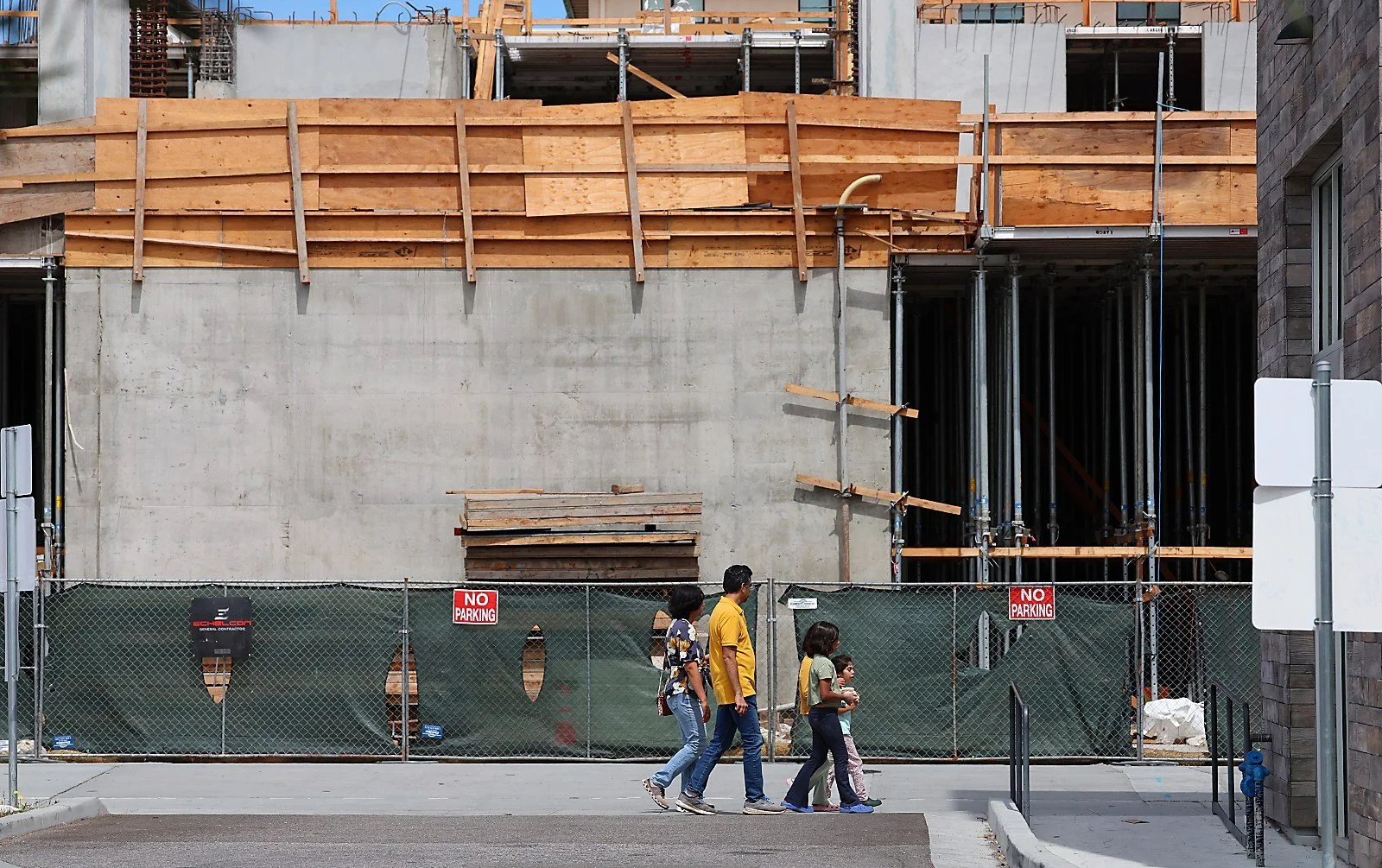
Photo Courtesy of Shmuel Thaler - Santa Cruz Sentinel
Santa Cruz has already shown that zoning changes and streamlined approvals can produce housing. San Luis Obispo and Berkeley offer a look at what could come next.
The first two articles in this series examined a troubling pattern in Santa Cruz County: homes that should exist, but do not. More than five years after the CZU Lightning Complex Fire, only 18 percent of the 911 homes destroyed had been rebuilt. In unincorporated Santa Cruz County, thousands of additional homes have been planned, but relatively few have made it through the pipeline to building permits.
The City of Santa Cruz offers a more encouraging counterpoint. During the state's 2015 to 2023 housing cycle, California required the city to accommodate 747 new homes. The city's final 2023 Housing Element Annual Progress Report recorded building permits for 1,777 units, more than twice its allocation, and showed that Santa Cruz exceeded its state target in every income category.
Santa Cruz Local reported that Santa Cruz was among roughly 6 percent of California jurisdictions that met their housing production targets during that cycle. It was also the only jurisdiction in Santa Cruz County to meet all of its state housing goals.
The challenge is now much larger. The city's current allocation calls for 3,736 homes by 2031, nearly five times its previous target. Of those, 1,421 must serve low and very-low-income households, and the city currently reports that permits have been issued for 801 of those lower-income homes.
Santa Cruz has not solved its housing shortage, but it has shown an ability to get housing approved. The question for the third and final installment of this series is what has worked here, and what Santa Cruz can learn from California cities that have pushed further.
Santa Cruz changed where housing could be built
One of the clearest turning points came downtown. In 2017, the city amended its Downtown Plan to allow taller buildings around Pacific Avenue, Front Street, Cathcart Street and Laurel Street. In some areas, height limits increased from roughly 50 feet to 75 or 85 feet, allowing substantially more housing on the same amount of land.
The results were measurable. By the end of 2023, city reports showed that those changes had helped facilitate three projects totaling 465 homes under construction, including developments at 100 Laurel Street, 508 Front Street and 818 Pacific Avenue. Two additional projects totaling 370 units had already received land-use entitlements. (City of Santa Cruz)
Principal Planner Matt VanHua told Santa Cruz Local that developers responded after the city increased allowable downtown heights. The city also streamlined approval for affordable developments, which officials said improved Santa Cruz's ability to compete for state funding and helped projects obtain financing.
Santa Cruz has continued that approach with its Downtown Plan Expansion south of Laurel Street. Approved by the City Council and later the California Coastal Commission, the plan adds capacity for substantial multifamily housing in an underused area between downtown and the beach.
The lesson is relatively simple: make major decisions about height, density, streets, infrastructure and public benefits before individual projects arrive, then allow projects that comply with those rules to move through a more predictable process.
San Luis Obispo plans neighborhoods before projects arrive
San Luis Obispo provides a useful comparison. Like Santa Cruz, it is a small Central Coast university city with expensive housing, strong environmental protections, a tourism economy and significant public concern about growth.
Its housing production has been substantial. In 2025, San Luis Obispo added 198 homes, including 104 accessory dwelling units. Over the five years ending in 2025, it added 2,183 units to its housing stock, according to the city's latest General Plan annual report.
A major part of San Luis Obispo's strategy has been planning entire growth areas before individual developments arrive. Its Housing Element identified large specific-plan areas such as Orcutt, Margarita, Avila Ranch, San Luis Ranch and Froom Ranch, establishing housing capacity, roads, infrastructure and development expectations across each area. (City of San Luis Obispo Housing Element)
That planning has translated into housing. In 2020, San Luis Obispo completed 313 homes, and 210 were located in specific-plan areas. San Luis Ranch alone was planned for more than 600 homes alongside businesses, roads, infrastructure, agriculture and open space.
While Santa Cruz cannot simply copy that model because San Luis Obispo has had different opportunities for outward expansion, the planning idea is transferable: decide infrastructure, density, design and public-benefit requirements in advance rather than reopening those questions project by project.
Make the permitting clock visible
San Luis Obispo also publishes expected review times for different types of development applications. Once an application is complete, the city lists targets ranging from roughly four to six weeks for minor development review to eight to 12 weeks for major review. Environmental review can add additional time. (City of San Luis Obispo Planning)
Its building department separately publishes plan-check targets, while a public Key Performance Indicators dashboard tracks planning cycle times and permitting performance.
Those targets do not guarantee that every project will move quickly. Their value is transparency. Applicants know what the city considers a normal review period, while residents can see whether the department is meeting its goals.
San Luis Obispo has also moved toward concurrent review, allowing related subdivision and development applications to be considered at the same time rather than forcing applicants to complete one process before beginning another. The city said its 2023 subdivision reforms were intended to eliminate unnecessary steps and duplicate review.
Santa Cruz is moving in a similar direction. Its Building and Safety Division is transitioning to a Consolidated Comment Review, which gives applicants one package of departmental corrections at the end of a review cycle instead of receiving separate comments at different times.
That may sound procedural, but it addresses a recurring source of delay. When departments review sequentially, each new round can add weeks or months. Concurrent review gives applicants a chance to address several issues at once.
Berkeley is reducing discretionary review
Berkeley is larger and more urban than Santa Cruz, but both are California university cities facing extremely expensive housing markets. Berkeley reported 1,495 homes entitled in 2025, 463 issued building permits and 493 completed, according to city budget documents.
Its recent reforms focus less on expanding outward and more on reducing the number of discretionary decisions required for smaller housing projects.
In November 2025, Berkeley implemented new Middle Housing zoning rules allowing duplexes, triplexes, fourplexes and small apartment buildings in neighborhoods that previously allowed much less housing.
Qualifying projects that meet predetermined objective standards can now receive ministerial zoning approval without going through the traditional discretionary hearing process. Berkeley says those applications can be processed in as little as 30 days, compared with six to 15 months under the previous process. Permit fees are also substantially lower.
Those rules are too new to credit for Berkeley's earlier housing production, but they illustrate a clear philosophy: if residents and elected officials have already established acceptable height, setbacks, density and design standards, projects meeting those rules should not have to repeatedly revisit the same policy questions.
Santa Cruz has already adopted objective design standards for multifamily and mixed-use housing. Berkeley's approach suggests that the next step is ensuring those objective rules translate into a similarly predictable approval process.
What Santa Cruz can take from both cities
Neither San Luis Obispo nor Berkeley provides a perfect blueprint. San Luis Obispo has more developable land, while Berkeley has a larger population, greater density and different economic conditions. Both remain expensive places to live.
But several practices translate directly to Santa Cruz.
Plan more before applications arrive - Santa Cruz has already seen this work downtown. Establishing density, infrastructure and design requirements across an area gives developers clearer expectations before they spend money designing projects.
Review departments concurrently - San Luis Obispo has explicitly moved toward parallel review, while Santa Cruz's consolidated correction process is a step in the same direction.
Measure how long projects actually take - San Luis Obispo publishes review targets and performance indicators. Santa Cruz could go further by showing time spent in city review, applicant corrections and outside-agency review separately.
Use objective approvals where possible - Berkeley's new system removes discretionary hearings for qualifying projects that already comply with adopted standards. Santa Cruz has objective standards in place and can continue aligning its approval process around them.
None of these changes requires eliminating building codes, environmental review or coastal protections. They focus on making the rules clearer, resolving more questions before applications arrive and reducing unnecessary repetition once a compliant project is submitted.
Santa Cruz already has evidence that it can work
Santa Cruz is not starting from zero. Its downtown zoning changes were followed by hundreds of homes moving into construction and entitlement, the city exceeded every category of its previous state housing target, and four major affordable projects added more than 200 apartments between 2024 and 2025. Another 128 affordable apartments are under construction at Pacific Station North. (City of Santa Cruz)
The need remains much larger. The city reports that approximately 11,200 lower-income households live in Santa Cruz while only about 3,000 deed-restricted lower-income homes are built or under construction. Recent affordable projects have received applications from far more households than they can accommodate. (City of Santa Cruz)
For local employers, the consequences extend beyond housing policy. Startups, hospitals, schools, restaurants and established companies all compete for workers who need to live within reach of their jobs.
This is the third and final article in Santa Cruz Works' housing series. The first examined the slow rebuilding of homes destroyed in the CZU Fire. The second looked at the gap between planned housing and actual building permits in unincorporated Santa Cruz County.
The City of Santa Cruz provides a more encouraging conclusion. It has already demonstrated that increasing housing capacity and making approvals more predictable can produce results. San Luis Obispo and Berkeley show how that strategy could be extended through earlier planning, concurrent review, objective approvals and clearer public measures of how quickly the system is working.