

Santa Cruz Science Could Help California Spend Climate Billions Smarter
UC Santa Cruz researchers are measuring how wetlands capture carbon and release methane, giving California better data for future climate investments.
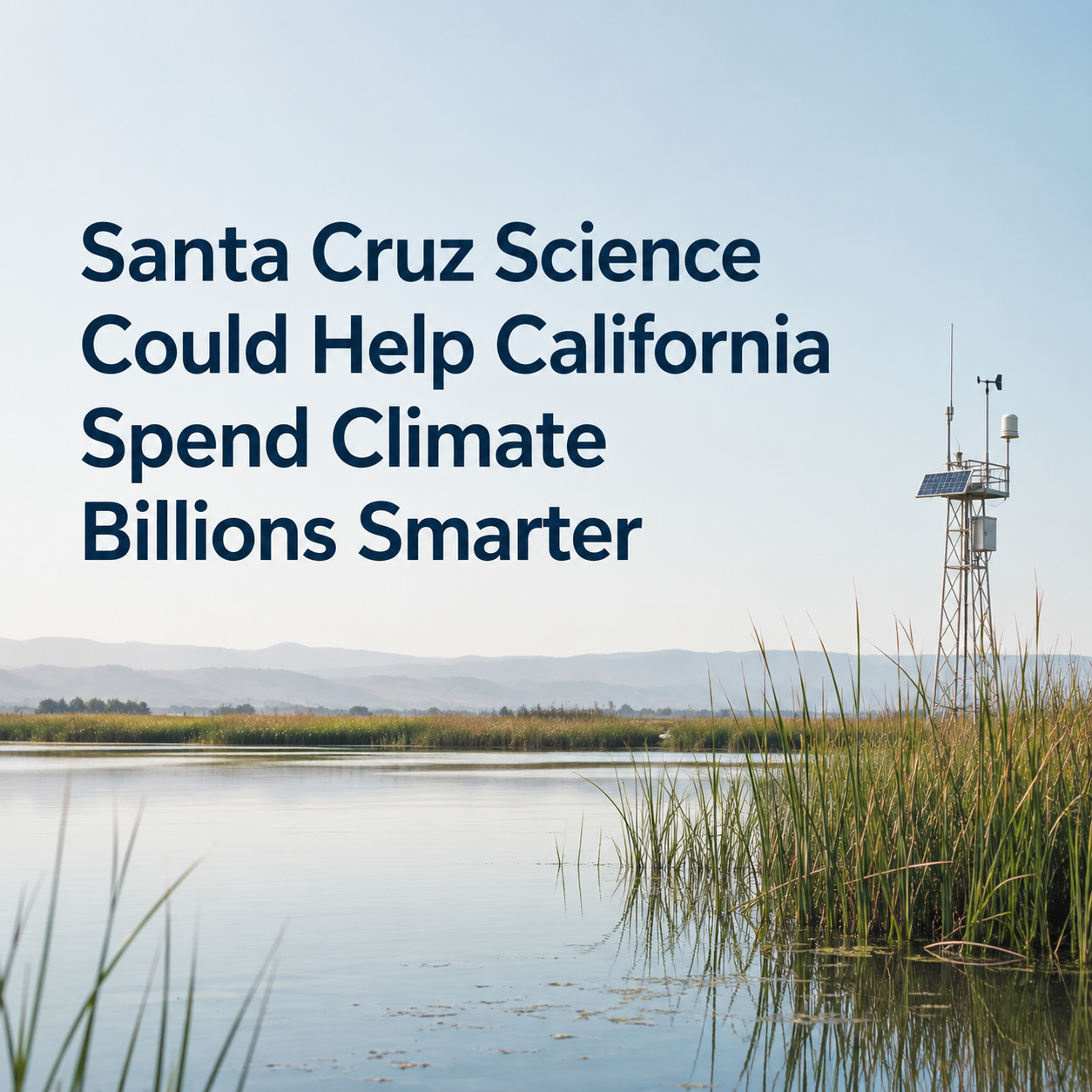
Some of California’s most important climate infrastructure looks like mud, grasses, shallow water, and a monitoring tower rising above a coastal marsh.
A team from UC Santa Cruz has installed advanced monitoring systems at two Southern California wetlands to study how they absorb carbon dioxide, release methane, and affect air quality.
The findings could help California decide where to direct billions of dollars toward wetland restoration and other nature-based climate projects.
Two Wetlands, Two Different Stories
The project is led by UC Santa Cruz Earth and planetary sciences professor Adina Paytan and the Paytan Lab, working with the California Air Resources Board and AmeriFlux.
Researchers are comparing the heavily impacted Los Cerritos Wetlands in Long Beach with the healthier Seal Beach National Wildlife Refuge.
Monitoring towers at both sites continuously measure the movement of carbon dioxide and methane between the wetlands and the atmosphere. This will help researchers understand how a degraded wetland performs compared with a healthy one, and what may change after restoration.
That distinction matters because wetlands can store large amounts of carbon, but they can also release methane under certain conditions.
Why Wetlands Matter
Coastal wetlands can store carbon in their soil far more efficiently than many land-based forests. Because their soils remain submerged, that carbon can stay trapped for decades or even thousands of years.
Wetlands also reduce flooding, protect shorelines, support wildlife, and help shield nearby communities from storm damage.
California has made wetlands and other natural and working lands part of its strategy for reducing greenhouse gas emissions. The challenge is identifying which restoration projects will deliver the greatest results.
Much of California’s previous wetland monitoring has focused on the Sacramento and San Joaquin Delta. Southern California’s wetlands have different plants, climates, and environmental pressures, leaving the state with an important gap in its data.
The UC Santa Cruz team is helping fill it.
Climate Technology in the Field
Climate technology is often associated with batteries, solar panels, and advanced fuels. It can also be a tower in a marsh collecting precise measurements every hour of every day.
Better data can help California determine which wetlands should be protected, which should be restored, and whether funded projects are actually working.
This is also where Santa Cruz County’s broader innovation community can contribute.
Sensor companies can improve environmental monitoring. Software and AI teams can help analyze large climate datasets. Founders can turn university research into tools for governments, landowners, and conservation groups. Investors can support companies working in climate resilience, water, agriculture, and environmental intelligence.
Businesses can also partner with UC Santa Cruz researchers, sponsor student projects, and help scientists find practical uses for their work.
Not every research project needs to become a startup. Stronger connections between researchers, engineers, entrepreneurs, and investors can still make valuable science easier to deploy.
Better Data Creates Better Decisions
California is preparing to invest heavily in climate resilience and nature-based solutions. The question is how to identify the right projects, measure their performance, and improve them over time.
UC Santa Cruz is helping provide that foundation.
The monitoring towers at Los Cerritos and Seal Beach may not attract the attention of a new aircraft or a major funding round, but the data they collect could shape how California restores wetlands, protects coastal communities, and spends billions of dollars.
That is climate innovation at its best: local expertise, precise technology, and science built to help people make better decisions.
Related Articles
UCSC’s 2025 Chancellor’s Innovation Impact Awards Celebrate Regional Changemakers
UC Santa Cruz recognized researchers and community leaders advancing coastal resilience, biotechnology, entrepreneurship, and regional innovation.
Study Shows Mangrove and Reef Restoration a Positive Investment for Flood Protection
Research shows how natural coastal defenses can reduce storm risk while delivering environmental and economic benefits.
UCSC Engineer Deploys Research on “Mud Batteries”
A UC Santa Cruz engineering team is exploring how naturally occurring soil bacteria could power low-cost agricultural sensors.