

Reservoir Farms Follows the Crops to Arizona — and Rewires the Clock on AgTech
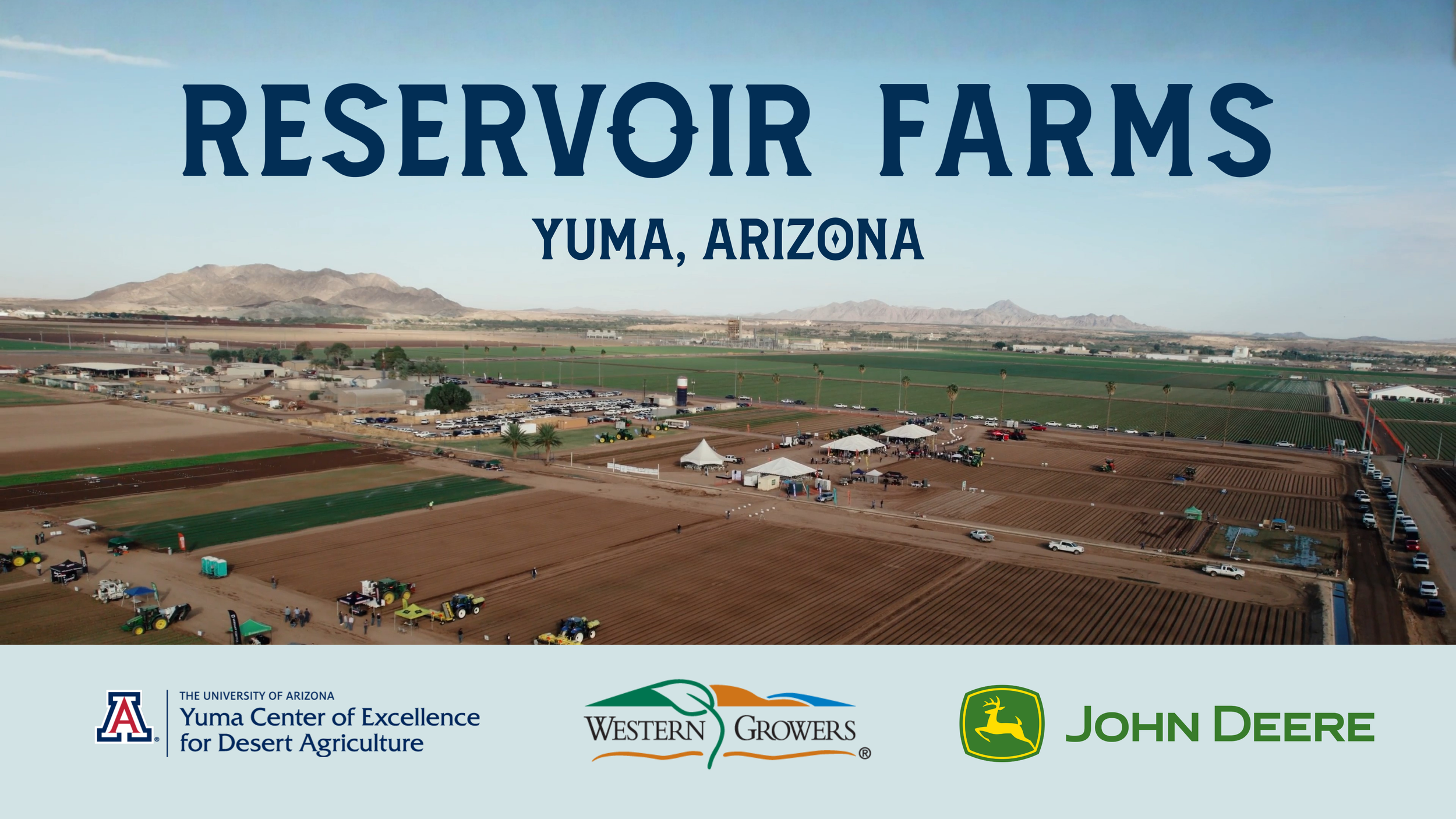
Danny Bernstein's Reservoir Farms announces its first out-of-state expansion, a Yuma, Arizona pilot opening October 1, 2026 — giving robotics startups year-round field access by following America's leafy greens from Salinas to the desert.
We tell ourselves a comforting story about innovation: ideas are the scarce resource. If we fund enough brilliant people, the future arrives on schedule.
Agriculture exposes that story as fantasy.
The Rep Problem
In agtech, the bottleneck was never ideas. It was reps. A robot learns to harvest romaine by attempting to harvest romaine, thousands of times, in real dirt, under real heat. And for as long as anyone can remember, that learning stopped when the season did. The crops came out of the ground, and the iteration clock froze until spring.
This is the problem Danny Bernstein has been quietly dismantling. First with Reservoir Farms in Salinas — the "Olympic Village of AgTech," where 20-plus startups now build and test alongside working growers. And now, announced today, with a pilot expansion to Yuma, Arizona, live October 1, 2026, developed with the University of Arizona's Yuma Center of Excellence for Desert Agriculture, the Yuma Agricultural Center, Western Growers, and John Deere.
Why Yuma?
Because Yuma is where the industry itself already goes. The region produces nearly $3 billion in annual agricultural output and grows an estimated 90% of the nation's leafy greens from November through March. It has long been Salinas's "sister city" — when the Salinas season ends, production simply moves. Bernstein's insight is disarmingly simple: if the crops migrate, the innovation should migrate with them.
"We help rugged physical AI move faster from concept to commercial impact," Bernstein said, "by creating real-world environments for testing and iteration, and following crop production across the largest growing regions."
The Clock, Rewired
Think about what that changes. With 500 accessible acres at the Yuma Agricultural Center, startups can now run trials in commercial desert vegetable production from October through March — then return to Salinas. The seasonal pause disappears. More reps, across harsher conditions — heat, water scarcity, industrial-scale winter production — in less calendar time. Technology that survives the desert comes back stronger.
Tanya Hodges, executive director of YCEDA, calls the Yuma Agricultural Center a living laboratory — a place where innovators refine their tools alongside the growers, researchers, and industry partners who know desert agriculture best. Walt Duflock of Western Growers put it plainly: Reservoir makes sure agtech is built for the real world, not the lab.
An Institution, Not a Moonshot
That's the abundance agenda, in miniature. Not a breakthrough — an institution. One that compresses the distance between a prototype and a tool a grower can trust. Two years ago Reservoir was an idea in a century-old barn. Today it's a network stretching across state lines, following the food.
Related Articles
Joby and Toyota Launch Initial Phase of a Strategic Manufacturing Alliance to Mobilize Air Mobility for All — Another Monterey Bay story of hard technology scaling from prototype to production, as Joby formalizes a manufacturing joint venture with Toyota.
Reservoir Farms Opens Applications for 2026 AgTech Startup Programs in Salinas — Where the expansion began: the DEVELOP and DEPLOY tracks that put robotics startups on dedicated acreage in the Salinas Valley.
Team Hephaestus Takes on the World: X Academy Robotics at the 2026 MATE ROV World Championships — The next generation of rugged-hardware engineers, proving Monterey Bay builds robots for the real world from high school onward.