

The Lost Coast Isn't Lost. It's Just Getting Started.

Two retired Silicon Valley executives — a former Hulu CTO and a Fortune 500 division president — are building an entrepreneurial ecosystem in Humboldt County. Santa Cruz has seen this movie before. It works.
Here's a question worth sitting with:
Why do some regions get to have economic futures and others don't? The conventional answer is geography, capital density, proximity to talent. The honest answer is simpler — somebody has to decide the place matters, and then do the unglamorous work of proving it.
In Humboldt County, that somebody is John Ballard and Dan Phillips.

Dan Phillips

John Ballard
Their résumés are the kind that let you retire to a beach chair. Ballard (who now resides in Santa Cruz) went to Humboldt "because it was cheap, and it was a long ways away from home," met his wife Kathy two hours after arriving on campus, and married her a week after graduation. He later succeeded his father as CEO of a struggling public company, turned it around, sold it to a Fortune 500 conglomerate in 2001, and ran multiple companies within SPX Corporation during the next 21 years. Phillips grew up in Bridgeville — six kids in his eighth-grade graduating class — coached high school football and wrestling, then went back to finish his degree by convincing his boss at the lumber mill to cut him to a 40-hour week while he carried up to 22 units a semester at Humboldt. He co-founded a software company in Arcata with $5,000 between the founders and talked Silicon Graphics into $25,000 and three workstations to get it off the ground. He took a startup public, sold another to IBM, ran engineering and operations at TiVo for over a decade, and eventually became CTO of Hulu, where he helped grow the platform from 15 million subscribers to over 40 million while launching its live service. These are men who understand scale.
Instead of beach chairs, they founded Lost Coast Ventures, a 501(c)(3) nonprofit venture organization supporting entrepreneurship at Cal Poly Humboldt and College of the Redwoods. The two met when Phillips chaired Humboldt's first-ever capital campaign and recruited Ballard to the cabinet; with the help of many, they raised $60 million doubling the original objective and a year early. Then they asked the question every restless retiree should ask: what could we do that would be more fulfilling and enduring?
The model they landed on comes with pedigree. Ballard's father started a similar fund at Dartmouth in 2001 — born at a coffee meeting of alumni trying to keep faculty from defecting to Harvard during the dot-com era. Over twenty years, it deployed roughly $1.5 million and returned about $20 million in equity to the campus. That's not philanthropy. That's a flywheel. All proceeds from LCV's future exits flow back to the two institutions. The capital compounds, and so does the community.
And the flywheel is spinning.
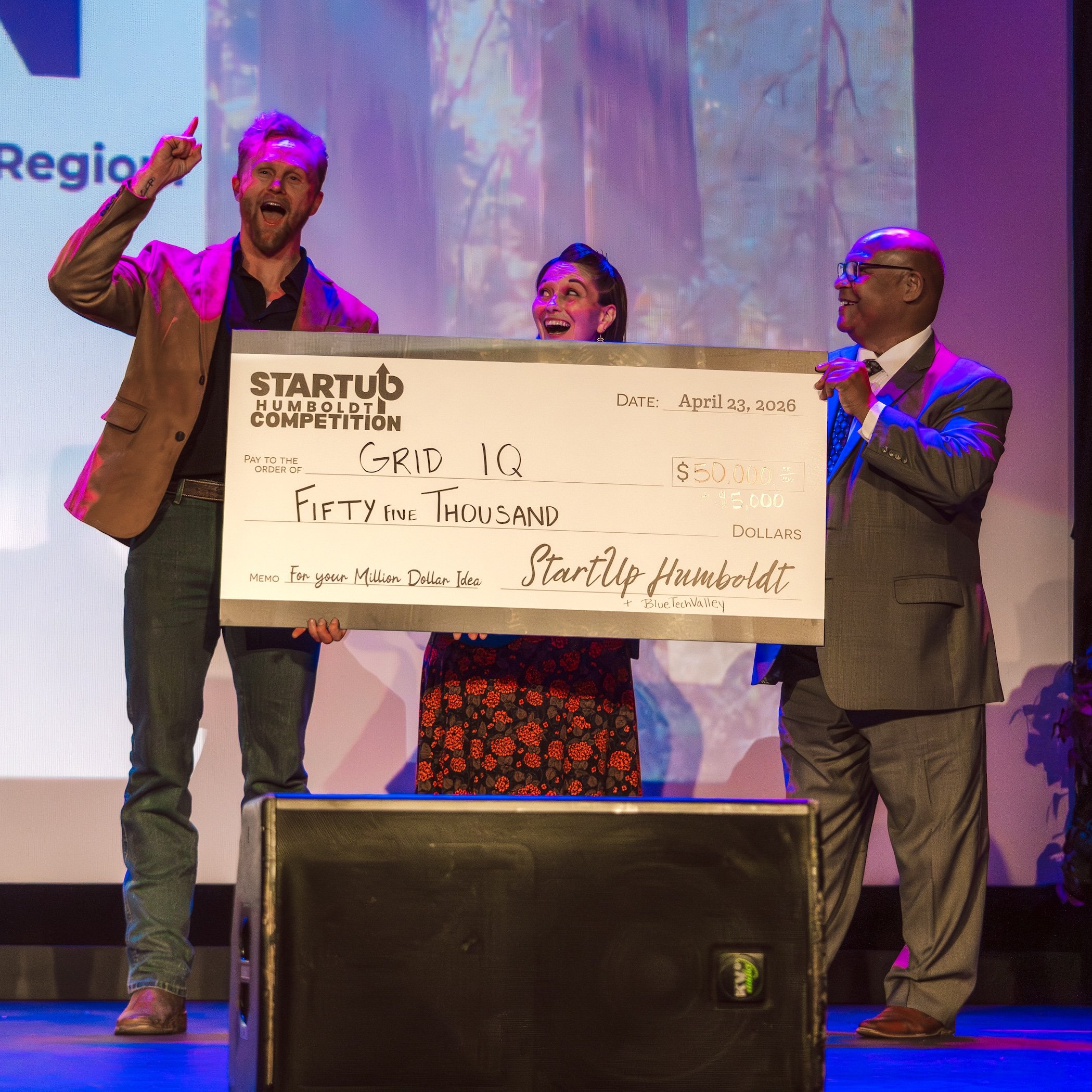
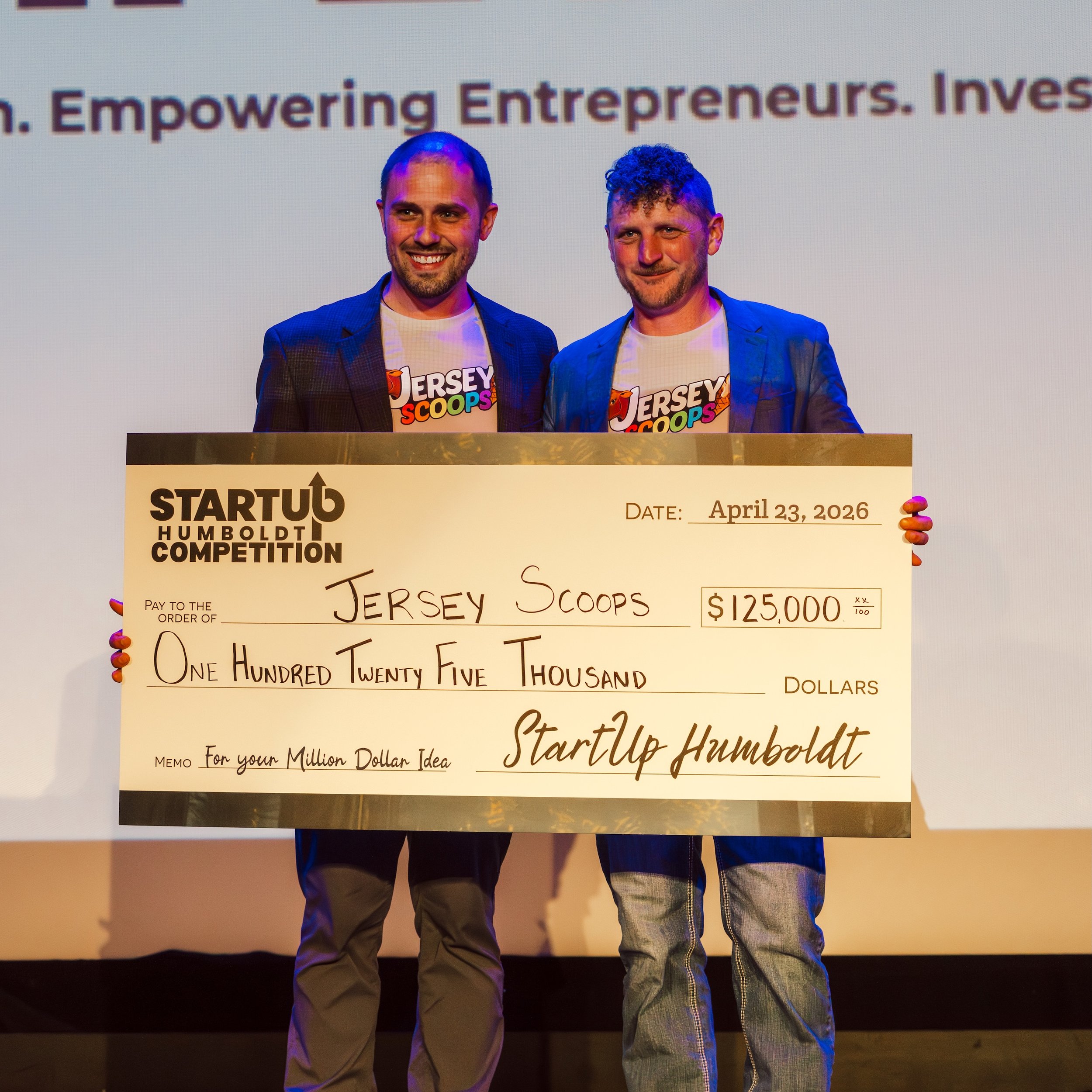
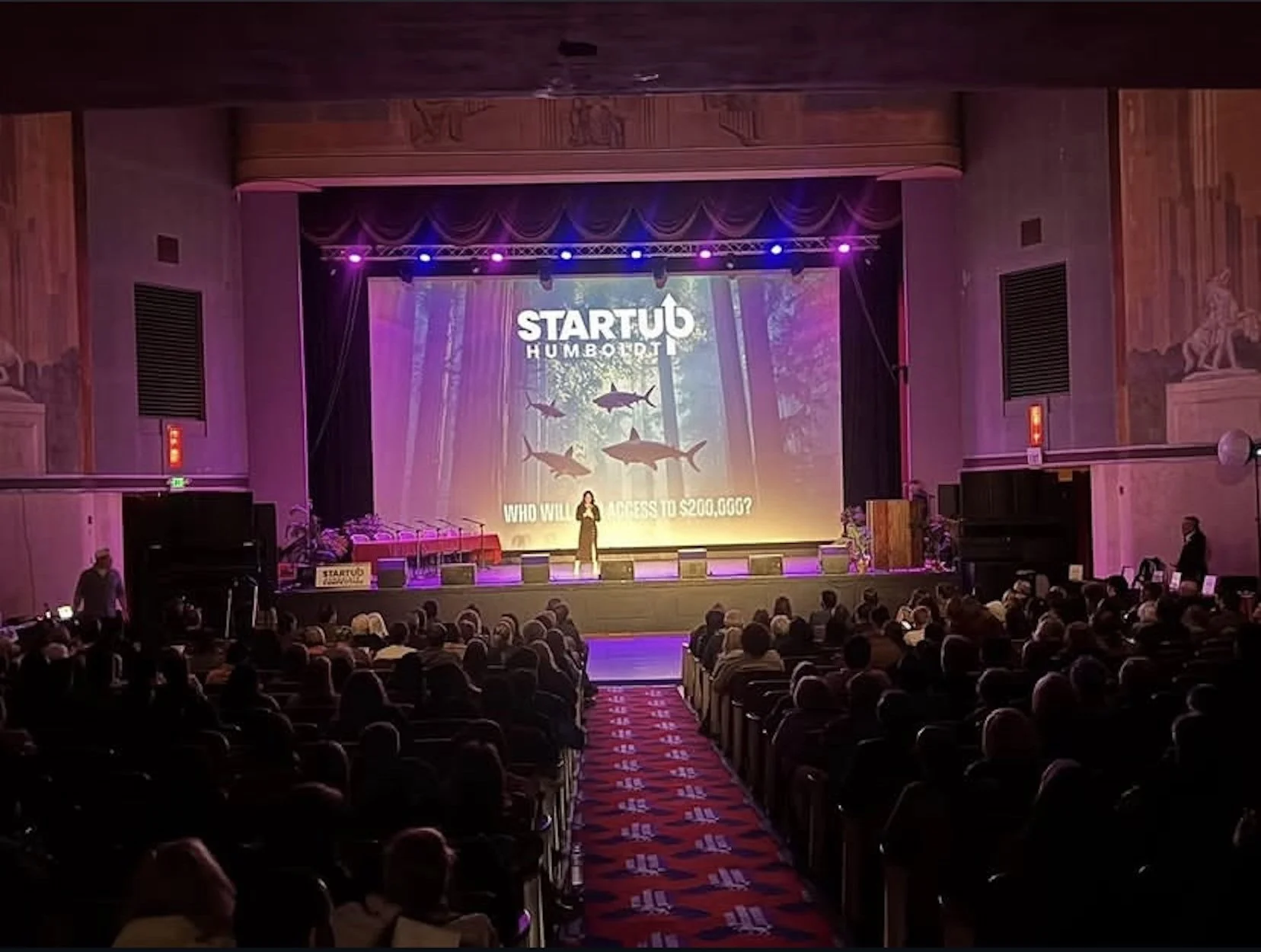
When a faculty member asked LCV to fund another modest $15–20K campus competition, Ballard refused. "We're not making any difference," he told him. "We need to give away $200,000." So they did — $210,000 across five winners in two tracks, scale ventures and micro ventures, drawn from 108 applicants and 24 semi-finalists, prepared through weekly community training sessions, culminating in a Shark Tank-style finale that filled the Eureka Theater with 650 community members. Outside judges — accomplished people with no prior involvement — came away impressed by the caliber of the pitches.
Then there's the building.
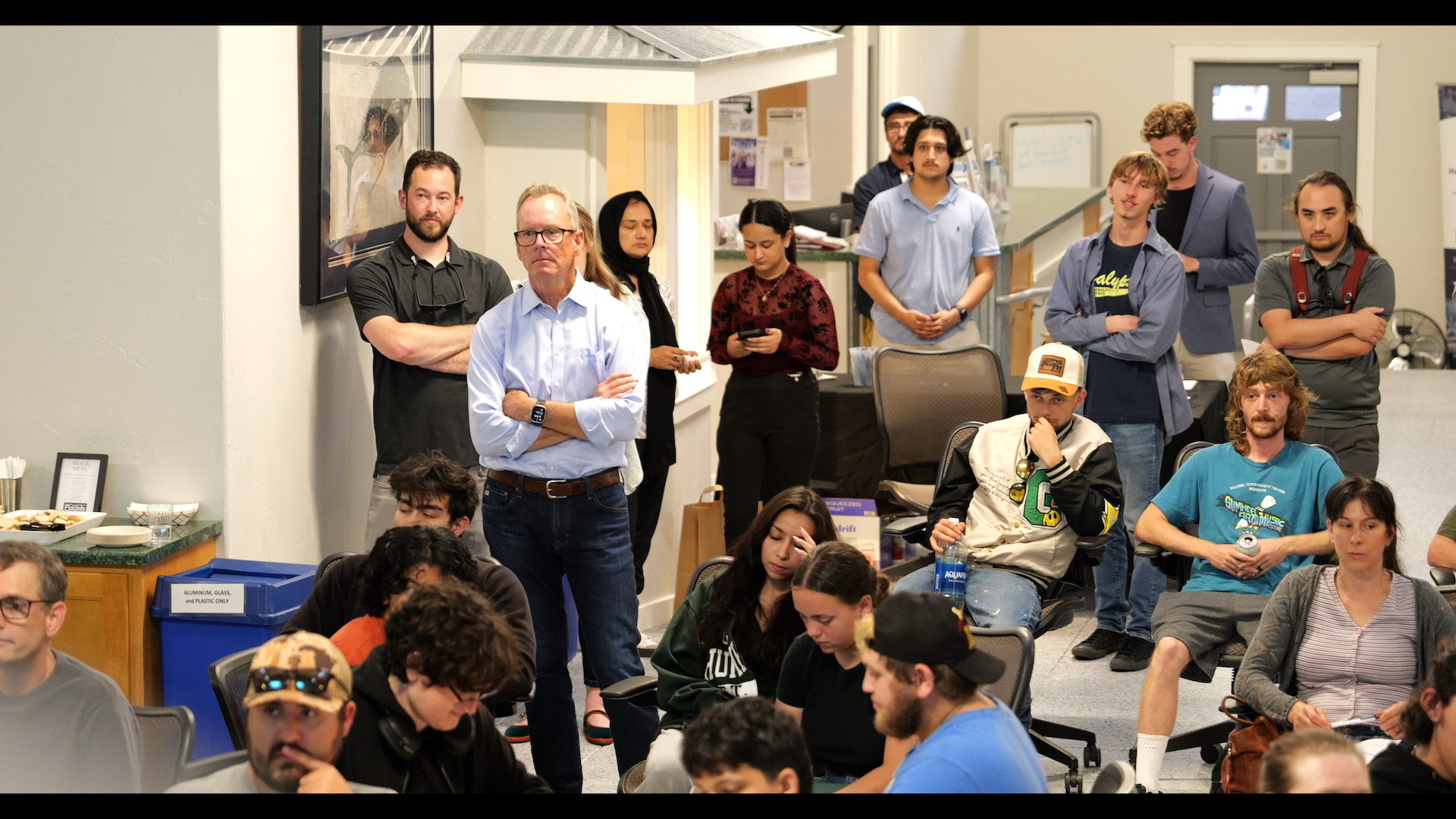
LCV saw that Humboldt's economic development players were scattered across separate offices, so they found an 8,000-square-foot building in Arcata, convinced the Small Business Development Center to become the anchor tenant, and brought Cal Poly Humboldt, College of the Redwoods, and LCV itself under the same roof. Startup Humboldt opened in April of last year, big sign on the front, self-sustaining, no annual fundraising required. It's already running out of space. As Dan put it with a grin: good problem. Their target: 250 quality jobs in five years. Doesn't sound like much until you understand what 250 good jobs means in rural America.
This is a familiar story for many small communities. Two decades ago, Santa Cruz was a beautiful place with a sleepy economy — a bedroom community exporting its talent over the hill every morning. Santa Cruz New Tech ("New Tech") was founded in 2007 on a premise borrowed from Steve Blank's research in Bend, Oregon: you don't have to be in Silicon Valley to build a tech hub. You need the pillars of a community — education, local government, financial institutions, key companies — connected and rowing together. The New Tech Board of Directors was built around exactly those pillars. Five years later, in 2012, Bob Cagle and Bud Colligan founded Santa Cruz Works to shape policies that encouraged businesses born in Santa Cruz to stay in Santa Cruz. In 2019, the two organizations merged — and the combined community grew into a network of 11,000 members, an accelerator that has launched 52+ companies, and ultimately a partnership with Santa Cruz Ventures, which just made a follow-on investment in its tenth portfolio company. Ecosystems aren't discovered. They're built, brick by stubborn brick, not by any one individual, but by an entire community.
Timing
What makes the Humboldt bet especially interesting is timing. Both regions share a tension: communities full of founders devoted to planetary health, wary of AI's energy appetite and data center sprawl — and a technology that punishes anyone who sits it out. Ballard is clear-eyed about it: AI has to find a way to coexist in that ecosystem, and those founders have to get comfortable using it or risk being left behind. Phillips made an observation that should be tattooed on every rural economic development plan in America: big is no longer a competitive advantage. Small, agile, and lean — supercharged by AI — is. Exhibit A: competition alumna Grounded AI, founded by a former AI product manager who moved home with two young children, revised her first-year plan from $45,000 to $290,000 in months by helping North Coast businesses adopt AI. The tools that once required a Sand Hill Road zip code now require a laptop and coaching. Coaching is the scarce resource. That's what Ballard and Phillips are supplying.
The Lost Coast got its name because the region was too rugged for highways — literally bypassed by infrastructure. There's a metaphor in there. For decades, American prosperity bypassed places like Humboldt and, yes, Santa Cruz. What LCV proves — what Santa Cruz Works proved — is that the bypass was never destiny. It was a choice. And choices can be unmade by people stubborn enough to stay in the game.
Retirement, it turns out, is wasted on the retired.
Related Articles
Humboldt Becoming a Polytechnical University — An in-depth look at what the polytechnic transition means for Cal Poly Humboldt and the community that surrounds it.
CSU Board of Trustees Polytechnic Video Presentation — The story of how Humboldt State became Cal Poly Humboldt on January 26, 2022, California's third polytechnic and the first in Northern California.
Cal Poly Humboldt ideaFest — A campus-wide showcase of research, performances, and digital projects highlighting the creative and scholarly energy on the North Coast.
Humboldt is the Communication Connection to the Pacific Rim — The world's longest subsea fiber optic cable would land in Eureka and stretch more than 10,000 miles to Singapore and Taiwan.
Alternative Energy Advancement with Schatz Energy Center & Offshore Wind Power — A $10.5 million state grant will prepare the Port of Humboldt Bay to support offshore wind development on the North Coast.