

Support of a Temporary Two-Way Signal on the Murray Street Bridge
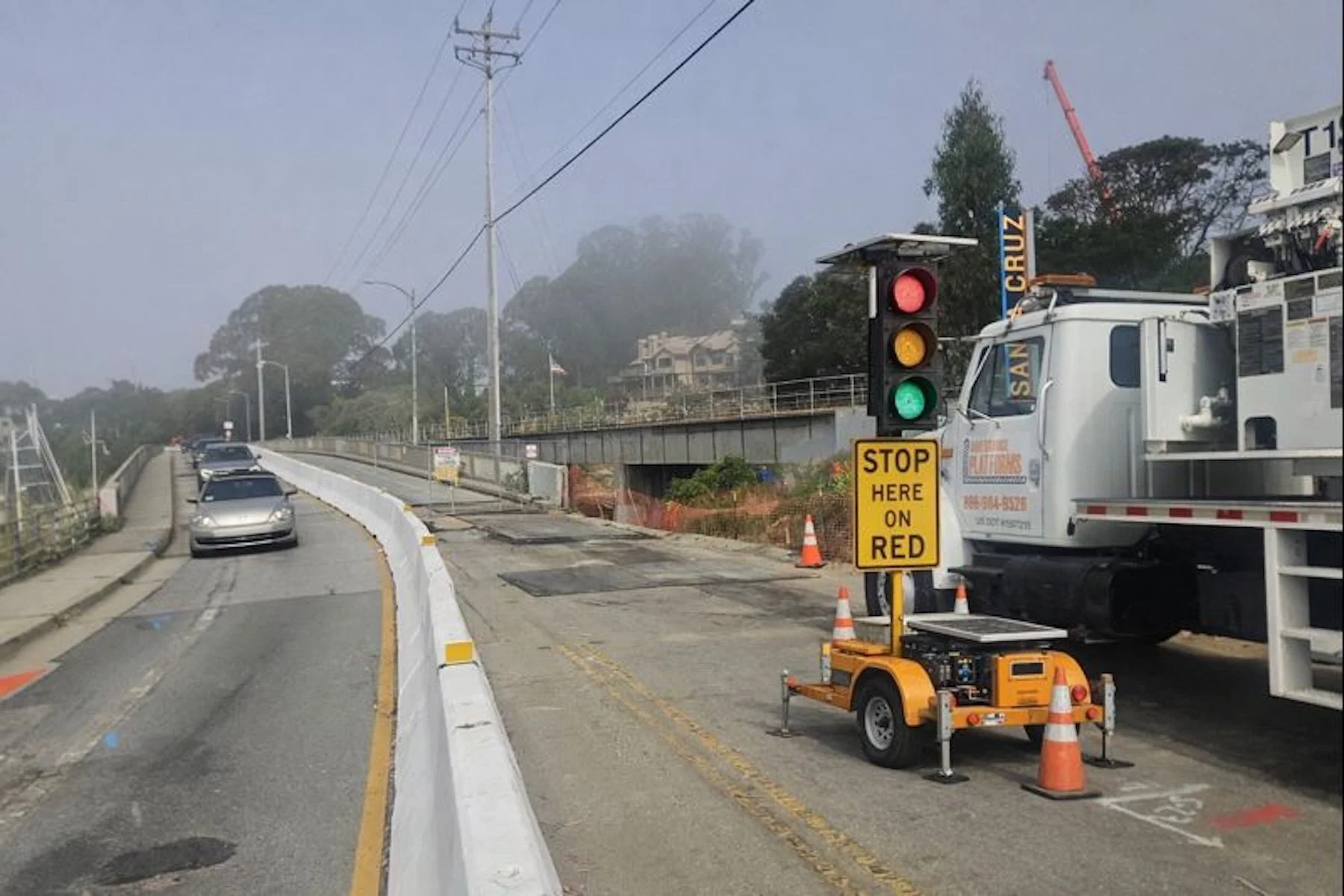
What used to be a five-minute errand now means long detours, traffic-clogged neighborhoods, and lost time for thousands of Santa Cruz residents—and the ripple effects are hurting local businesses and city revenue alike.
What is Needed
The Murray Street Bridge is a critical east–west connection serving local businesses, workers, residents, cyclists, and emergency responders. Its closure has significantly increased congestion on Highway 1, Soquel Avenue, and surrounding neighborhoods, while limiting customer access to small, locally owned businesses in Seabright, Live Oak, Twin Lakes, Portola, and the Harbor area. Reopening the bridge as one-way traffic from February through June 2026—followed by another full closure—will prolong these impacts unnecessarily.
Santa Cruz Works and many other local media outlets have written countless stories on the struggles facing the Seabright, Live Oak, Twin Lakes, Portola, and Harbor businesses in the wake of the bridge closure.
What it Costs
Portable automated traffic signals are a proven tool for managing two-way traffic on one-lane roads and bridges during construction. These systems operate 24/7 using vehicle detection sensors and coordinated signal timing, offering safer and more consistent control than manual flaggers. Municipal procurement records and traffic control vendor pricing indicate that long-term deployment of portable automated traffic signal systems typically ranges from $80,000 to $150,000, depending on duration and site conditions. This is modest compared to the ongoing economic losses caused by restricted access, extended travel times, and reduced customer traffic. By contrast, flagging operations can cost thousands of dollars per day and are less reliable over long periods.
A temporary two-way signal restores equal access for residents on both sides of the bridge, that would otherwise be eliminated under a one-way configuration. A two-way signal has the potential to shorten travel distances, reduce pressure on parallel arterials, and improve reliability for customers, workers, deliveries, and emergency services. For corridor businesses facing years of disruption, this is not a marginal improvement but a meaningful difference in economic viability.
Why Now
For many in Santa Cruz, everyday trips have become longer, more stressful, and less predictable. Commutes to work, quick errands, bike rides, and visits to local businesses now require frustrating detours that impact daily life and neighborhood safety. Cyclists and pedestrians are pushed onto less safe routes, and congestion continues to build on Highway 1, Soquel Avenue, and residential streets.
This disruption affects more than convenience. With a multi-year construction timeline ahead, waiting to improve access means accepting years of unnecessary strain on our community.
A temporary two-way signal can restore critical connection now—helping Santa Cruz move, work, and stay safe while construction continues.
Call to Action
Santa Cruz Works strongly supports the petition urging the City of Santa Cruz to install a temporary automated two-way traffic signal on the Murray Street Bridge, rather than reopening the bridge to one-way traffic only during the ongoing retrofit project. This approach offers a practical, cost-effective solution that balances safety, mobility, and economic stability.
Related Articles (Santa Cruz Works News)
