Joby’s Success in the Monterey Bay Region Didn’t Happen by Accident
By Josh Metz, Executive Director, Monterey Bay DART; Dr. Jackie Cruz, Vice President, Hartnell College and DART Board Member; Julie Edwards, Director, Strategic Educational Options, Pajaro Valley Unified School District; and Dr. Lawrence Samuels, Special Advisor to the UC Santa Cruz Chancellor
Public-private workforce partnerships rarely make headlines. They show up in a curriculum built years before a single job opening exists, a facilities agreement negotiated in public over months, an apprenticeship structured so a paycheck and a classroom seat can coexist. None of it is glamorous. All of it is why an advanced air mobility company can locate here, hire here, and grow here.
The City of Santa Cruz's agreement with Joby is one clear example of that kind of groundwork. The deal structure, developed, debated, and approved in public through the City Council process, with defined verification requirements, an annual cap, and long-term retention commitments built in, reflects the kind of measured, accountable public policy that lets a city capture real benefit from a growing employer while keeping the terms of that relationship transparent to the community it serves.
It's one example among many, and it wasn't the first. Long before the City Council took up that agreement, the earliest proof of this region's approach came in fall 2022, when Joby was scaling up manufacturing in Marina and facing a challenge familiar to any advanced-tech company trying to grow in a region without an existing pipeline of workers: where do you find the talent?
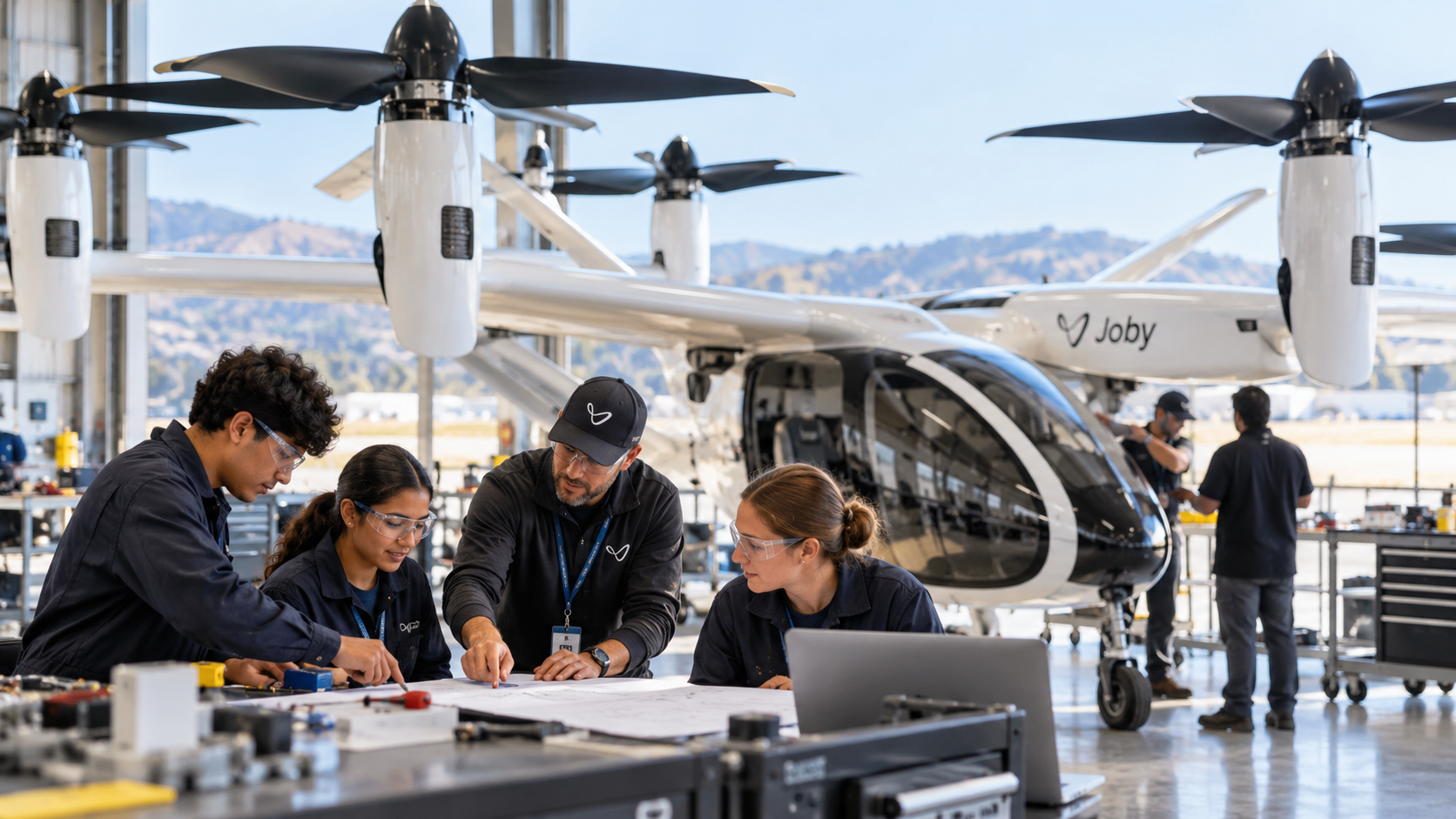
DART, Joby, and the James Irvine Foundation answered that question together with the Advanced Manufacturing Apprenticeship Program (AMAP): a paid, earn-and-learn pathway built in close partnership with community-based organizations including Mujeres en Acción, the Monterey County Black Caucus, Digital NEST, and the Salinas Inclusive Economic Development Initiative, alongside Hartnell College. AMAP was the region's first workforce win with Joby, and it has proven durable: more than 200 apprentices, the vast majority coming from Monterey Bay area communities, have since trained through the program; 85% have moved into full-time positions at Joby, with a 22% average wage gain within the first-year, and the model's early success helped inform state-level policy supporting California's advanced air mobility industry.
That same coordinated approach has only deepened since. Hartnell College's partnership with DART on the Maturing Regional AgTech and Aerospace Job Readiness Pathways program (MSUAS Pathways), is building FAA Part 107 drone credentials and STEM pathways for Salinas Valley and Seaside residents, including first-generation students, farmworker families, and veterans.
UC Santa Cruz’s CITRIS Institute for Drone Education and Research (CIDER) program, is in the third year of the Drones Uplifting California Communities (DUCC) “train the trainer” program, funded by California’s Jobs First initiative. The DUCC model is focused upon teaching community college, high school, and adult education instructors how to fly drones, and obtain Part 107 licenses. This effort has enabled Cabrillo College, Monterey Peninsula College and public high schools throughout Santa Cruz and Monterey Counties to start offering drone piloting coursework and to integrate drone piloting into curriculum such as marine science, geographic information systems, photography, business, and agriculture.
In Watsonville, Pajaro Valley Unified School District students in its FAST Aircraft Build CTE pathway split their time between aerospace engineering coursework and Watsonville Municipal Airport, where they're building a real Van's RV-12iS aircraft alongside volunteer mentors from the local aviation community.
That same aircraft platform carries directly into the new Aircraft Maintenance Technician Apprenticeship at Joby itself: an 18-month, earn-and-learn program catalyzed by DART and funded with Irvine, California Jobs First, and Central Coast K-16 Collaborative investment, giving apprentices a paid, direct route from a high school hangar into a certified aviation career.
On October 29, Hartnell College and DART will convene the Technology in the Workforce Summit in Salinas, bringing many of these same partners together to keep building on that work across agriculture, healthcare, and advanced air mobility alike.
None of these efforts belong to any single institution, and none of them happened quickly. They reflect a much longer list of contributors: community colleges and four-year institutions offering credit and credentialing pathways; K-12 districts building career-technical education years ahead of demand; regional workforce boards aligning funding to where jobs are actually opening; and community-based organizations doing the work of reaching residents who don't already have a foot in the door.
Regional coordinating bodies like the Monterey Bay Tech Hub exist precisely to help connect this kind of work across institutions and sectors, so that it adds up to more than the sum of its parts.
That is the real lesson of Joby's growth here. It is not the story of one deal, one program, or one company succeeding on its own. It is the story of a region's schools, colleges, workforce agencies, community organizations, and local governments each doing their part, over years, to build the conditions under which a company like Joby could take root and grow.
The City of Santa Cruz's measured, publicly debated agreement with Joby is a meaningful piece of that story, not because it broke new ground, but because it reflects the same patient, accountable approach to public benefit that this region's workforce partners have practiced for years. That is worth recognizing, and worth continuing.
Doug Erickson is Executive Director of Santa Cruz Works and a member of the Monterey Bay Tech Hub Leadership Council, where he brings the startup, founder, and investor perspective to the region's advanced aviation and maritime innovation agenda.
Danny Bernstein is CEO of Reservoir, the Salinas-based early-stage venture firm and on-farm robotics incubator, and a member of the Monterey Bay Tech Hub Leadership Council, where he brings the investor's lens to the region's agtech and innovation economy.
Related Articles
Catalyzing Coastal Innovation: The Monterey Bay Tech Hub's Vision for Advanced Air Mobility — The Tech Hub's founding charter: workforce training, AAM infrastructure, entrepreneurship, and collective political engagement across the tri-county region.
The Central Coast Is Playing a Long Game. Most Regions Don't. — How Joby, DART, UCSC, and Hartnell are assembling a full regional ecosystem of aircraft, corridors, and talent that fragmented regions can't replicate.
Regional Leaders Convene Tech Hub Consortium Effort — The origin story: the first convening of industry, education, military, and municipal leaders to turn the MBEST property into a regional tech hub.
Monterey Bay DART and Hartnell College Launch Drone and Aerospace Program — A workforce initiative connecting Central Coast residents to FAA-certified careers in agriculture, public safety, and advanced air mobility.
A Big Win for Monterey Bay AgTech: Bonsai Robotics Acquires farm-ng — The acquisition of Watsonville's farm-ng validates the region as a serious hub for agricultural robotics and AI.
From Maple Syrup to the Salad Bowl: Farmblox Brings Its Farm Automation Platform to Santa Cruz — Why an East Coast agtech company chose the Monterey Bay region as the place where farm technology gets built, tested, and scaled.
Santa Cruz HardTech Launches to Support the County's Physical Builders — A new advisory initiative for founders across ten hard-tech sectors, including agtech, marine and ocean tech, and aerospace.
Santa Cruz Invited to NOAA — Santa Cruz's position at the top of the Monterey Bay Sanctuary gives blue tech startups like Scoot Science a strategic edge in ocean innovation.