

The Clothes We Throw Away Don't Stop Emitting. We Just Stop Counting.
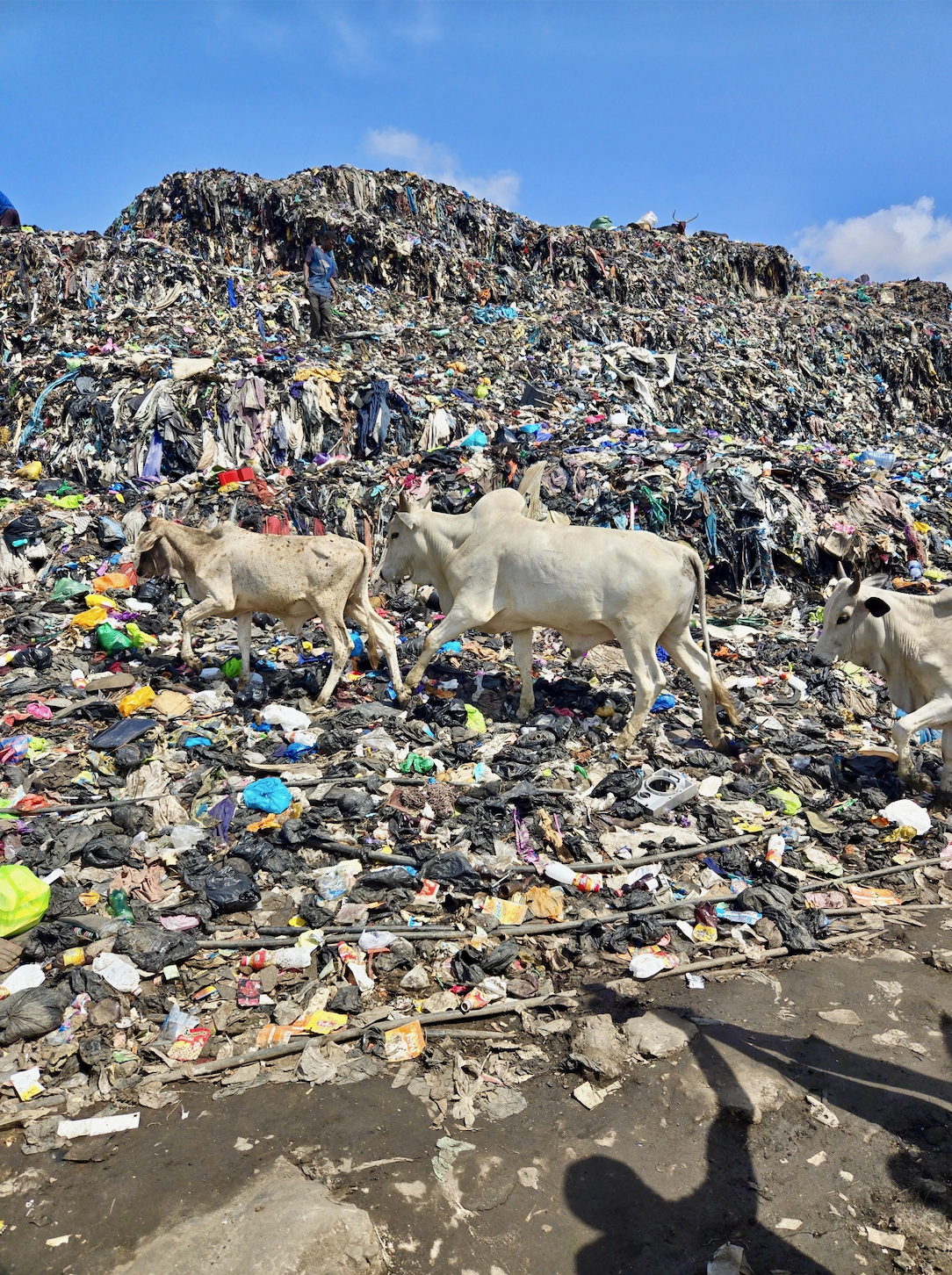
A Scripps master's thesis by Adelka Hancova finds that discarded polyester releases methane, CO₂, and carbon monoxide as it degrades in the sun — emissions no climate inventory currently counts.
There's a story we tell ourselves about what happens to a shirt when we're done with it. We drop it in a donation bin, it finds a second life somewhere, and the moral ledger closes. It's a comforting story. It is also, increasingly, not true.
Adelka Hancova, a master's student in Climate Science and Policy at Scripps Institution of Oceanography, just finished her thesis that complicates that story in a way I can't stop thinking about. Her question sounds almost too simple: when synthetic clothing sits in the sun, does it emit greenhouse gases? We know polyethylene — water bottles, plastic bags — releases methane under ultraviolet light. Polyester is a cousin polymer, and polyester is now roughly 59 percent of global textile production. Nobody had tested the fabric itself.
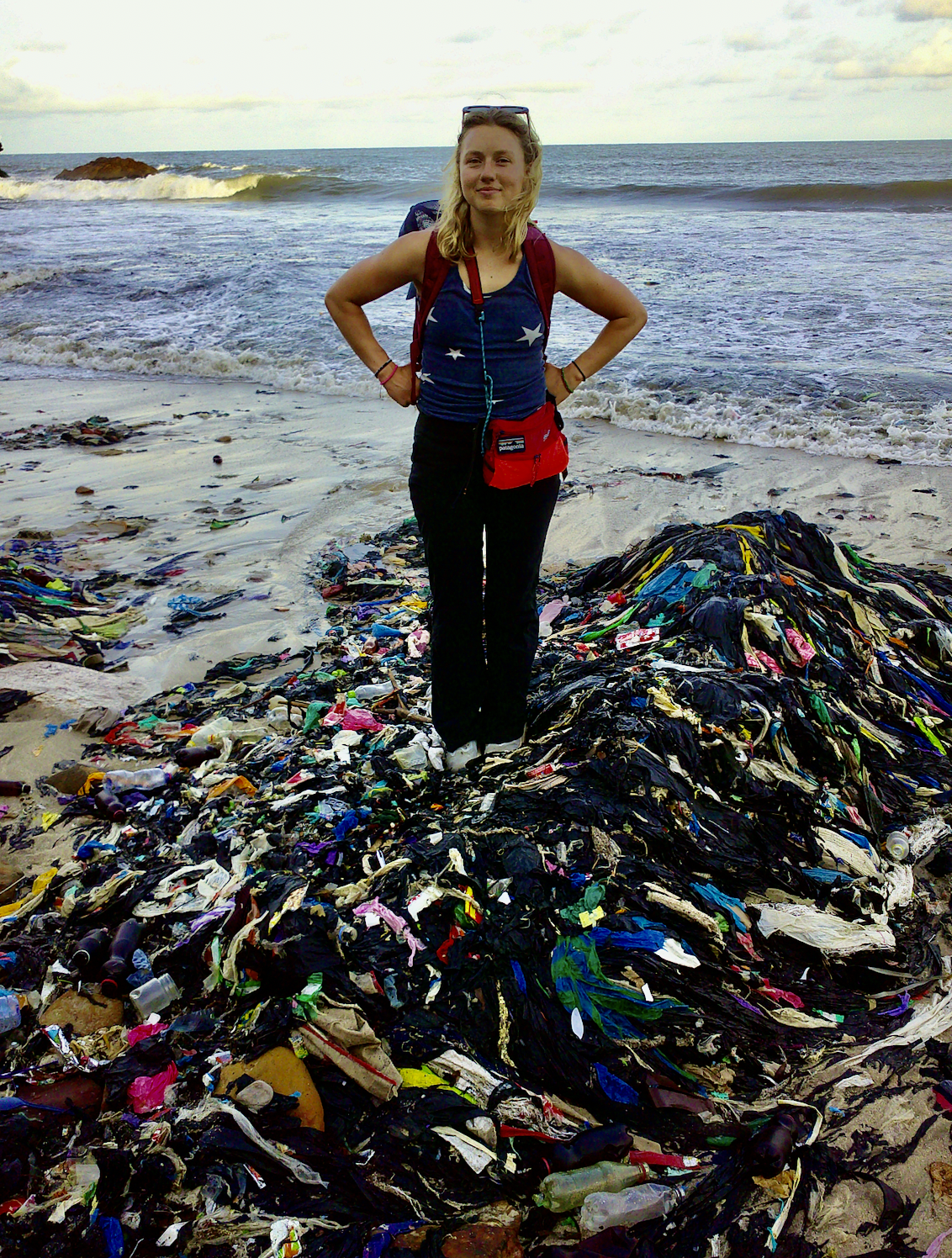
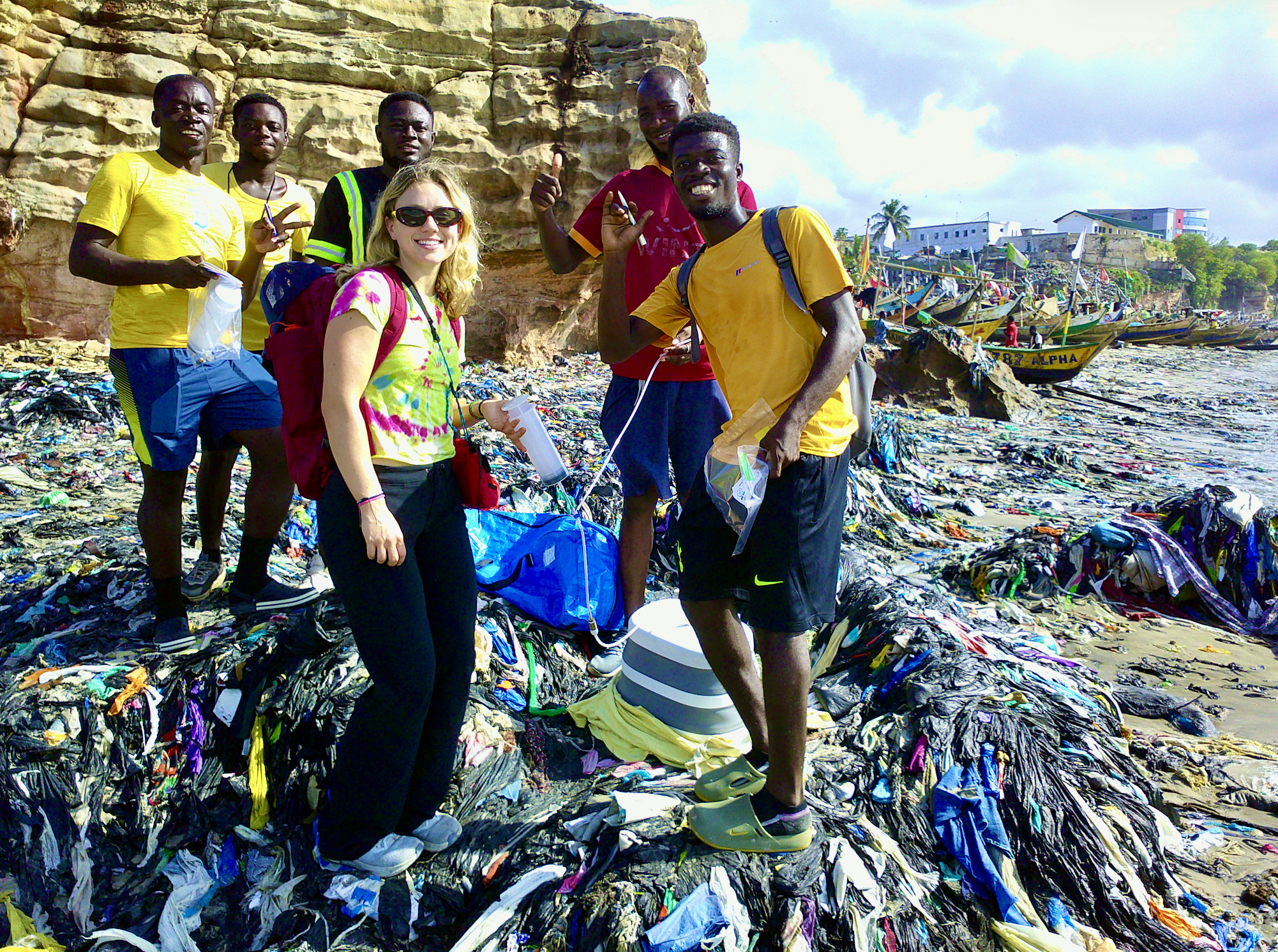
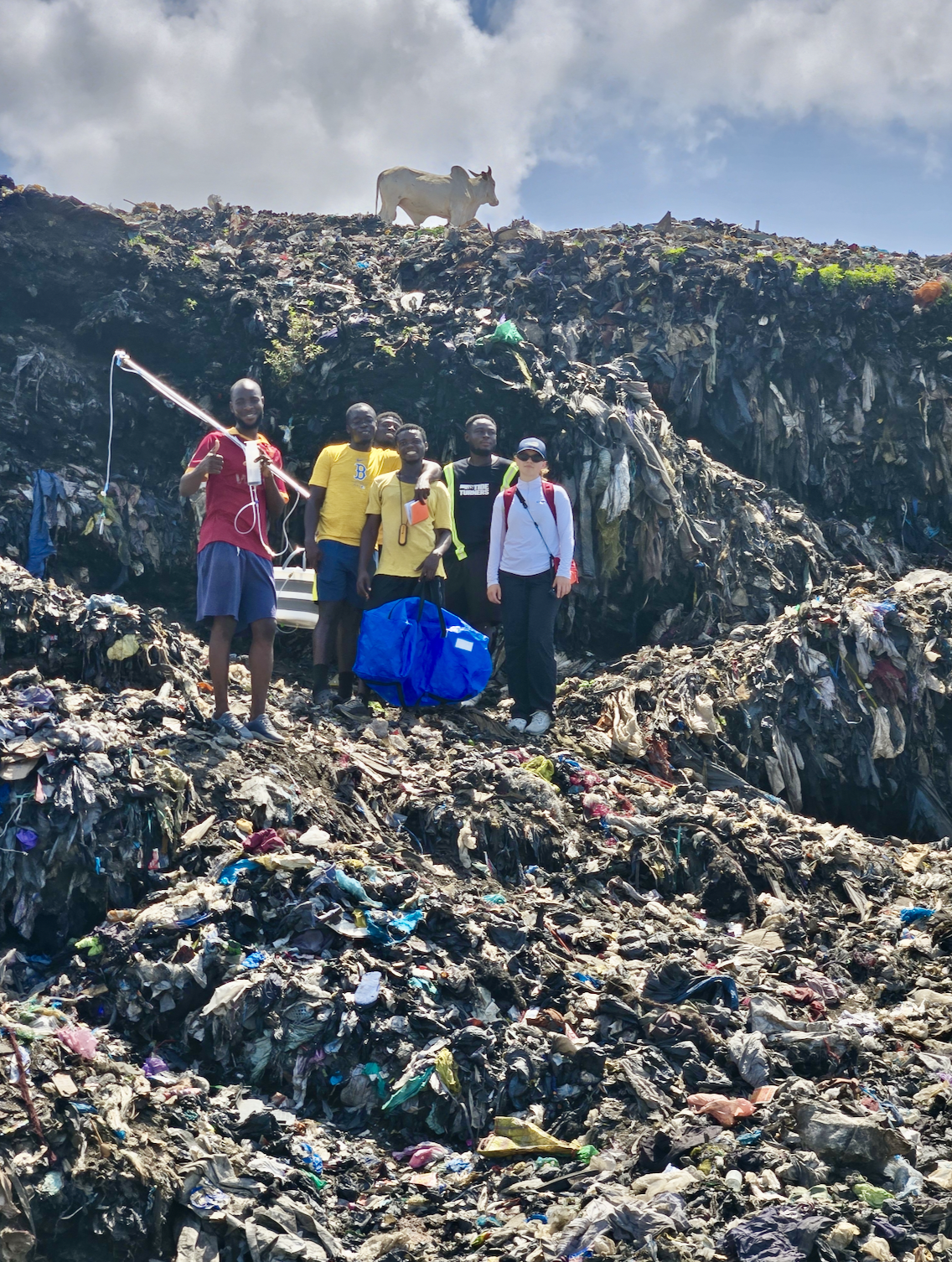
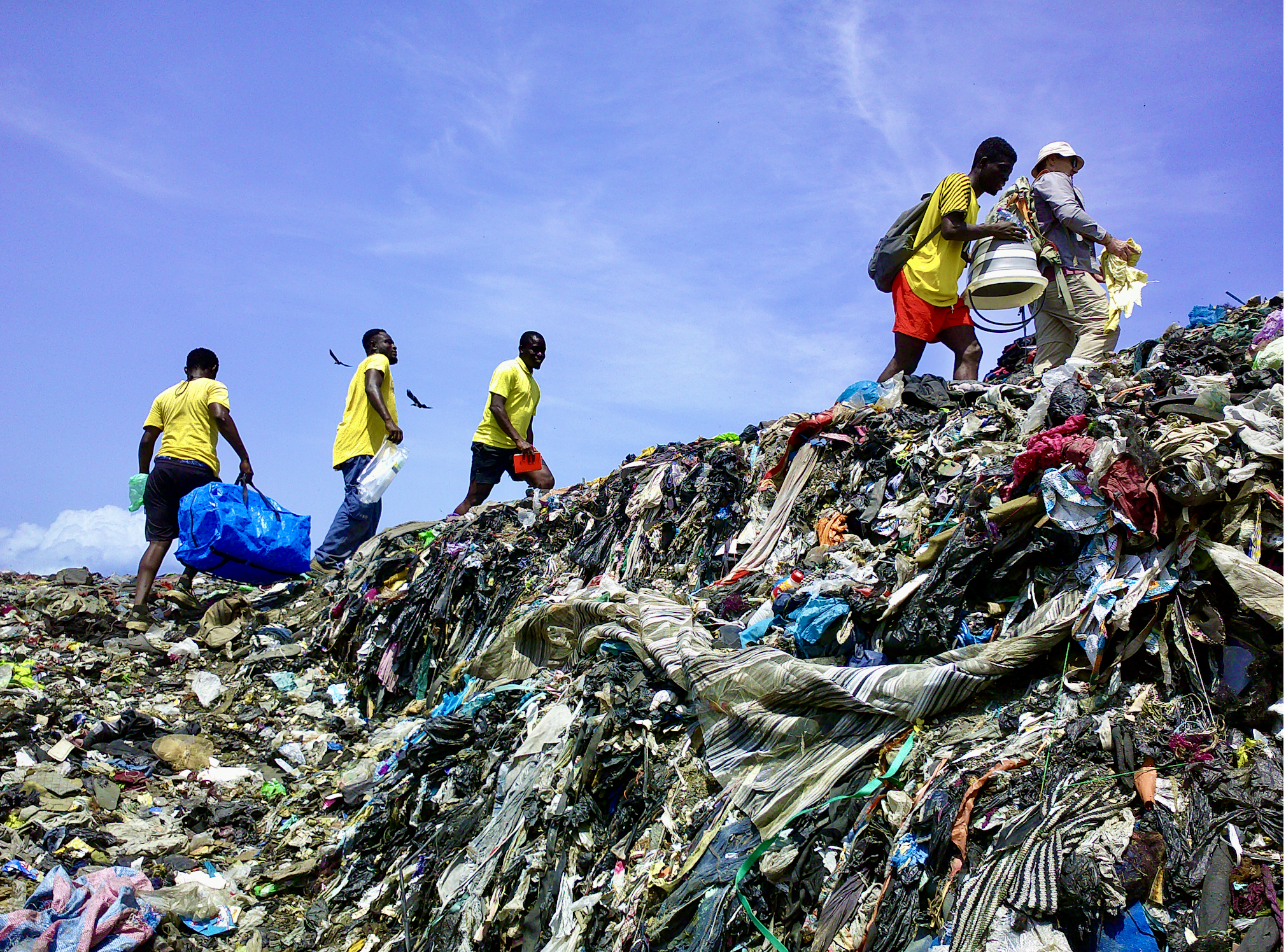
So she did. In a UV chamber at Scripps in the Rhew and Deheyn Labs, polyester produced methane, carbon dioxide, and carbon monoxide across most conditions tested — consistently more than cotton. Then she flew to Accra, Ghana, and with the collaboration with the OR Foundation, sampled the air around Kantamanto Market, one of the largest secondhand clothing markets on Earth, which receives an estimated 15 million garments a week from the U.S. and Europe. Roughly 40 percent of those bales are unsellable on arrival. They pile up in open dumps, in the Korle Lagoon, on Jamestown Beach. Along the lagoon, Hancova measured methane at up to 28 times atmospheric background. A probe inside the Old Fadama dumpsite read 206 times background.
Here's the part that should rearrange how you think about this. None of those emissions appear in anyone's climate accounting. Lifecycle assessments for clothing assume disposal happens in engineered landfills with methane capture — the infrastructure of the countries that produce and buy the clothes, not the countries where the clothes actually die. Extended Producer Responsibility laws, the policy tool everyone is excited about right now, stop at the border. The moment a garment enters the secondhand export stream, it exits responsibility entirely. The emissions keep happening. We just stop counting them. Hancova's term for this, borrowed from a growing legal literature, is waste colonialism — and her data shows it now extends into climate accounting itself.
What do you do with a finding like that? Her policy answers are structural, and they're the right kind: track garments through final disposal, replace estimated end-of-life emissions with measured ones, and make producers finance real waste infrastructure in the countries receiving their castoffs. The problem is a system, and systems require regulation, not virtue.
But there's a second answer, and it's the one Santa Cruz Works exists to back: the entrepreneurs who attack the material problem at its source. A lot of what we do is put focus and resources behind startups solving for planetary health — companies like Treeswax, replacing petroleum surf wax with pine resin and olive oil; Cruz Foam, turning food-industry waste into biodegradable packaging that displaces single-use plastic; Wonderfil, whose refill stations have already diverted mountains of plastic bottles from landfills; Purcell, rebuilding retail around bulk dispensing to eliminate the food packaging that makes up roughly 75% of American household waste; TerraNova Bio, using fungi from our coastal redwoods to digest polyurethane in weeks instead of centuries; Carbon Bridge, converting waste methane and CO₂ into low-carbon methanol; and more. Hancova's thesis is a map of exactly the kind of blind spot these founders were built to close: the emissions and materials our systems were designed not to see.
I want to hold on to the individual layer too, because it's where this got personal for me. My grandmother taught me to sew. I still use that skill constantly — reattaching buttons, closing seams, patching the boardshorts and jackets that Santa Cruz life is hard on. I always understood it as thrift, maybe as a small act of remembrance. What Hancova's research reframes is that repair is also emissions policy at the household scale. Every year a garment stays in use is a year it doesn't sit photodegrading under equatorial sun in a country that never agreed to host it. The average American now buys a new clothing item every 5.5 days. Half of fast fashion is discarded within a year. My grandmother's generation would have found both numbers incomprehensible.
The deeper lesson of this thesis is about attention. The climate problem isn't only the emissions we're failing to cut — it's the emissions we've structured ourselves not to see. Hancova put an analyzer where the system said there was nothing to measure, and found plenty.
The mending kit won't fix that alone. Regulation might. Founders will. But knowing how to make a shirt last — that's the habit of mind the whole system is missing: the refusal to believe anything really goes "away."
Watch Adelka Hancova deliver her master’s thesis presentation HERE.
Related Articles
Harnessing Nature: TerraNova Bio's Revolutionary Approach to Polyurethane Recycling — The UCSC team using fungi from the Santa Cruz redwoods to decompose polyurethane in 2–3 weeks instead of centuries, and the Launchpad win that launched them.
The Top Startups to Watch in 2025 — Our Central Coast watchlist, with TerraNova Bio, Treeswax, Wonderfil, and SwellCycle all attacking the same problem from different angles: materials that don't go "away."
What Happened to Our 2025 Startups to Watch — The honest follow-up: TerraNova Bio's circular-economy traction and Circular Economy Innovation Competition finalist nod, plus how Treeswax and Wonderfil actually fared.
Purcell Introduces M1 Dispenser — The bulk-food dispenser designed to make plastic-free shopping mainstream, from chips and grains to nuts and spices.
CarbonBridge Scores $1.85M ARPA-E Extension, Partners with RTI International — The SCA alum converting waste methane and CO₂ into low-carbon methanol — the same gases Hancova measured rising off textile waste in Accra.
Santa Cruz Startup Treeswax Featured in SURFER Magazine — The petroleum-free surf wax proving a sustainable material can outperform the plastic incumbent, no compromise required.
Wonderfil's Update: Taking Giant Leaps in Sustainable Refilling Solutions! — How this Accelerates startup's autonomous refill stations are engineering single-use plastic out of everyday retail.